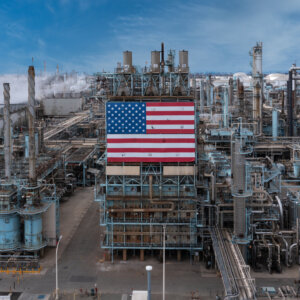
The debate over rising electricity prices in Washington has revealed a strange paradox. Republicans blame climate policies and renewable energy subsidies for driving up costs. Democrats, meanwhile, claim rates are rising because the Trump administration rolled back clean-energy incentives. Both stories cannot be entirely accurate. Renewables cannot simultaneously be the cause and the cure for high prices.
US-Africa Conservation Cooperation is a Model for Durable Policy Solutions
What we didn’t see reported was the actual progress made during the sessions (or outside the sessions). An important event quietly brought together the leaders of Botswana, Mozambique, Namibia, and South Africa, along with bipartisan leadership from Congress, and philanthropists representing the Walton Family to the Bezos Earth Fund, all around a central theme of conservation and international cooperation.
The Left’s Energy Amnesia
Energy price politics is not a new game in Washington. Typically, politicians blame the opposing side for higher gas prices. These days, higher prices are at the meter as electricity rates have more than doubled the inflation rate over the past year.
Tennessee Valley Authority Bets On the Future of Advanced Small Modular Reactors
The Tennessee Valley Authority (TVA) has announced they are betting on the future of advanced small modular nuclear reactors (SMRs). TVA is partnering with ENTRA1 Energy to develop six gigawatts of nuclear power generated by SMRs. This partnership marks the largest planned deployment of SMRs in the United States to date.
China Isn’t a Climate Leader, but the United States Could Be
President Trump’s comments drew quick condemnation, with California Governor Gavin Newsom arguing the US is “ceding our leadership to China.” But anyone seriously claiming that China is a global leader on climate policy has not been paying attention.
Is Iowa’s Duane Arnold Nuclear Plant Coming Back Online?
Five years later, NextEra is working to bring the nuclear reactor back online. Now, the federal government has given them the green light to start moving the plant out of retirement.
How to Make Rare Earths More Plentiful
“The West does not need to develop a home-grown substitute for the entire Chinese rare-earth industry to reduce the threat China’s monopoly poses,” the Economist article concluded. Indeed, “the West could ‘significantly derisk’ by cutting its reliance on China to 60-70 percent of consumption. That would provide sufficient alternative supply for the most critical uses.”
Panasonic, Ford to Launch EV Battery Manufacturing Facilities
As automakers expand their electric vehicle production, investments in battery technologies are evolving at an unprecedented pace. Now, two major industry leaders have announced plans to open EV battery factories dedicated to scaling automotive cell production in the United States.
Duke Energy’s Small Modular Reactors: Nuclear Power’s Comeback?
Duke Energy, a major utility serving millions in the Southeast, is betting that small modular reactors (SMRs) can be an integral part of America’s future, providing baseload, clean power.
Reforming Radiation Standards to Unlock Nuclear Energy’s Full Potential
Executive Order 14300 explicitly calls for a re-evaluation of the Linear No-Threshold (LNT) model and the As Low As Reasonably Achievable principle (ALARA). These two frameworks have guided nuclear regulation for decades. While these models may have been defensible when first adopted, they have hardened into regulatory doctrines that no longer align with the best available science, economic realities, or the nation’s strategic energy goals.