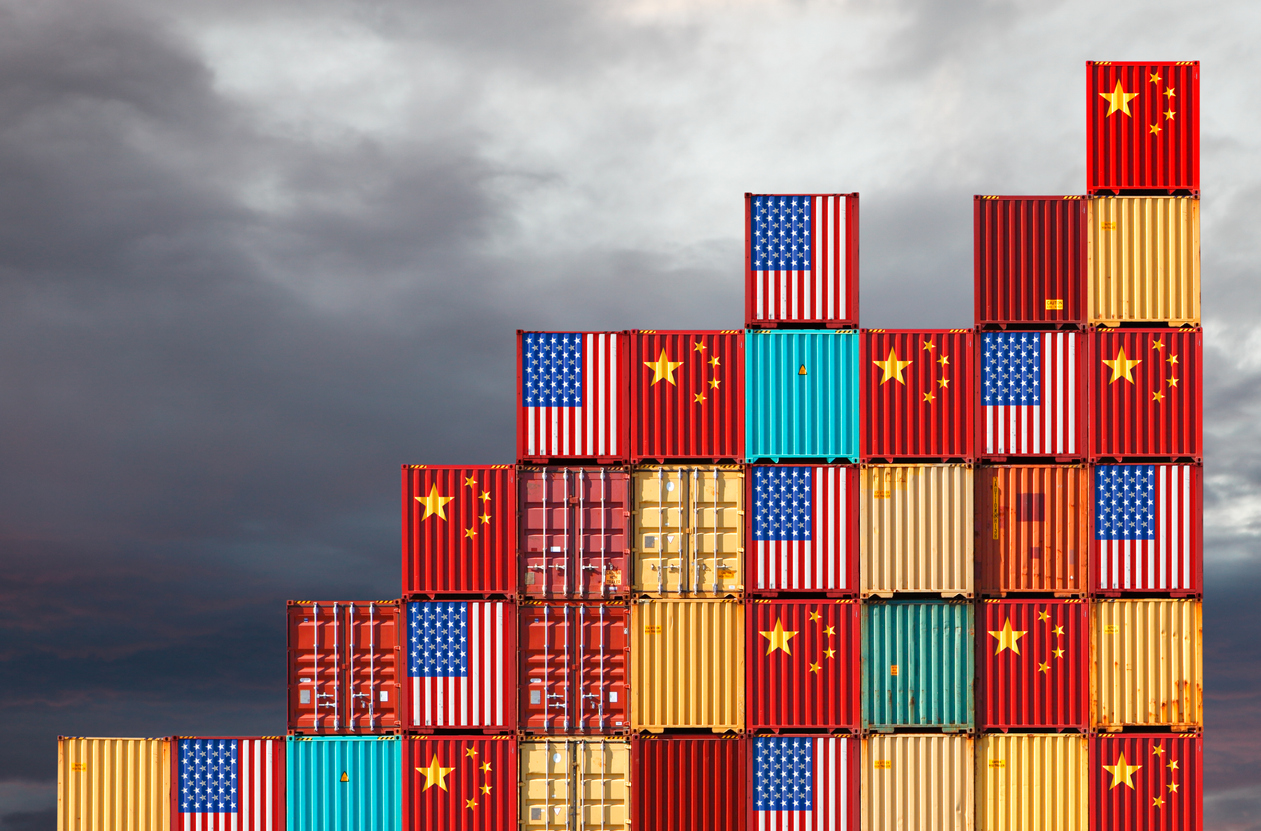
Climate Week in New York City illuminated opposing views on climate change and raised important questions about what global leadership on climate policy should look like. In a brief statement to the United Nations General Assembly, Chinese President Xi Jinping announced new climate targets, including a pledge that China’s emissions would fall 7 to 10 percent of their peak levels and that more than 30 percent of its energy would come from non-fossil fuel sources by 2035. These promises stood in stark contrast to remarks made a day earlier by President Donald Trump, who dismissed climate change as “the greatest con job ever perpetrated on the world” and argued that renewable energy is too costly and unreliable.
President Trump’s comments drew quick condemnation, with California Governor Gavin Newsom arguing the US is “ceding our leadership to China.” But anyone seriously claiming that China is a global leader on climate policy has not been paying attention.
It’s true that, over the past decade, China has led the world in the deployment of clean energy. Between 2013 and 2023, it quadrupled its nuclear, hydro, solar, wind, and other renewable capacity while global capacity only doubled. That pace is accelerating: in 2024 alone, China expanded solar and wind capacity by 45 and 18 percent, respectively.
At the same time, however, China remains the world’s largest emitter by a wide margin. In 2023, its total emissions were more than double the United States, the world’s second-largest emitter. In per capita terms, China still trails many Western nations, including the United States. But while per capita emissions in the West are trending down (US per capita emissions declined by 31 percent between 2003 and 2023), Chinese per capita emissions continue to grow, more than doubling in the past two decades.
Driving China’s high emissions is its continued reliance on coal, which still accounts for over 60 percent of its electricity generation. In contrast, the United States has reduced emissions largely thanks to the shale gas revolution and a shift from coal to low-cost natural gas (a trend that is unlikely to substantially change even with the Trump administration’s recently announced efforts to revive the coal industry).
Given this reality, China is not a climate leader simply because it is building more renewables. Its energy transition is shaped by its own unique domestic factors, including much higher levels of conventional air pollution, rapid demand growth, and labor and materials costs that differ from those of other countries. These conditions may make large-scale construction of renewable and nuclear energy more economical than in other countries. Most importantly, in a command-and-control system, the government can order new renewable capacity regardless of whether it makes economic sense. Without transparent markets and reliable price signals, it is impossible to evaluate whether such investments reflect efficient or sustainable choices.
The broader question is what genuine global leadership on climate should look like. President Trump’s comments were overly dismissive, but there is some truth behind his intuition. Green energy is often portrayed as the end-all solution, with China being celebrated simply for building out solar and wind with no consideration given to its broader environmental track record.
The United States has an opportunity to chart a better path forward. True leadership means recognizing the benefits of clean energy while also weighing them against other tradeoffs, especially affordability and reliability. For countries seeking to address climate concerns while increasing prosperity created by abundant, low-cost energy, the United States can show that a smart energy and climate policy rests on removing barriers to investment, fostering innovation, and allowing markets to deliver both economic growth and environmental progress.
The views and opinions expressed are those of the author’s and do not necessarily reflect the official policy or position of C3.