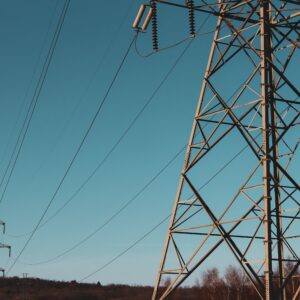
Ember’s new Global Electricity Review 2026 points to a genuine shift in the global power mix. In 2025, renewables supplied 33.8% of global electricity, edging past coal’s 33% share for the first time in the modern power era. Even more striking, clean generation growth slightly exceeded the rise in global electricity demand, which meant fossil...
A Consumer-First Grid Needs Competition, Not Just More Wires
America needs more electric transmission, the high-voltage lines that carry electrons from power plants to communities nationwide. But under today’s policies, building those lines takes too long and costs too much. Without a substantial expansion in transmission capacity, the country is at risk of rising energy costs, a less reliable electric grid, and stymied global leadership in AI.
3 Proposals to Reduce the Time and Cost of Nuclear Deployment
After two decades of flat demand, power consumption is surging. Grid Strategies forecasts 5.7 percent annual growth over the next five years, and the peak demand could be equivalent to 15 times New York City’s peak energy consumption.
Meanwhile, electricity prices are rising faster than inflation, and families and businesses across the country are feeling the effects.
It’s clear we need more supply, and nuclear power can be part of the solution. It’s safe, clean, dependable, and scalable. The key question for policymakers and ratepayers alike is: Is it cost-competitive?
America’s Wildfire Economics Are Backwards
When wildfires are treated as a temporary, seasonal disruption rather than a continual, chronic risk, the default policy response is suppression. But a new analysis from PERC shows just how much that’s costing us.
Energy Innovation Is Worth Funding, If It’s Well Targeted
This month, C3 Solutions Action signed on to a bipartisan coalition letter calling for steady, robust federal funding for energy research, development, and demonstration. Addressed to the leadership of the House and Senate Appropriations Committees, the letter highlights the United States’ long history of energy innovation and the importance of maintaining that leadership.
Foreword for Speed to Power: How Electricity Ratepayers Can Win the AI Race
Should taxpayers love or loathe data centers? This question seems a loaded one in the first place. To ask it is to present a binary choice when, in reality, public opinion on the matter is more complex. Initially, a handful of fiscal conservatives branded the facilities that provide the infrastructure of the next Information Age as little better than taxpayer-funded sports stadiums or convention centers, which are proven economic and fiscal losers for the communities in which they abide compared to the various government subsidies they receive. Yet, aside from the fact that data centers, sports stadiums, and convention centers are physical structures, they have little to nothing in common.
America’s new nuclear era starts in Idaho
America has finally decided to get serious about nuclear energy again. President Donald Trump’s executive orders launching a nuclear energy emergency and directing federal agencies to dramatically accelerate advanced reactor deployment signal a turning point. After decades of hesitation, America is once again treating nuclear power as the strategic asset it has always been — essential to...
Defense Department delays 54 wind projects in Texas, citing national security concerns
Dozens of wind projects in Texas are in limbo after the U.S. Department of Defense paused issuing routine federal permits citing national security concerns, a move that experts say expands the Trump administration’s crusade against wind energy. According to data collected by the American Clean Power Association, 54 Texas wind projects are waiting for the...
Star Catcher raises $65m to build first power grid in orbit
Star Catcher Industries, the company building the first power grid in space, has raised $65m in an oversubscribed Series A round. The new investment – led by B Capital and co-led by Shield Capital and Cerberus Ventures, the venture arm of Cerberus Capital Management – brings Star Catcher’s total capital raised to $88m Read more...
Can We Refill the Great Salt Lake?
The Great Salt Lake is drying up. Since the mid-1980s, the lake has dropped 22 feet, and its surface area is 60 percent smaller than it once was. If that doesn’t sound like a lot, consider this: it takes 12 minutes and 13 seconds to walk from where the lake’s shoreline once was to where it is today.