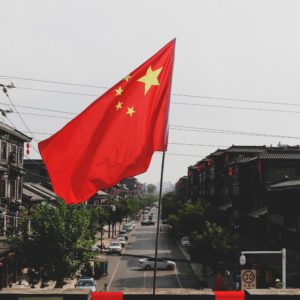
A research arm of the Chinese government said it had published an atlas of deep-sea mineral deposits, highlighting Beijing’s ambitions to mine the ocean floor and underscoring its disputed claims to waters that neighboring nations consider theirs. Experts say the maps, in addition to pinpointing mineral deposits found in the deep ocean, give China’s military...
Puerto Rico’s LNG Shift Strengthens Grid Reliability
Puerto Rico’s energy strategy is undergoing a quiet but meaningful shift, with liquefied natural gas (LNG) playing a more central role in stabilizing the island’s grid. The first year of operations for the U.S.-flagged LNG carrier American Energy, operated by Crowley, signals a step toward a more structured and reliable fuel supply model. Since launching...
Britain’s Windfall Tax Gamble Could Backfire
Britain is preparing to raise windfall taxes on electricity generators unless they agree to long-term fixed-price contracts, in what amounts to one of the government’s most aggressive efforts yet to shield consumers from gas-driven power price spikes. The logic is politically seductive: if gas prices surge and legacy generators benefit from the market structure, the...
Ember’s “Global Electricity Review 2026” Is Out
Ember’s new Global Electricity Review 2026 points to a genuine shift in the global power mix. In 2025, renewables supplied 33.8% of global electricity, edging past coal’s 33% share for the first time in the modern power era. Even more striking, clean generation growth slightly exceeded the rise in global electricity demand, which meant fossil...
Trump swings for moon with nuclear reactor plans as China, Russia team up in space race
A memo released by the Trump administration on Tuesday detailed a goal of having a nuclear reactor on the moon’s surface by 2030, a move that furthers the United States’ quest for supremacy in space over China and Russia. In the six-page document, the White House Office of Science and Technology Policy wrote that incorporating nuclear energy in...
China weighs curbs on exports of solar manufacturing equipment to US
Chinese officials have held initial talks with providers of equipment to make solar panels as they consider limiting exports of the most advanced technology to the United States, said five people with knowledge of the consultations. Such a clampdown would risk investments by U.S. firms and set back a race for space-based computing, as China,...
The Iran War and the Long-Term Risks to Energy Affordability
As the Iran war continues, oil prices keep rising. Gasoline has climbed to over $4 per gallon for the first time in four years. The ripple effects are spreading across the economy as markets that depend on affordable crude begin to absorb the disruption of roughly one-fifth of the world’s oil and liquefied natural gas that normally passes through the Strait of Hormuz. Everything from airline tickets to groceries is seeing upward pressure as the prices of jet fuel, diesel, and fertilizer all rise.
How could oil markets look after a peace deal with Iran?
While it still seems to be a long way off, Iran and Trump seem to be considering the conditions they need to make peace. As I’ve noted in past Low-Energy Fridays, peace is better for the economy than war, which destroys productive resources and erodes investor confidence. But we must also understand that the way in which this peace is achieved may impact energy markets in the long term. While any peace is generally better economically than the status quo, risks caused by the war may remain even after a deal is made.
Saudi Aramco boss pulls out of major international energy conference due to Iran conflict, source says
Read more in CNBC here.