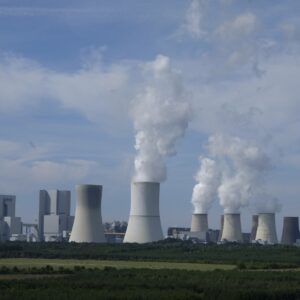
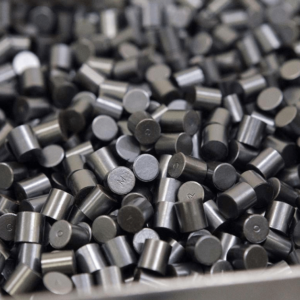
America is betting on a nuclear comeback, driven by a new generation of advanced reactors with lower capital costs and significant potential for economies of scale. Many of these reactors, however, require specialized fuel that has led the government to pour billions into a domestic supply chain. To ensure these investments pay off, federal officials should proactively eliminate artificial procurement barriers and permitting hurdles which threaten to stall nuclear fuel independence.
Issue: Nuclear Energy
Mission Critical Energy Investments Can Be a Boon for American Energy Dominance
Defense-driven innovation has repeatedly reshaped the American economy. Advanced nuclear and other mission-critical technologies could become the next major breakthrough.
Cut Red Tape, Make Nuclear Great Again
Reforming the Nuclear Regulatory Commission’s [NRC] outdated radiation protection framework is essential to unlocking nuclear energy’s potential. Reconsidering the linear no-threshold (LNT) radiation standard could help streamline construction and lower costs, strengthening the President's nuclear agenda without compromising safety.
Fusion, A Down to Earth Moonshot Worth Taking
The term “moon shot” was launched in the 1940s, according to research by the Oxford English Dictionary. “The real result of all the work which would have to go into the moon shot,” Rotarian magazine wrote in 1949, “would be the knowledge of how to build and operate rockets of such size.”
America’s Nuclear Renaissance Deserves a Fuel Policy to Match
Since 1998, the federal government has paid nuclear reactor owners more than$10.6 billion in court-ordered damages over a broken contract of its own making. The tab grows by roughly $2 million a day, and total federal exposure may eventually reach $39.2 billion. The cause isn’t a safety failure or a market collapse but rather political failures.
Three Reforms to Improve Nuclear Energy’s Economic Outlook
Nuclear energy is safe, clean, reliable, and scalable. It can power the artificial intelligence (AI) revolution, revitalize industrial communities, and help meet our environmental ambitions. So why does building a nuclear plant in the United States cost so much?
3 Proposals to Reduce the Time and Cost of Nuclear Deployment
After two decades of flat demand, power consumption is surging. Grid Strategies forecasts 5.7 percent annual growth over the next five years, and the peak demand could be equivalent to 15 times New York City’s peak energy consumption.
Meanwhile, electricity prices are rising faster than inflation, and families and businesses across the country are feeling the effects.
It’s clear we need more supply, and nuclear power can be part of the solution. It’s safe, clean, dependable, and scalable. The key question for policymakers and ratepayers alike is: Is it cost-competitive?
A New Regulatory Paradigm for Advanced Nuclear Energy
In the coming months, the Nuclear Regulatory Commission (NRC) will finalize a slate of rulemakings that, taken together, represent the most consequential overhaul of America’s nuclear regulatory framework in nearly 70 years. The modernizations will address many significant regulatory cost drivers that have disadvantaged advanced nuclear energy as a reliable, emissions-free, dispatchable source of power. For nuclear energy to be a viable option, it needs to work for the American taxpayer and ratepayer. The NRC’s reforms give all forms of nuclear power a better shot at doing so.
Indiana pushes into nuclear future with Braun, Eli Lilly partnership
Indiana Gov. Mike Braun is doubling down on plans to make Indiana a national leader in nuclear energy, announcing a new partnership with Eli Lilly and Company to explore next-generation power options. According to FOX 59, the agreement lays out a path for the state and the Indianapolis-based company to study nuclear energy solutions, including small...
Iran war reality check: Global markets still dictate American energy prices
After the Iran war ends and the Strait of Hormuz opens, gas prices will fall. But when the next crisis comes, we’ll be happy for every nuclear reactor we have, large and small. So let’s build.