Getting climate, energy & environment news right.

Google Pledges Power, Ratepayer Protections in $15B Missouri Data Center Expansion
Post

Google Pledges Power, Ratepayer Protections in $15B Missouri Data Center Expansion

Google will invest $15 billion in Missouri infrastructure, including a new data center in New Florence, Montgomery County, in a project that pairs its expanding data center footprint with new generation commitments, a large-load cost-allocation framework, and Ameren Missouri rate structures designed to protect existing customers from infrastructure costs tied to large energy users. “When...

Trump Administration to Invest $14 million for Next-Gen EGS
Post

Trump Administration to Invest $14 million for Next-Gen EGS

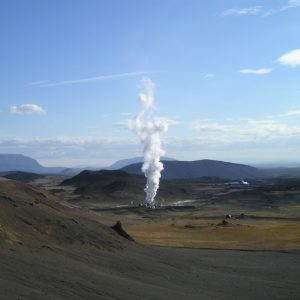
The Department of Energy’s Hydrocarbons and Geothermal Energy Office (HGEO) is allocating $14 million to fund field-testing of next-generation geothermal technologies. According to an announcement on April 14, the Pennsylvania-based enhanced geothermal systems (EGS) pilot project will reuse existing oil and gas infrastructure to test the potential of geothermal energy in the eastern U.S., where resources are less accessible due to the region’s unfavorable geology. 

3 Proposals to Reduce the Time and Cost of Nuclear Deployment
Post

3 Proposals to Reduce the Time and Cost of Nuclear Deployment

After two decades of flat demand, power consumption is surging. Grid Strategies forecasts 5.7 percent annual growth over the next five years, and the peak demand could be equivalent to 15 times New York City’s peak energy consumption.

Meanwhile, electricity prices are rising faster than inflation, and families and businesses across the country are feeling the effects. 

It’s clear we need more supply, and nuclear power can be part of the solution. It’s safe, clean, dependable, and scalable. The key question for policymakers and ratepayers alike is: Is it cost-competitive?

Energy Department takes steps toward allowing plutonium, historically used in weapons, in nuclear fuel
Post

Energy Department takes steps toward allowing plutonium, historically used in weapons, in nuclear fuel

The Energy Department may allow up to five companies to use its surplus plutonium — which it has historically been used in nuclear warheads — as fuel. The department has selected the firms for “advanced negotiations regarding the potential allocation of surplus plutonium materials,” a spokesperson for its nuclear energy office said Tuesday. The five...

America’s new nuclear era starts in Idaho
Post

America’s new nuclear era starts in Idaho

America has finally decided to get serious about nuclear energy again. President Donald Trump’s executive orders launching a nuclear energy emergency and directing federal agencies to dramatically accelerate advanced reactor deployment signal a turning point. After decades of hesitation, America is once again treating nuclear power as the strategic asset it has always been —  essential to...

Canadian Wildfire Smoke Is Now a Grid Transmission Risk
Post

Canadian Wildfire Smoke Is Now a Grid Transmission Risk

Canada’s Wildfire Season Is Becoming a Transmission Problem, Not Just an Air Quality Problem When a wildfire burns near a transmission corridor, physical damage is the obvious risk. The less visible risk is what smoke and ash contamination do to high-voltage infrastructure across a much wider area. In Alberta and British Columbia, that contamination risk...

Harvest Deep-Sea Minerals to Combat China
Post

Harvest Deep-Sea Minerals to Combat China

Harvesting from the sea floor is the most environmentally sustainable way to obtain the minerals we need. These nodules can be harvested using specialized, deep-sea vessels. Seabed nodules sit exposed on the ocean floor, allowing collection without significant disruption.

Foreword for Speed to Power: How Electricity Ratepayers Can Win the AI Race
Post

Foreword for Speed to Power: How Electricity Ratepayers Can Win the AI Race

Should taxpayers love or loathe data centers? This question seems a loaded one in the first place. To ask it is to present a binary choice when, in reality, public opinion on the matter is more complex. Initially, a handful of fiscal conservatives branded the facilities that provide the infrastructure of the next Information Age as little better than taxpayer-funded sports stadiums or convention centers, which are proven economic and fiscal losers for the communities in which they abide compared to the various government subsidies they receive. Yet, aside from the fact that data centers, sports stadiums, and convention centers are physical structures, they have little to nothing in common.

Subscribe to our exclusive email designed for conservatives who care about climate.

Help us promote free market solutions for climate change.

5 Incredible Ways Economic Freedom Helps the Planet.

Sign up for our newsletter now to get the full list right in your inbox.

Thank you for signing up

Help us promote sensible solutions for both planet and prosperity.

Download Now