Getting climate, energy & environment news right.

Conservatives have been vocal about our climate for years. Those voices won’t be ignored any longer.

[searchandfilter id="17558"]
large data center

Forget about learning to code. Meta says it’s time to pick up a wrench.

The company is starting a “workforce academy” to train Americans to build its data centers as skilled trade workers become a sought-after commodity. The five-week training program, in partnership with CBRE and the Associated Builders and Contractors, is free of charge and guarantees graduates a job at a Meta data-center construction site, the company said. 

Read more in the Wall Street Journal here.

utility scale batteries

Last October, DOE canceled $700 million worth of battery and manufacturing projects grants, including American Battery’s grant, saying the projects either didn’t meet certain milestones, were not economically viable or would not “adequately advance the nation’s energy needs.” American Battery says it was one of “hundreds” of grants that were canceled in that process.

In 2022, the DOE had initially selected American Battery for a five-year grant to help build the first phase of the refinery, located on what CEO Ryan Melsert described during a May 11 earnings call as “one of the largest identified lithium deposits in the U.S.”

Read more in Utility Dive here.

A major grid-tech company is asking the Trump administration to fund a project it says could significantly boost the nation’s ability to move power around — without building a single new transmission tower or line.

Open Access Technology International (OATI) is a Minneapolis-based firm whose software is used by nearly every North American transmission grid operator to manage the flow of electrons. Now, it envisions developing new features for that software. Huge amounts of data, parsed by artificial intelligence, would be used to more accurately calculate how much power can run along power lines — providing both real-time estimates and forecasts days and weeks into the future. That intel would be automatically shared among neighboring grid operators, allowing them to make better decisions about how to run their networks.

Read more in Canary Media here.

Conservation science has long defined itself as a crisis-solution field, rooted in problem-solving. Yet for years it has been better at identifying species and regions at risk than at delivering solutions to help them. Identifying this key downfall, Conservation X Labs has risen to the occasion. A non-profit focused on slowing biodiversity loss, it promotes innovation and the development of cutting-edge technology to tackle conservation challenges.

The economy or the climate? Why not both?

Subscribe for ideas that support the environment and the people. 

One of their breakthrough developments is known as the Extinction Solutions Index, a framework that aims to identify and compare the effectiveness of solutions to biodiversity loss by assessing each one’s potential success rate, cost, and impact. It works in five steps. First, a coalition of partners is assembled, gathering experts across conservation science, including in model development, data analysis, and impact evaluation. Second, they identify potential solutions from groups across society and the economy. Third, a qualitative and quantitative framework is created, tailored to the solution being assessed. Fourth, the solution’s effectiveness is evaluated using that framework and expert input, validating assumptions about the feasibility of the solution and a cost-benefit analysis. Fifth, the findings are compiled into a publication or interactive dashboard that can be utilized by an array of stakeholders across the public sector, private sector, and academia. Ultimately, the Extinction Solutions Index aims to enable solutions to be diverse, impactful, and ready to scale from the very beginning.

Where do these solutions come from? Every year, Conservation X Labs organizes several challenges and competitions to bring together the brightest minds to address the most pressing environmental problems. In 2025 alone, five challenges were organized. The Fire Grand Challenge, for example, sought new ways to manage and live with fire, asking participants to pair traditional knowledge with innovative technology to create scalable solutions. Alternative Proteins: The Amazon aimed to mitigate deforestation in the Amazon by developing alternative proteins for food products. Through these competitions, the organization has been able to support more than 100 innovations and award over 12 million dollars towards breakthrough solutions. 

>>>READ: How RESOLVE Is Bridging Conservation and Critical Minerals

Conservation X Labs has also developed innovations of its own. Among their most impactful is Wild Me, an open-source software that supports efficient wildlife population research and assessment. It combines artificial intelligence, computer vision, and citizen science to identify and track wildlife. Anyone can take a picture of an animal and upload it to the platform, where the software identifies the animal and adds the picture to a broader set of citizen science records. Several platforms within Wild Me are specific to different species, including Sharkbook and GiraffeSpotter. The software was recently used in a study that revealed a broader range for whale sharks across the American West Coast than previously understood, demonstrating its value to wildlife research. 

Another technology, Sentinel is an AI-powered environmental monitoring system that draws on information from cameras, acoustic sensors, thermal sensors, and other systems to automatically identify events, including poaching and habitat disturbances. Unlike other camera-trap systems, it utilizes edge-AI, processing data directly on the device in the field rather than sending it to the cloud. As a result, the data is processed in real-time, allowing for faster responses to the environmental situations on the ground. The system has been used to track invasive species, detect signs of Feline Leukomyelopathy (FLM) in Florida Panthers, and eliminate incidents of human-elephant conflict in India.

>>>READ: How Conservation Can Improve Global Security

Conservation increasingly depends on contributions from many fields, and organizations like Conservation X Labs are helping bring diverse voices with new solutions to the table. By opening conservation up to innovation, these new voices can help bring it into a new era.

Wildfires have worsened ozone levels across the United States so much over the last decade that they have reversed around four years of progress, a new study has found. 

Surface ozone levels, or smog concentrations, steadily increased from 2015 to 2024, deteriorating air quality across the Midwest and Western U.S., researchers at the University of Iowa found in a study released Thursday. According to the study authors, this contributed to an increase of 318 premature deaths per year from fire-sourced ozone since 2013. Their NASA-funded research mapped these ozone levels in kilometer-by-kilometer grids across the entire continental U.S between 2003 and 2024. 

Read more in Inside Climate News here.

Electric utilities and power grid operators increasingly are looking at ways to diminish and avoid disruptions from extreme weather. The power sector also has experience with the financial impacts of wildfires, both with damage to assets and losses incurred when equipment is found liable for causing those events.

Undergrounding lines, in addition to enhancing safety, also can improve the performance of transmission infrastructure, by mitigating hazards such as impacts from trees and other vegetation. A report from the U.S. Department of Energy’s (DOE’s) Grid Deployment Office, along with Berkeley Lab in California, notes a “key advantage of underground transmission and distribution lines is substantially reduced vulnerability to disruption from extreme weather and wildfires [by preventing initial ignition as well as propagation], resulting in both reliability and resilience improvements.” Several electric utilities and other agencies have noted that undergrounding offers protection against lightning, animal incursions, high winds (including thunderstorms, tornadoes, hurricanes, and derechos), and ice and snow. It also eliminates the chances of fallen power lines caused by auto accidents (Figure 1), or simply due to aging infrastructure.

Read more in Power Magazine here.

Developing and commercializing new metal alloys is a slow and expensive process. As a result, companies in sectors such as aerospace, defense, and energy often rely on established materials, even when they lack the performance required to build next-generation products. 

The economy or the climate? Why not both?

Subscribe for ideas that support the environment and the people. 

To address this challenge, Foundation Alloy is developing a new class of advanced alloys based on metals such as steel, aluminum, nickel, molybdenum, and tungsten. Among these materials, molybdenum has emerged as a key focus area. 

Molybdenum is a critical transition metal widely used in metallurgy to enhance the strength and performance of carbon and low-alloy steels, while improving the corrosion resistance of stainless steels. Building on these properties, Foundation Alloy is developing proprietary molybdenum and molybdenum-alloy formulations through its MetalsFIRST manufacturing platform.

An MIT spinout, Foundation Alloy was founded by former MIT professor Chris Schuh and other MIT researchers. The team developed a solid-state metallurgy system that bypasses the traditional melting phase, enabling faster and more energy-efficient production of advanced alloys compared to conventional manufacturing methods.

The process begins with powdered raw materials that are mechanically alloyed into a homogeneous metal powder. The material is then shaped using techniques such as metal injection molding, pressing, or 3D printing before undergoing a final sintering step in a furnace. During sintering, the particles are heated just enough to bond together and form a fully dense metal component without ever melting.

>>>READ: Can this Company Disrupt the Metals Market?

According to the company, its novel approach can accelerate alloy development cycles tenfold while producing materials twice as strong as traditional metals. The technology also creates crystal grain structures up to 100 times finer than those found in conventional materials, unlocking improved strength and performance levels. 

Since the company’s powders are easier to sinter than standard powders, engineers also have better control over the metal’s internal structure. This allows them to tailor mechanical properties such as strength, toughness, ductility, heat resistance, and fatigue performance. 

By achieving the desired component density and microstructure with less energy, Foundation Alloy can further forgo many of the costly heat-treatment and post-processing steps that manufacturers typically rely on to ensure material quality. 

The result is reduced energy consumption, lower costs, and shortened production timelines. 

What once took a matter of years can now be achieved in a couple of months.

>>>READ: Researchers from Northwestern University Discover Metal-Free Alternative for Battery Production

“This is an entirely new approach to making metals,” says CEO Jake Guglin, one of the MIT co-founders. “It gives us a broad set of rules on the materials engineering side that allows us to design a lot of different compositions with previously unattainable properties.”

High-performance materials are essential to the aerospace, defense, energy, and advanced manufacturing sectors, where components must withstand extreme temperatures, stresses, and operating environments. By modernizing metal manufacturing, advanced materials companies like Foundation Alloy are helping kickstart the next wave of industrial innovation. 

The Energy Department says a small nuclear reactor under development at a national lab has reached a crucial milestone that could allow it to produce electricity within a few years.

The microreactor being developed by Antares Nuclear Inc. at the Idaho National Lab reached “criticality” on Thursday, Energy Secretary Chris Wright said. The milestone occurs when a nuclear reactor achieves a self-sustaining chain reaction capable of producing a steady release of energy.

Antares is the first private company to bring an advanced reactor to criticality under a pilot program begun last year by the Trump administration meant to supercharge nuclear energy production in the U.S. The demonstration was conducted in partnership with the Energy Department and other contractors with support from the U.S. Army.

Read more in AP News here.

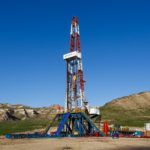
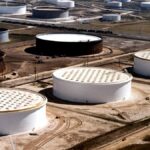
The Trump administration is in “active dialogue” on creating a petroleum reserve in California, Energy Secretary Chris Wright told POLITICO on Friday, a move that would boost oil infrastructure in the state and undermine Democratic Gov. Gavin Newsom’s bid to shrink the state’s fossil fuel footprint.

A June 2 document that lawyers for Sable Offshore Corp., which owns a trio of oil platforms off the California coast, sent to the Energy Department and seen by POLITICO shows the company has proposed a West Coast Strategic Petroleum Reserve “in response to the inquiries made by the Trump administration and in the furtherance of Sable’s ongoing discussions with the Department of War for the supply of oil and gas to California.”

Read more in Politico here.

Urenco USA, operator of the only U.S. commercial-scale uranium enrichment facility, will expand low-enriched uranium (LEU) capacity at its National Enrichment Facility (NEF) in Eunice, New Mexico, by nearly 50% through a privately funded, multibillion-dollar investment that includes construction of a new enrichment plant. The project will add 2.1 million separative work units (SWU) of new enrichment capacity.

The expansion, announced June 2, will install up to 24 gas centrifuge cascades at the licensed New Mexico site. While construction is slated to begin at the new plant in 2029, the first cascades are scheduled to begin production in 2032, and additional cascades are slated for installation through 2036. The NEF site is already licensed by the Nuclear Regulatory Commission (NRC) for up to 10 million SWU of capacity—well above the projected buildout, Urenco told POWER.

Read more in Power Magazine here.

Subscribe to our exclusive email designed for conservatives who care about climate.

Help us promote free market solutions for climate change.

5 Incredible Ways Economic Freedom Helps the Planet.

Sign up for our newsletter now to get the full list right in your inbox.

Thank you for signing up

Help us promote sensible solutions for both planet and prosperity.

Download Now