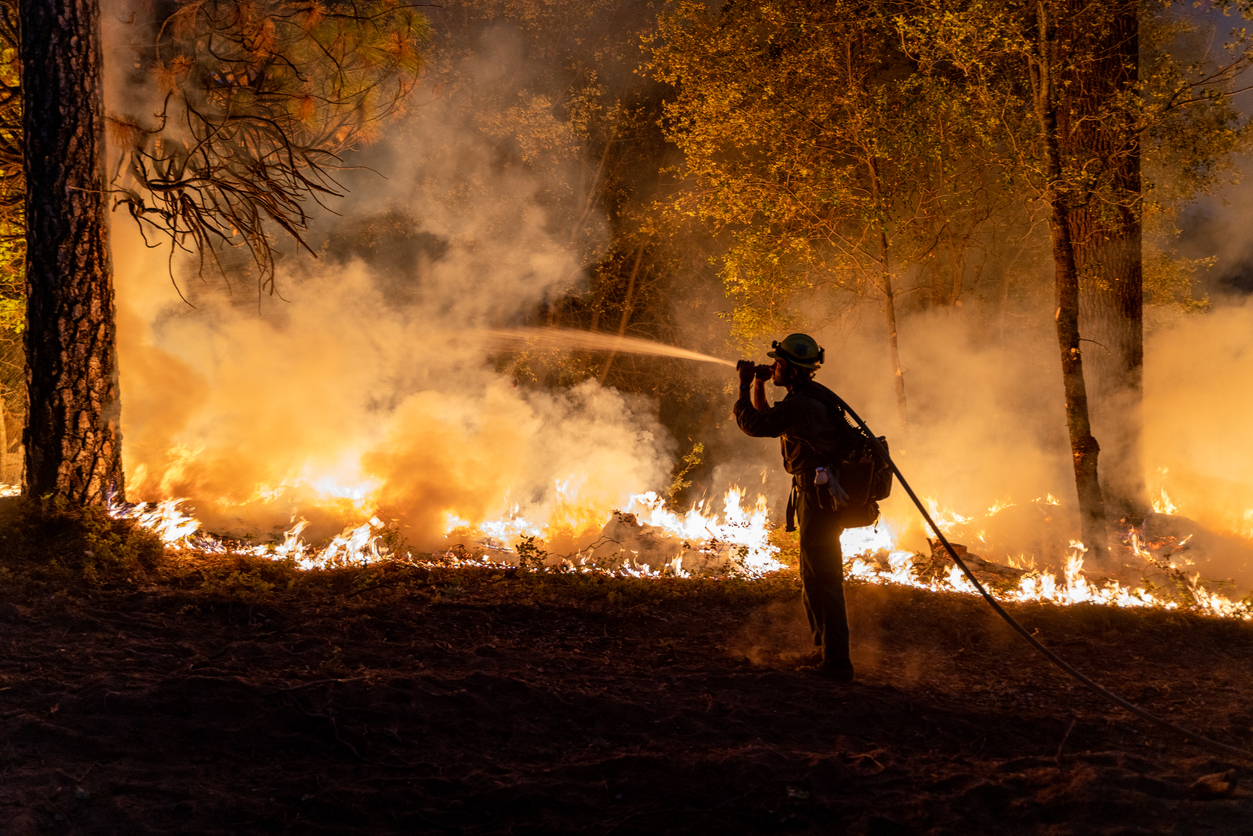
Over the past few weeks, smoky skies have spread across the United States and Canada. From the Canadian fires that pushed the Northeast and Great Lakes air quality to dangerous levels last month to the fires burning in the Northwest today, there seems to be no end in sight. The need to reduce fire risk is apparent, and we know how to do so through active forest management. Yet policy continues to slow those efforts down and that urgently needs to change.
>>>READ: America’s Wildfire Economics Are Backwards
In fact, one of the most effective ways to limit fire severity is through hazardous fuel reduction. A UC Davis study found that treatments such as prescribed burns and mechanical thinning reduced total burn area by 36 percent, prevented the loss of 4,000 buildings, and avoided almost 3 million tons of CO2 emissions.
Reducing wildfire emissions has to be part of any serious climate strategy because even one bad fire season can wipe out decades of climate progress for states.
For too long, regulations under the Clean Air Act have penalized states for smoke from prescribed fires used to reduce wildfire risk, while excusing wildfire emissions. The Clean Air Act’s exceptional events classification allows states to exclude wildfire smoke from federal air quality standards because those emissions are considered beyond their control. Ironically, smoke from the tool that could prevent much larger wildfires–prescribed burns–is not exempt. Because exceeding CAA standards and falling into nonattainment could trigger additional permitting requirements, loss of funds, or restrictions on economic development, states are perversely incentivized to avoid fuel treatment. The EPA has attempted to amend this by allowing states to apply to exclude prescribed burns, but the process is burdensome and rarely successful. Both the Wildfire Emissions Prevention Act and the FIRE Act would reform this.
For decades, the country has let critical prevention projects sit for years in the name of “environmental protection,” even as acres burn waiting to clear permitting statutes like the National Environmental Policy Act and the Endangered Species Act. These statues also leave projects subject to costly, time consuming litigation despite the Forest Service winning almost 80 percent of these cases.
The Fix our Forests Act, which passed the House last January and advanced out of the Senate Committee in October, would largely address these permitting barriers. The bill would expand opportunities for active forest management and reduce the litigation burden that delays these projects for far too long. Expediting environmental permitting reviews and allowing more projects to move forward without years of analysis through categorical exclusions would help the Forest Service to manage more acres. According to the House Natural Resources Committee, over 117 million acres of forest across the country are overgrown and at risk of fire. Tools like the Good Neighbor Authority and Shared Stewardship can help tackle that massive backlog of acreage by encouraging states, localities, and tribes to take on more management work in the forests close to home.
>>>READ: Taking Action to Reduce Wildfire Risk
More recently, wildfire prevention efforts have fallen under the Trump administration despite funding levels remaining elevated. This could be, in part, due to a 6,000-worker reduction in the U.S. Forest Service. Additionally, Congress pulled back on annual appropriations for treatments because of increased funding under the Infrastructure Investment and Jobs Act and the Inflation Reduction Act, rather than taking it as an opportunity to amplify treatment. Increasing funding for fuel treatment would pay for itself 3 times over; the same UC Davis study found that each dollar spent on prevention saves about $3.75 in wildfire damages.
We also must consider where we are building and what we are building with. Nearly a third of U.S. housing is located in the Wildland-Urban Interface, where homes and development meet undeveloped wildlands. A 2016Nature Climate Change article predicted that future increases in human exposure to wildfires would be driven largely by population growth in fire-prone areas, rather than because of more acres burned.
The recent fires in Spokane, Washington illustrate that point clearly. While the fires burned around only 10,000 acres, more than 800 structures were destroyed, and 65,000 people were evacuated.
In WUI communities, “home hardening” with fire-resistant materials should be a priority in any new builds as well as upgrades. Part of the fix is simply not to build subsidized housing in the WUI. Insurance rates should properly convey the risk and incentivize homeowners to harden their homes, thereby reducing the risks, costs, and insurance premiums. Home hardening for new builds and retrofits is already cost-competitive; a Fall 2025 report from Headwaters Economics estimates that the construction cost premium is only 2-3% compared to traditional construction.
Additionally, the designation of “fireshed management areas” under the Fix our Forest Act would expedite hazardous fuel treatments in the Wildland Urban Interface and ensure communities most at risk are prioritized.
Nationwide, over 6 million acres have burned this year, well over the 10-year average. It’s high time we begin managing our forests before they burn and remove policy barriers that stand in the way.
The views and opinions expressed are those of the author’s and do not necessarily reflect the official policy or position of C3.