It’s always difficult to make predictions, as Yogi Berra said, especially about the future. However, looking back across the history of humanity, it is safe to say that the world will need more energy in the years and decades ahead, as it has steadily used more energy year after year in the past.
Issue: R&D
How Data Centers Can Drive Energy Innovation
Necessity, the proverb says, is the mother of invention. That indicates that the reason behind most innovations is that they fill a need. Many of us have a different, more modern way to explain that same observation: free markets work. People see a need, and they innovate to fill it, often crafting a new product or service.
House Acts to Unlock America’s Geothermal Potential
Two bills recently passed by the U.S. House—H.R.5631, the Geothermal Energy Advancement Act, and H.R.1687, the CLEAN Act—take direct aim at this regulatory dysfunction. Together, they represent a consequential step toward realizing the full extent of the geothermal opportunity as the legislation now moves to the Senate for consideration.
How This Company is Using Coal Combustion Waste to Power Multiple Industries
Across the United States, billions of tons of industrial waste could hold the key to revitalizing the country’s struggling critical metals sector. PHNX Materials is unlocking that opportunity by transforming waste into high-value materials for the agriculture, semiconductor, and building materials industries.
Energy Innovation Is Worth Funding, If It’s Well Targeted
This month, C3 Solutions Action signed on to a bipartisan coalition letter calling for steady, robust federal funding for energy research, development, and demonstration. Addressed to the leadership of the House and Senate Appropriations Committees, the letter highlights the United States’ long history of energy innovation and the importance of maintaining that leadership.
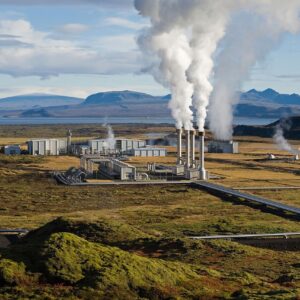
This Clean Energy Company is On Track to Build the World’s First Superhot Geothermal Energy Plant
The fallout in global energy markets from the ongoing conflict in Iran demonstrates the perils of overrelying on a single energy source like oil to meet America’s energy needs. As countries are forced to ration fuel and subsidize energy costs, sustainable alternatives like geothermal power are receiving renewed and well-deserved attention for their ability to deliver reliable, always-on power without the risks of price volatility or supply disruptions.
Energy Innovation Could Offer a Path to More Affordable Energy and Lower Emissions
Affordability has quickly overtaken climate change as the primary focus of energy policy. One reason may be that the climate policies adopted over the past decade are finally starting to bind, imposing added costs at a time of rising electricity demand and, in some parts of the country, higher power bills.
How Prize Competitions Can Help Fuel America’s AI Energy Revolution
Last November, President Donald Trump launched the Genesis Mission through an executive order (EO) that outlines 26 National Science and Technology Challenges, ranging from autonomous scientific labs to fusion energy to artificial intelligence (AI)-driven grid operations. Embedded in that order is a directive to use prize competitions to get there. This is a smart policy because prizes are a growing but still underutilized tool at the Department of Energy (DOE). Now the DOE needs to run with it.
What CERAWeek 2026 Says About Energy’s Next Chapter
The conversation at CERAWeek shifts each year. In 2026, the focus was on surging demand, disruptions to energy flows through the Strait of Hormuz, infrastructure bottlenecks, and a more pragmatic energy posture. The conference showed an industry and policymakers increasingly focused not on abstract narratives about the future of energy, but on the harder questions of security, buildout, reliability, affordability, and competitiveness.
The Onshore Wave Energy Company Turning the Tide on Clean Power
Onshore wave energy company Eco Wave Power is turning the tide on reliable, clean electricity with its patented, wave-harnessing devices that can be seamlessly integrated into coastal infrastructure. Founded in 2011, the Israeli-based company was featured in a February 2026 U.S. Department of Energy (DOE) national laboratory report on coastal structure-integrated wave energy converters (CSI-WECs), which are smart, automated devices that can be attached to onshore or nearshore structures such as breakwaters, piers, and ports.