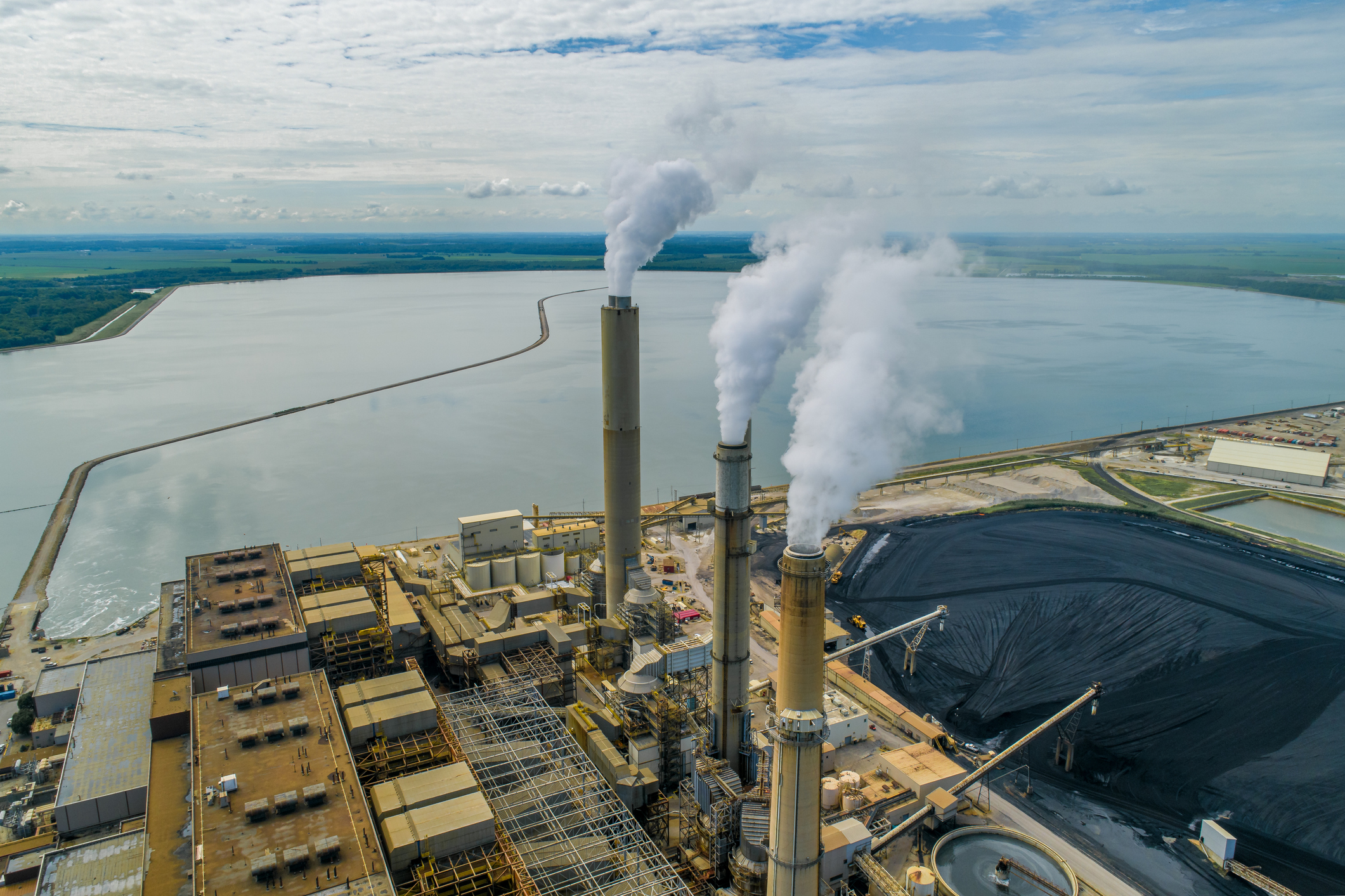
Across the United States, billions of tons of industrial waste could hold the key to revitalizing the country’s struggling critical metals sector. PHNX Materials is unlocking that opportunity by transforming waste into high-value materials for the agriculture, semiconductor, and building materials industries.
The California company has raised more than $15 million in funding to repurpose dirty industrial waste, turning valuable byproducts like silica-bearing fly ash from coal plants into building materials for the construction industry. According to PHNX Materials co-founder and CEO Krish Mehta, ash can replace up to 30 percent of cement in concrete mixes. In doing so, PHNX is helping decarbonize the cement sector, which accounts for nearly eight percent of global CO2 emissions and is one of the world’s largest sources of industrial pollution.
>>>READ: Harvest Deep-Sea Minerals to Combat China
By removing sulfur and carbon from fly ash, PHNX can turn what would otherwise be a waste byproduct of coal combustion into a low-carbon substitute for cement. Sulfur and aluminum compounds can also be extracted from coal ash and repurposed for fertilizer and other agricultural applications.
Meanwhile, critical minerals like gallium and germanium are also hidden within industrial waste streams. Both elements are essential for semiconductor and advanced technology applications. Currently, China dominates the global supply of gallium and germanium, which are key inputs for semiconductors, 5G infrastructure, advanced electronics, solar panels, and defense technologies. Developing a domestic supply of gallium, germanium, and other core semiconductor materials, such as silicon, may therefore help increase supply chain stability.
“Traditional mining extracts critical minerals while disposing of a majority of the feed. At PHNX, we’ve created a ‘solids refinery’ to extract maximum value – gallium and germanium critical for defense, and the residual sold as cement replacement material,” Krish Mehta, CEO of PHNX Materials, said about his startup.
>>>READ: Critical Minerals Policy Needs Clear Guardrails
Mehta’s startup comes at a time when the White House has been exploring alternative sources of chip-making materials, especially gallium, outside of China. Apart from controlling nearly all of the world’s gallium supply and production, Beijing has also imposed restrictions on exports of gallium and germanium, substantially lowering the amount of these minerals available for defense purposes. The curbs could create a bottleneck for America’s semiconductor sector, particularly as the U.S. ramps up domestic chip production.
To counter this rising threat, PHNX has identified over 850 industrial waste sites across the U.S. and tested over 25 to date. In April, the U.S. Department of Energy’s (DOE) Office of Critical Minerals and Energy Innovation selected PHNX as one of five companies advancing efforts to restart domestic gallium production.
“These five projects support President Trump’s commitment to strengthen America’s critical minerals supply chains,” Assistant Secretary of Energy (EERE) Audrey Robertson said in the DOE announcement. “Using novel and innovative approaches to gallium extraction, these projects demonstrate the focus on restarting domestic primary gallium recovery for the first time in almost 40 years. Technological breakthroughs foster the commercialization of cutting-edge technologies, expand the nation’s critical minerals production capacity, and reduce our reliance on foreign sources.”
By using a single waste stream to power multiple industries, American companies like PHNX Materials may help develop domestic supply chains that can hedge against supply disruptions.
The views and opinions expressed are those of the author’s and do not necessarily reflect the official policy or position of C3.