Getting climate, energy & environment news right.

Issue: Electricity & Grid Resiliency

A Consumer-First Grid Needs Competition, Not Just More Wires
Post

A Consumer-First Grid Needs Competition, Not Just More Wires

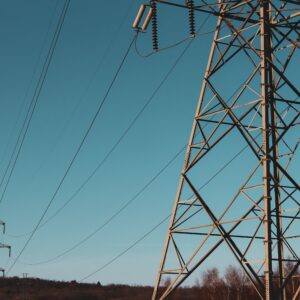
America needs more electric transmission, the high-voltage lines that carry electrons from power plants to communities nationwide. But under today’s policies, building those lines takes too long and costs too much. Without a substantial expansion in transmission capacity, the country is at risk of rising energy costs, a less reliable electric grid, and stymied global leadership in AI.

A Growing Grid Needs Market Discipline: Five Principles for Transmission Policy
Post

A Growing Grid Needs Market Discipline: Five Principles for Transmission Policy

In a rare Level 3 alert, the North American Electric Reliability Corporation (NERC) warns that hyperscale data centers are introducing volatile, hard-to-predict load swings—where gigawatts can drop off the grid in seconds—that utilities aren’t equipped to manage, creating a new reliability risk as electricity demand surges. This comes on the heels of recent Senate and House hearings on the state of the bulk power system and how to meet growing electricity demand while protecting ratepayers.

A Consumer-First Framework for Transmission Reform
Post

A Consumer-First Framework for Transmission Reform

Transmission is one of the most inefficiently regulated forms of infrastructure in the United States. Regulatory flaws reward inefficient projects, underdevelop efficient projects, and underutilize existing infrastructure. This has caused escalating transmission costs to consumers, while the gap between transmission need and infrastructure capacity widens. 

Heatmap: Data Centers Are the New Wind Farms
Post

Heatmap: Data Centers Are the New Wind Farms

Heatmap this week published a short but telling analysis of local opposition to major infrastructure, finding that data centers now face more organized pushback than wind farms in its tracking database. The piece uses that shift to illustrate a broader change in the politics of development: the backlash once associated mainly with renewable energy is...

Britain’s Windfall Tax Gamble Could Backfire
Post

Britain’s Windfall Tax Gamble Could Backfire

Britain is preparing to raise windfall taxes on electricity generators unless they agree to long-term fixed-price contracts, in what amounts to one of the government’s most aggressive efforts yet to shield consumers from gas-driven power price spikes. The logic is politically seductive: if gas prices surge and legacy generators benefit from the market structure, the...

Ember’s “Global Electricity Review 2026” Is Out
Post

Ember’s “Global Electricity Review 2026” Is Out

Ember’s new Global Electricity Review 2026 points to a genuine shift in the global power mix. In 2025, renewables supplied 33.8% of global electricity, edging past coal’s 33% share for the first time in the modern power era. Even more striking, clean generation growth slightly exceeded the rise in global electricity demand, which meant fossil...

Britain’s Renewable Energy Glut
Post

Britain’s Renewable Energy Glut

The United Kingdom has been rapidly increasing its deployment of new renewable energy capacity in recent years, to the point that it now has some to spare during peak production hours. While the U.K. gradually increases its battery storage, the government is encouraging consumers to use more electricity during certain times of the day to...

The Texas Energy Reference Design: Stress-Testing Load Growth Challenges for an AI Century
Post

The Texas Energy Reference Design: Stress-Testing Load Growth Challenges for an AI Century

Texas has long stood apart from national energy policy—its own grid, its own rules. In 2026, that independence has made it the top destination for AI-driven electricity demand. While Washington grapples with the pressures of building data centers, ensuring reliability, and controlling costs, Texas is tackling everything at once. The Electric Reliability Council of Texas (ERCOT) market is solving for speed-to-power by surmounting transmission bottlenecks, phantom load growth, buying down residential rate increases, and more.

Populism’s War on Capacity
Post

Populism’s War on Capacity

Over the past two decades, we have been trained either by politics, by media, or by endless crisis rhetoric, to think in fixed pies. When demand rises, we are told someone must be taking more than their share. The industries capable of expanding supply — engineers, industrialists, investors, technologists — are cast as villains before they break ground. In other eras, they won wars, electrified cities, doubled oil output, and built the networks on which modern abundance rests. Today, they are more likely to be hauled before a hearing than celebrated for production. The instinct to increase capacity has given way to the instinct to referee.

Why Your Energy Bill Keeps Rising
Post

Why Your Energy Bill Keeps Rising

The report from Americans For Prosperity details a 21 percent increase in electricity prices between 2020 and 2024, including a four percent increase from 2023 to 2024 alone. While fuel prices, weather, and inflation all play a role, the report argues that a major, underappreciated driver of higher bills is America’s broken energy permitting system.

Subscribe to our exclusive email designed for conservatives who care about climate.

Help us promote free market solutions for climate change.

5 Incredible Ways Economic Freedom Helps the Planet.

Sign up for our newsletter now to get the full list right in your inbox.

Thank you for signing up

Help us promote sensible solutions for both planet and prosperity.

Download Now