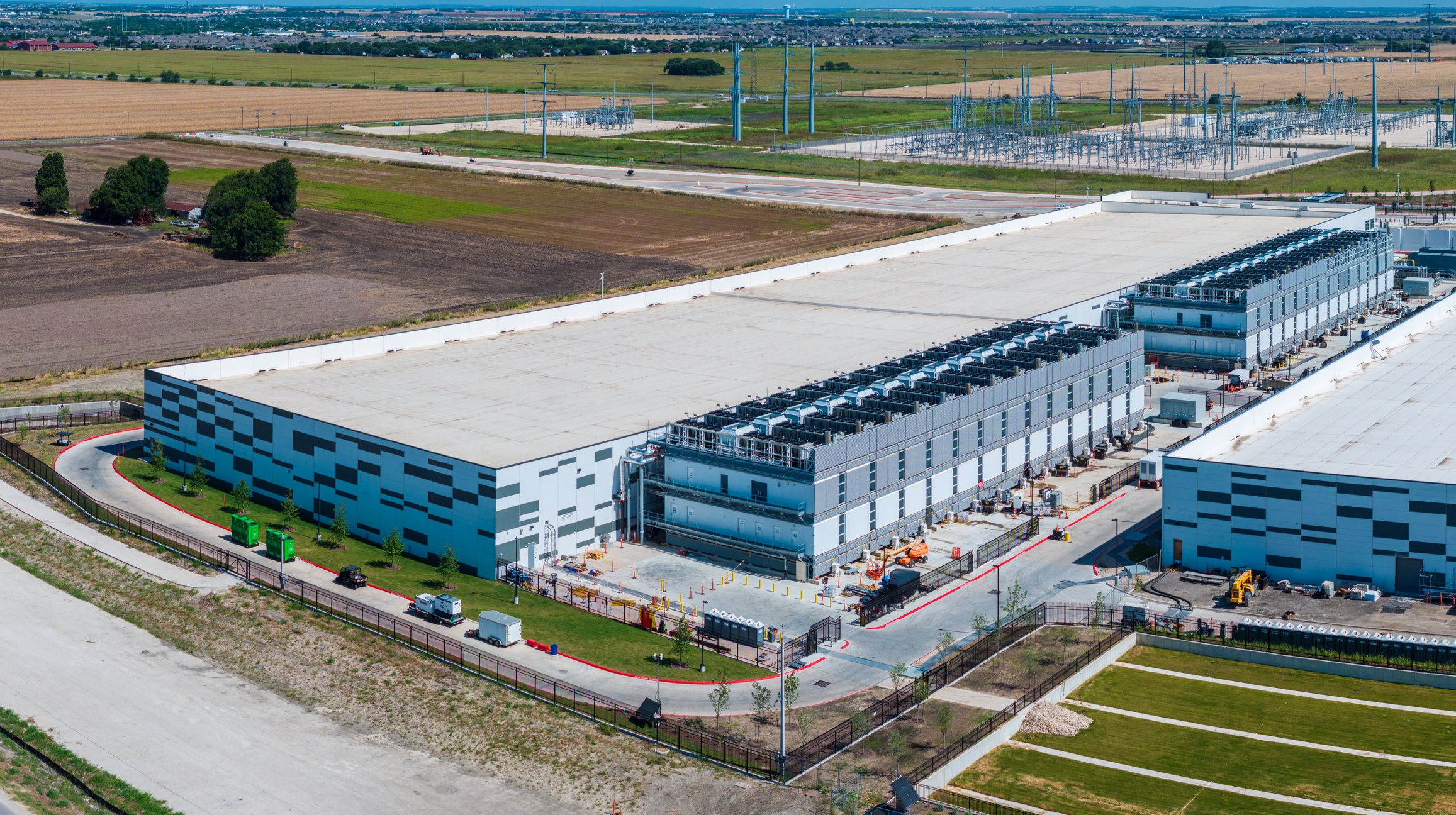
As Americans crank up their air conditioning bills in the summer months, the importance of affordable, dependable power is critical but often taken for granted. Especially today, families are more acutely aware of how much they’re paying as electricity rates have risen at a pace more than double the rate of inflation over the past year.
With demand surging, primarily driven by the data centers powering America’s AI boom, the Trump administration launched its Ratepayer Protection Pledge to shield Americans from the costs of new load growth. Since its signing in March, the pledge has grown to cover roughly 80 percent of all power delivered to U.S. homes and businesses, pulling in support from more than 200 additional utilities, developers, cooperatives, and states. The initiative has also been picked up as a Senate resolution urging federal agencies to help implement it. While the buy-in is real, the outcome will be more difficult to achieve without the regulatory reforms necessary to truly protect ratepayers.
The original premise of the Ratepayer Protection Pledge is sound in principle. Hyperscalers that need more energy should pay for the power plants and transmission lines their servers require, rather than spreading those costs across every ratepayer’s monthly bill. Original signatories, including Amazon, Google, Meta, Microsoft, and OpenAI, committed to building or buying their own generation, covering the infrastructure upgrades their projects require, and paying negotiated rates whether they use the power they request or not. Utilities already negotiate special contracts with large industrial customers and data centers, and the power they help bring online could be a flexible resource for the grid during high demand or if a weather event takes other power offline.
>>>READ: Energy Innovation Could Offer a Path to More Affordable Energy and Lower Emissions
In practice, insulating ratepayers from all the new builds will be challenging. Electricity rates are complex, and disentangling the costs AI developers should bear for generation, transmission, and distribution is an extremely difficult task that requires coordinated efforts across multiple jurisdictions. Special contracts between utilities and large customers that preemptively bind commercial and industrial players to pay for grid upgrades are rare in today’s buildout. This leaves ratepayers to foot the bill if a large customer’s demand is lower than expected or fails to materialize altogether. While federal regulators just directed regional markets to close this gap, the comprehensiveness and timeliness of regions’ responses are highly uncertain. In the near term, contracts could include real minimum-payment and exit-cost provisions, but it is likely that not all of them will.
Investor-owned utilities’ business model is also not conducive to building out energy infrastructure in an economically efficient manner. These monopolies earn a regulator-approved rate of return on new infrastructure investments they add to their rate base. They have a “spend money, make money” model. Since the beginning of 2026, utility rate increases have totaled $18.6 billion, evidence of this perverse incentive. As utilities plan $1.4 trillion in capital expenditures through 2030, there’s no utility bill relief in sight for U.S. households and businesses. When regulators approve large, rate-based investments, ratepayers foot the bill.
While spending is necessary to ensure grid reliability and meet rising demand, policy and regulation should ensure reliability at the lowest possible cost, which has been far from the case. The role, then, for federal and state policymakers is to create a system that structures the incentives to minimize those costs.
The hard work requires consumer-first reforms at the federal and state levels. Subjecting generation and transmission to more competition, expanding retail choice, improving permitting timelines, providing flexibility, integrating cost-competitive, advanced transmission technologies into grid planning, and creating entirely new infrastructure development models that operate outside of public utility commissions but are still subject to environmental and safety standards.
>>>READ: Blocking Data Centers Won’t Make Electricity Cheaper
These reforms share a common goal of reducing artificial barriers to competitive grid innovation. Meeting elevated, AI-driven electricity demand while fostering cost discipline requires policymakers to embrace a solution set that enables competition, supports the least-cost investments, and cuts unnecessary red tape that hinders energy growth.
None of this means the pledge is worthless. It’s a meaningful signal that industry recognizes the political and economic risk of shifting AI’s power needs onto ordinary families, particularly amid growing opposition to data centers. However, if lawmakers are serious about protecting ratepayers, it is incumbent on federal lawmakers, state legislatures, and public utility commissions to enact reforms that create a more dynamic, flexible system that rewards cost discipline rather than cost overruns. Doing so will reward technological innovation and drive economic competitiveness while protecting families from unnecessarily high utility bills.
The views and opinions expressed are those of the author’s and do not necessarily reflect the official policy or position of C3.