Last fall, Energy Secretary Chris Wright told the audience at Senator John Curtis’ conservative climate summit that “nuclear is going to become sexy again.” For policy wonks and proponents of modernizing outdated nuclear regulation, there may be nothing sexier than reforming ALARA.
Harvest Deep-Sea Minerals to Combat China
Harvesting from the sea floor is the most environmentally sustainable way to obtain the minerals we need. These nodules can be harvested using specialized, deep-sea vessels. Seabed nodules sit exposed on the ocean floor, allowing collection without significant disruption.
A Consumer-First Framework for Transmission Reform
Transmission is one of the most inefficiently regulated forms of infrastructure in the United States. Regulatory flaws reward inefficient projects, underdevelop efficient projects, and underutilize existing infrastructure. This has caused escalating transmission costs to consumers, while the gap between transmission need and infrastructure capacity widens.
How to Avoid Repeating the Potomac River Spill Fiasco
For five days, the equivalent of 350 Olympic-sized pools’ worth of sewage flooded into the Potomac River in a suburb of Washington, D.C. The cause? A clear failure in our permitting systems.
Can This Battery Storage Startup Overcome the Nation’s Aging Power Grid?
As summer rolls around, increasing energy demand could strain the power grid in parts of the country. With concerns over outages rising, more families are purchasing portable generators. A new alternative technology from Base Power is making waves for its next-generation whole-home battery backup system.
America’s Grid Is More Fragile Than Politicians Admit. Here’s How to Fix It.
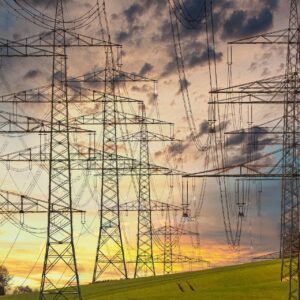
America has an infrastructure problem hiding in plain sight. Too often, when a storm rolls through, millions of homes dark. Politicians hold press conferences, utility companies apologize, and nothing fundamentally changes. The U.S. power grid is not a modern system under routine stress. It is an aging, fragile patchwork operating well past its design life, and the consequences are landing squarely on ordinary Americans and the natural environment around them.
The POWER Interview: How the Oil and Gas Industry Is Advancing Geothermal
The International Energy Agency (IEA) earlier this year reported that its analysis of recent data on geothermal power showed financing for the sector reached nearly $2.2 billion last year. The investment represents an 80% increase from the prior year, and IEA said it shows exponential growth from just $22 million of investment in 2018. Industry...
China Publishes Maps Detailing Minerals on the Ocean Floor
A research arm of the Chinese government said it had published an atlas of deep-sea mineral deposits, highlighting Beijing’s ambitions to mine the ocean floor and underscoring its disputed claims to waters that neighboring nations consider theirs. Experts say the maps, in addition to pinpointing mineral deposits found in the deep ocean, give China’s military...
Restoring Predictability to Historic Preservation Review
The National Historic Preservation Act (NHPA) was enacted in 1966 to protect America’s cultural heritage at a time when rapid development was destroying historic sites. Its core process, Section 106, requires federal agencies to consider how projects they fund, permit, or carry out affect historic and cultural resources. Though well-intentioned, nearly six decades later, Section 106 has become a source of uncertainty, delay, and rising costs for energy, transmission, and conservation projects.