Getting climate, energy & environment news right.

EPA won’t set nationwide standards for data centers
Post

EPA won’t set nationwide standards for data centers

The Trump administration is not going to set nationwide environmental requirements or recommendations for the rapidly growing data center industry, EPA Administrator Lee Zeldin said Wednesday. While there are technologies and practices that reduce air pollution and water usage, states and communities know what works best for them, Zeldin said at the POLITICO Energy Summit...

Meta Launches ‘Workforce Academy’ to Train Workers to Build Data Centers
Post

Meta Launches ‘Workforce Academy’ to Train Workers to Build Data Centers

Forget about learning to code. Meta says it’s time to pick up a wrench. The company is starting a “workforce academy” to train Americans to build its data centers as skilled trade workers become a sought-after commodity. The five-week training program, in partnership with CBRE and the Associated Builders and Contractors, is free of charge and guarantees graduates a job at...

DOE reinstates $57M American Battery grant
Post

DOE reinstates $57M American Battery grant

Last October, DOE canceled $700 million worth of battery and manufacturing projects grants, including American Battery’s grant, saying the projects either didn’t meet certain milestones, were not economically viable or would not “adequately advance the nation’s energy needs.” American Battery says it was one of “hundreds” of grants that were canceled in that process. In 2022,...

Wildfires Are Reversing Years of US Air Quality Gains, Study Finds
Post

Wildfires Are Reversing Years of US Air Quality Gains, Study Finds

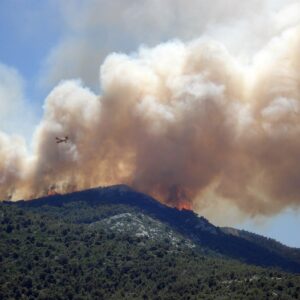
Wildfires have worsened ozone levels across the United States so much over the last decade that they have reversed around four years of progress, a new study has found.  Surface ozone levels, or smog concentrations, steadily increased from 2015 to 2024, deteriorating air quality across the Midwest and Western U.S., researchers at the University of...

3 Proposals to Reduce the Time and Cost of Nuclear Deployment
Post

3 Proposals to Reduce the Time and Cost of Nuclear Deployment

After two decades of flat demand, power consumption is surging. Grid Strategies forecasts 5.7 percent annual growth over the next five years, and the peak demand could be equivalent to 15 times New York City’s peak energy consumption.

Meanwhile, electricity prices are rising faster than inflation, and families and businesses across the country are feeling the effects. 

It’s clear we need more supply, and nuclear power can be part of the solution. It’s safe, clean, dependable, and scalable. The key question for policymakers and ratepayers alike is: Is it cost-competitive?

The Texas Energy Reference Design: Stress-Testing Load Growth Challenges for an AI Century
Post

The Texas Energy Reference Design: Stress-Testing Load Growth Challenges for an AI Century

Texas has long stood apart from national energy policy—its own grid, its own rules. In 2026, that independence has made it the top destination for AI-driven electricity demand. While Washington grapples with the pressures of building data centers, ensuring reliability, and controlling costs, Texas is tackling everything at once. The Electric Reliability Council of Texas (ERCOT) market is solving for speed-to-power by surmounting transmission bottlenecks, phantom load growth, buying down residential rate increases, and more.

The Iran War and the Long-Term Risks to Energy Affordability
Post

The Iran War and the Long-Term Risks to Energy Affordability

As the Iran war continues, oil prices keep rising. Gasoline has climbed to over $4 per gallon for the first time in four years. The ripple effects are spreading across the economy as markets that depend on affordable crude begin to absorb the disruption of roughly one-fifth of the world’s oil and liquefied natural gas that normally passes through the Strait of Hormuz. Everything from airline tickets to groceries is seeing upward pressure as the prices of jet fuel, diesel, and fertilizer all rise.

AI can lower energy bills with data centers that power themselves 
Post

AI can lower energy bills with data centers that power themselves 

Artificial intelligence may be the future, but the public isn’t convinced it’s the future they want.

Even as companies, investors, and the federal government invest heavily in this transformative technology, the American people remain skeptical. A third of Americans are concerned about AI, nearly half think AI will cause “significant job losses,” and less than half think the government will regulate AI well.

Subscribe to our exclusive email designed for conservatives who care about climate.

Help us promote free market solutions for climate change.

5 Incredible Ways Economic Freedom Helps the Planet.

Sign up for our newsletter now to get the full list right in your inbox.

Thank you for signing up

Help us promote sensible solutions for both planet and prosperity.

Download Now