"It's an ambitious timeline that will require arduous regulatory approvals and new infrastructure at airports. 'If we have all these beautiful engines with no fuel at the airports, nobody's gonna fly them,' he told Axios."

"It's an ambitious timeline that will require arduous regulatory approvals and new infrastructure at airports. 'If we have all these beautiful engines with no fuel at the airports, nobody's gonna fly them,' he told Axios."
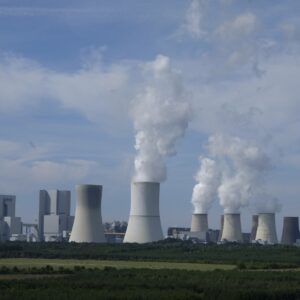
"Plant Vogtle’s Units 3 and 4 are the first nuclear reactors to be constructed in the United States in more than three decades, and it’s no wonder. Overregulation and the absurd cost – both time-wise and financially – of the NRC permitting process are stopping clean, safe nuclear energy in its tracks. We’re allowing outdated fears and bureaucratic inertia dictate our energy future, while our energy security and climate goals suffer."
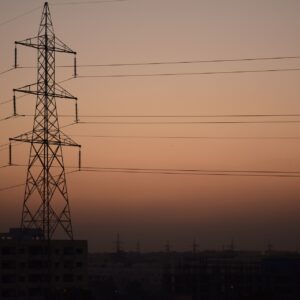
"Critics, however, warn that the PUC is pushing the state toward a market design rooted in the past instead of embracing renewable energy and accelerating efforts to cut electricity use when demand is highest. Some also say the proposal would raise power costs for customers. And powerful legislators question whether the PUC’s plan will offer the reliability its supporters promise."
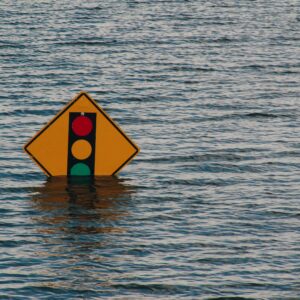
"'Most recent storm systems don’t hold a candle to the kinds of extreme prolonged storms of the last century,' said Daniel Swain, a climate scientist at UCLA. 'They do, however, point in the direction of the episodes of hydro-climate we can expect to see more of due to global warming.'"
"Returning to R&D expensing—by which investments are written off immediately—makes sense. Virtually every single country around the world allows companies to deduct the full cost of R&D—and many subsidize it heavily. China, among other countries, does so using a 'super-deduction,' allowing companies to deduct more than 100% of their R&D costs. In China, companies may deduct 175% of R&D expenses. The U.S. is the outlier; it punishes investment by not letting companies deduct even 100% of R&D costs."
"'It used to take five years to build something like the Hoover Dam,' he said. 'Now, it takes us, at least for any kind of sizable project today, at least four years for the permitting process, not the construction. And generally, it will take us nine months to construct.'"
"Touted as the first facility of its kind in the US, datacenters at the campus will be directly connected to the 2.5 gigawatt Susquehanna power plant 'without intermediation by legacy electric transmission and distribution utilities,' which the company claims will allow it to offer the most attractive energy rates in the country."
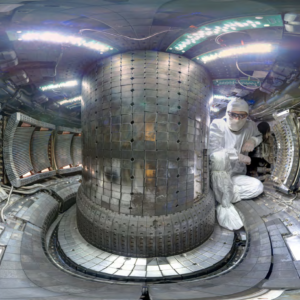
"We can strengthen our energy grid and produce more power than ever before. But we can only accomplish this if Congress takes action to provide American researchers and developers a regulatory framework that makes room for fusion energy."

"For Doosan, the investment is expected to provide an opportunity to pursue diverse industrial applications of the Xe-100 technology, including the use of steam heat from the reactor to produce hydrogen or for other industries."
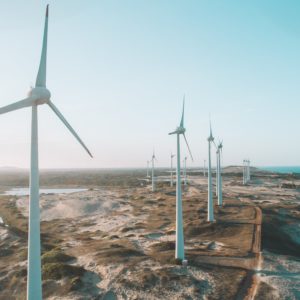
"REGEN Fiber has also begun recycling scrap materials from manufacturing of the blades. This scrap is processed into fibers that can be used for asphalt and composite products, the company said."