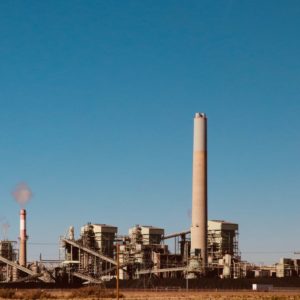
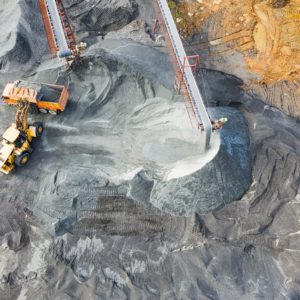
"At the end of November last year, uranium prices reached more than $80 per pound (lb) for the first time in more than 15 years. Commenting on the attractive market conditions, Mark Chalmers, CEO of Energy Fuels, said: 'Due to the substantial increase in uranium prices, US Government support for nuclear energy and nuclear fuel, and a global focus on reducing carbon emissions, Energy Fuels is resuming large-scale uranium production.'"
Articles from Around the Web
These startups are teaming up to decarbonize cement and concrete
"Producing cement and concrete contributes around 8 percent of human-caused carbon dioxide emissions every year. About 40 percent of those emissions comes from fiery cement kilns that can get hotter than molten lava. The other 60 percent is the result of a chemical process. When limestone is heated to make cement, it breaks down into its constituent parts of calcium oxide and CO2, releasing planet-warming gases into the atmosphere."
Benin entrepreneur harnesses biowaste to power homes, farms
"In a world grappling with climate change and the search for sustainable energy solutions, Enock Gnaga hopes his company Benin Biogas's complete waste-to-energy cycle will usher in a renewed dedication to environmental stewardship for his country."
The High Cost of the Trump-Biden Tariffs
"The high cost of protectionism has been long documented. Surveying research on protections for various U.S. industries from 1950 through 1990, the Cato Institute’s Scott Lincicome found that the average annual cost to American consumers per job saved during those four decades was $620,000 (in 2017 dollars). Moving forward a few decades, Peterson Institute economists Gary Clyde Hufbauer and Sean Lowry estimate the price tag for each job saved by President Obama’s tire tariffs at $926,500."
The Rare Earths Mine That Won’t Need a Single Shovel
"However, Rainbow is now working with K-Tech, a Lakeland, Fla.-based chemical technology firm, on a novel approach to processing the rare earths further into more valuable rare-earth oxides. It is testing out a faster, more environmentally friendly way, known as continuous-ion chromatography, which has been used in photography. Bennett hopes to start producing rare-earth oxides with K-Tech on a trial basis by the end of March."
These Startups Are Helping Carbon Dioxide Find a New Life
"Calgary-based CleanO2 transforms CO2 captured from building heating boilers into feedstock to make soap. Newlight Technologies, a biotechnology startup based in California, takes carbon pulled directly from the air and turns it into biodegradable plastics. Germany’s Covestro AG, one of the world’s largest polymer manufacturers, is also switching some of its fossil fuel-based feedstocks to carbon-derived materials for everything ranging from car shells to medical devices and stadium roofs."
This startup is removing carbon from the air — and here’s why JetBlue is backing it
"Both water and captured carbon can be used to make sustainable aviation fuel. That was particularly attractive to investor JetBlue Ventures, the venture capital arm of the airline, which invests in companies attempting to change the travel industry."
A new venture fund in Seattle aims to accelerate adoption of climate technologies that slash carbon
"Eidelson emphasizes that while Stepchange is driven by what he sees as a moral imperative — working as fast and aggressively as possible to slash carbon from every sector of the economy — he also expects it to succeed financially."
What China’s Ban on Rare Earths Processing Technology Exports Means
"The rollout of major export restrictions for graphite, gallium, germanium, rare earth extraction, and separation technologies in less than one year should be a powerful signal to U.S. policymakers that although they are late to the critical minerals game, there is a significant need to both build domestic capabilities and leverage international cooperation to facilitate rapid sourcing and developing of processing capacity."
America Has Plenty of Natural Gas. So Why Is New England Left Out in the Cold?
"The tankers of cheap gas loaded along the Gulf Coast aren’t allowed to deliver to Everett or anywhere else in the U.S. due to the Jones Act, a 1920 law meant to preserve the domestic shipbuilding industry that restricts domestic shipping routes to U.S.-built and American-crewed vessels."