Getting climate, energy & environment news right.

Conservatives have been vocal about our climate for years. Those voices won’t be ignored any longer.

[searchandfilter id="17558"]

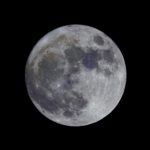
A memo released by the Trump administration on Tuesday detailed a goal of having a nuclear reactor on the moon’s surface by 2030, a move that furthers the United States’ quest for supremacy in space over China and Russia.

In the six-page document, the White House Office of Science and Technology Policy wrote that incorporating nuclear energy in space will be essential to advancing U.S. efforts in “space exploration, commerce, and defense applications.”

Read more in Fox News here.

Chinese officials have held initial talks with providers of equipment to make solar panels as they consider limiting exports of the most advanced technology to the United States, said five people with knowledge of the consultations.

Such a clampdown would risk investments by U.S. firms and set back a race for ‌space-based computing, as China, estimated to make more than 80% of the world’s solar panel components, is also home to the top 10 suppliers of equipment to make solar ‌cells.

Read more in Reuters here.

GlobalData’s latest report, ‘Steam and Gas Turbines Market Size, Share and Trends Analysis by Technology, Installed Capacity, Generation, Key Players and Forecast to 2030‘, offers comprehensive information and understanding of the global steam and gas turbines market. The report analyses the steam and gas turbine market value and capacity for the historical (2021–2025) and forecast (2026–2030) periods, as well as country-wise drivers and restraints affecting the market.

The report also provides the global steam and gas turbine market share for 2024 and major upcoming projects for each country. The analysis is based on GlobalData’s proprietary databases, as well as primary and secondary research, and in-house expertise. The global steam and gas turbines market is poised for substantial growth, driven by rising demand for efficient energy solutions, stringent environmental regulations, and the transition toward cleaner energy sources. The market is forecast to reach $23.4bn by 2030.

Read more in Power Technology here.

For five days, the equivalent of 350 Olympic-sized pools’ worth of sewage flooded into the Potomac River in a suburb of Washington, D.C. The cause? A clear failure in our permitting systems.

The economy or the climate? Why not both?

Subscribe for ideas that support the environment and the people. 

Many Americans are all too familiar with the federal government’s bureaucratic nature. But red tape extends farther than minor nuisances. As the Potomac River fiasco shows, government underresponsiveness and overregulation can produce a toxic—literally—mix. 

An interceptor pipe along the river ruptured on January 19, causing the river’s concentration of dangerous E. coli i bacteria to skyrocket by almost 300,000 percent. 

In 2018, when the District of Columbia Water and Sewer Authority (D.C. Water) conducted a routine pipe inspection along the riverbank, it immediately sounded the alarm: inspectors noticed the pipe’s reinforcements were eroding, very close to the site of the eventual pipe rupture. When D.C. Water alerted the U.S. National Park Service (NPS) about the situation and the need for urgent remedies, the National Park Service began a lengthy, years-long environmental review that, at the time of the pipe rupture, nearly eight years after finding pipe erosion, was still ongoing. 

The NPS’s concern was with mitigating the impact of repairs on select plants and animals, including a species of wildflower. And, in order to fix the pipe, hundreds of trees needed to be cut down.

Ironically, the NPS’s sclerotic pace and a permitting process that failed to balance the risks of delay resulted in environmental disaster. The prospect of even minor damage to a species of wildflowers, trees, and bats ultimately endangered the safety and public health of millions of humans who live near the Potomac River, whose tributaries are the D.C. area’s primary water source. It also likely harmed countless aquatic species by subjecting them to concentrated bacterial exposure. Long-term impacts remain unknown. 

>>>READ: How The SPEED Act Charts a Path Forward for Permitting

Recent media reporting, if accurate, casts the NPS in an even harsher light. D.C. Water reportedly had a plan to ensure the protection of the bats and wildflowers that were the focus of NPS’s concern. It also committed to replanting every tree it cut down as part of the proposed repairs. The environmental review requirements, however, continued at its laggard place, preventing permits for the repairs from being issued. National Park Service spokeswoman Christiana Hanson acknowledged the process was lengthy, but blamed revisions to D.C. Water’s repair plans that forced the agency to restart its environmental assessment each time.

Much of the permitting conversation focuses on how delays slow the construction of new projects and hold back industry. According to C3 Solutions, building a new wind or geothermal project can take seven to ten years.

While many environmental statues contribute to lengthy processes, including the Endangered Species Act, the Clean Water Act, and the National Historic Preservation Act, the National Environmental Protection Act (NEPA) is at the core of this issue. This law mandates that the federal government consider environmental factors on par with other factors in decisions concerning permits, land management, and construction.  

These reviews often weigh environmental factors far out of proportion to the needs of affected Americans, as the Potomac sewage spill highlights. 

For eight years, D.C. Water desperately waited for permits to be awarded that would allow it to conduct the relatively simple repairs on less than a mile of pipe. 

>>>READ: Policy Inaction Threatens the West’s Energy and Water Supplies

They never came, and the ticking time bomb went off. Eventually, the pipe burst on January 19. For six days, sewage spilled into the Potomac. Not until January 24 did the sewage get redirected into an empty canal. And not until March 14 did the repairs to the interceptor get completed. 

The lesson from the Potomac spill is straightforward. A permitting process that does not account for the risks of delay can end up undermining the very environmental and public health goals it is meant to protect. With initial cleanup efforts taking months, there is still work to be done. Downstream of the spill, unsafe levels of E. coli are still being reported, and the water is unsafe to swim in. 

Around America, many damaged pipes, walls and critical infrastructure have potentially been detected, but environmental reviews may similarly be impeding needed repairs. Millions of Americans are potentially in danger of bursts and collapses that are completely preventable. 

Prevention is the best medicine. However, environmental review and permitting wait times block progress and invite failure. An ounce of prevention is worth a pound of cure, as the saying goes. 

Water contamination is a serious public health risk. Though the Potomac spill is a concerning, even tragic, lesson, it can and should be used for good. It can serve as a catalyst for policy change that reforms bureaucratic, burdensome permitting policies.  The answer is to make environmental reviews more responsive. Comprehensive permitting reform bills already on the table—such as the SPEED Act, the PERMIT Act, and the ePermit Act—offer a path forward by streamlining reviews, reducing duplication, and improving coordination across agencies.

Permitting delays are, like the bystander effect, harming the public without any risk of accountability. Policymakers have a choice between stagnation and innovation. America should step up to protect our resources from self-strangulation.

 Inertia Enterprises, the commercial fusion energy company, today announced a landmark strategic partnership with Lawrence Livermore National Laboratory (LLNL), establishing one of the largest private sector-led partnerships in the history of the U.S. national lab system.

On the heels of its $450 million funding round, the collaboration with LLNL expands on the robust research and development capabilities and strong capital position Inertia has established and accelerates the company’s path towards commercializing fusion energy. To date, LLNL is home to the only facility in the world to successfully demonstrate fusion energy gain.

Read more in Globe Newswire here.

Agriculture may be the world’s oldest industry, but at Syngenta, it is being reshaped by some of the most advanced technologies available today. As Chief Information and Digital Officer, Feroz Sheikh leads efforts to integrate data, artificial intelligence and digital platforms into how food is grown and how farmers make decisions.

“Syngenta is an agriculture inputs provider,” Sheikh explained. “We make the crop protection products that farmers use on their fields, and we develop seeds for crops like corn, soybeans and tomatoes.” Operating in more than 100 countries with roughly 60,000 employees, Syngenta Group reported approximately $28.5 billion in sales in 2025. This scale increases Syngenta’s global reach and influences highly localized farming realities.

Read more in Forbes here.

The Clean Air Act (CAA) is a critical environmental law designed to protect Americans from harmful air pollution. Along with private-sector innovation, the law has helped to improve air quality, boosting public and environmental health and overall quality of life. While still well-intentioned, the law has failed to keep pace with innovation, resulting in regulations in which the economic costs can exceed the marginal environmental benefits. With respect to addressing America’s wildfire crisis, the CAA can ironically penalize states for conducting prescribed burns, which are among the most effective tools for preventing catastrophic wildfires and the harmful air pollution they produce. 

The economy or the climate? Why not both?

Subscribe for ideas that support the environment and the people. 

This week, the House will vote on whether to maintain the status quo or amend the law to reflect today’s wildfire realities. Ahead of what’s expected to be a severe wildfire season, this is critically important.

Congressman Gabe Evans’ (R-CO) Fire Improvement and Reforming Exceptional Events (FIRE) Act would ensure states aren’t penalized in their air quality standards for carrying out prescribed burns to protect their communities from wildfires. This matters because of how federal air quality standards are structured.

The National Ambient Air Quality Standards (NAAQS) are EPA-set limits on the level of certain pollutants in the air. There are six main types of pollutants, and states that exceed their limits face “nonattainment” status, triggering a burdensome, multiyear process that adds additional air quality regulations. 

>>>READ: Policy Inaction Threatens the West’s Energy and Water Supplies

States can qualify for CAA waivers under the exceptional events rule, which excludes pollution from wildfires, high-wind dust storms, and other naturally occurring, non-preventable events from counting towards states’ pollution limits. Because prescribed burns don’t fall into those categories, they often count against states. 

While the EPA amended this rule in 2016 to allow prescribed burns to qualify, it has failed in practice. In the past decade, only one prescribed fire has qualified for this exemption. The FIRE Act would directly amend the Clean Air Act to ensure that actions that mitigate wildfire risk are counted the same way exceptional events are.

Without this change, states risk nonattainment status for simply managing their forests and land better. That designation carries real consequences for local and state economies: new or expanding businesses face additional restrictions, tougher permitting, and are required to install the most stringent available pollution controls and offset their emissions by securing pollution reductions from other sources in their vicinity. Instead of complying with these costly, heightened regulations, economic development would likely pivot to states without nonattainment status.

>>>READ: Pray for Snow, Plan for Fire

Recent research shows that wildfires in the U.S. and Canada are reversing decades of progress towards clean air and are emitting harmful pollutants. PM 2.5 is the primary pollutant of concern emitted by smoke (from both prescribed burns and wildfires). However, Forest Service data from the Western US shows that prescribed burns produce roughly one-tenth of the PM 2.5 (one of the six pollutants under the NAAQS) that wildfires do. Another study found that emissions from the largest wildfire in California in 2015, the Rough Fire, could have been reduced by 20 percent had prescribed burns been carried out. Prescribed burns are not only a critical tool for preventing wildfires, but they also reduce the very pollution that the CAA is trying to control.

With Western states heading into what is expected to be another severe fire season due to historic widespread droughts, policies like the FIRE Act can make all the difference in saving lives and communities, as well as protecting the environment. Forest managers need certainty that taking proactive measures today to reduce wildfire risk will not trigger regulatory penalties in the future. This bill is commonsense policy that would improve long-term air quality and protect communities and the environment from wildfires.

Today, U.S. Secretary of Agriculture Brooke L. Rollins announced the U.S. Department of Agriculture (USDA) has finalized a rule modernizing the National Environmental Policy Act (NEPA) regulations. This Final Rule adopts the changes introduced in the Interim Final Rule published on July 3, 2025, which consolidated seven agency-specific NEPA regulations into a single, department wide framework, reducing the overall volume of regulations by 66 percent. This major action is also a linchpin in Secretary Rollins’ broader Deregulatory Agenda for U.S. Agriculture and Consumers (PDF, 5.1 MB).

“Since last July, agencies at USDA have shown they can reduce environmental review timelines by up to 80%. These faster, more efficient reviews are saving the Department millions in taxpayer dollars,” said Secretary Rollins. “Those savings benefit the American people, and quicker reviews mean the loans, critical infrastructure, and forest health projects our farmers, ranchers, and rural communities depend on can move forward sooner. USDA is proud to help advance President Trump’s vision of a government that serves its citizens, beginning with cutting unnecessary bureaucratic overreach.”

Read more from the US Department of Agriculture here.

On April 7, Anthropic announced Project Glasswing, a coalition of 12 major technology companies marshaling a new frontier artificial intelligence (AI) model to find and fix critical software vulnerabilities before attackers can exploit them. While the announcement is framed around technology infrastructure broadly, the implications for the power sector are immediate and serious. Partner posts from Amazon Web Services (AWS)CiscoCrowdStrikeMicrosoftPalo Alto Networks, and the Linux Foundation reinforce the urgency—and offer concrete detail on what has changed. Here’s what energy leaders should take away and what to do about it.

Anthropic’s unreleased Claude Mythos Preview model has already discovered thousands of previously unknown zero-day vulnerabilities across every major operating system and browser. One flaw it found had survived 27 years in OpenBSD, a system widely used to run firewalls and critical infrastructure. Another sat undetected in FFmpeg code that automated tools had tested five million times. The model also chained together multiple Linux kernel vulnerabilities to escalate from ordinary user access to full machine control, exactly the kind of attack path that could compromise a utility’s supervisory control and data acquisition (SCADA), distributed control system (DCS), or energy management system (EMS) environments.

Read more in Power Magazine here.

  • The U.S. Department of Energy outlined a plan to increase defense spending by 21% while cutting non-defense spending by 16% in a congressional budget justification released last week in support of President Donald Trump’s proposed budget for fiscal year 2027.
  • The administration is asking Congress to increase DOE’s total discretionary budget by nearly 10% to $53.9 billion. Much of that increase would go to the National Nuclear Security Administration to develop “new warheads” and “next-generation reactor technology for future naval systems,” among other military applications, according to the White House. Since it was created in 2000, the NNSA has accounted for a large portion of DOE’s budget.

Read more in Utility Dive here.

Subscribe to our exclusive email designed for conservatives who care about climate.

Help us promote free market solutions for climate change.

5 Incredible Ways Economic Freedom Helps the Planet.

Sign up for our newsletter now to get the full list right in your inbox.

Thank you for signing up

Help us promote sensible solutions for both planet and prosperity.

Download Now