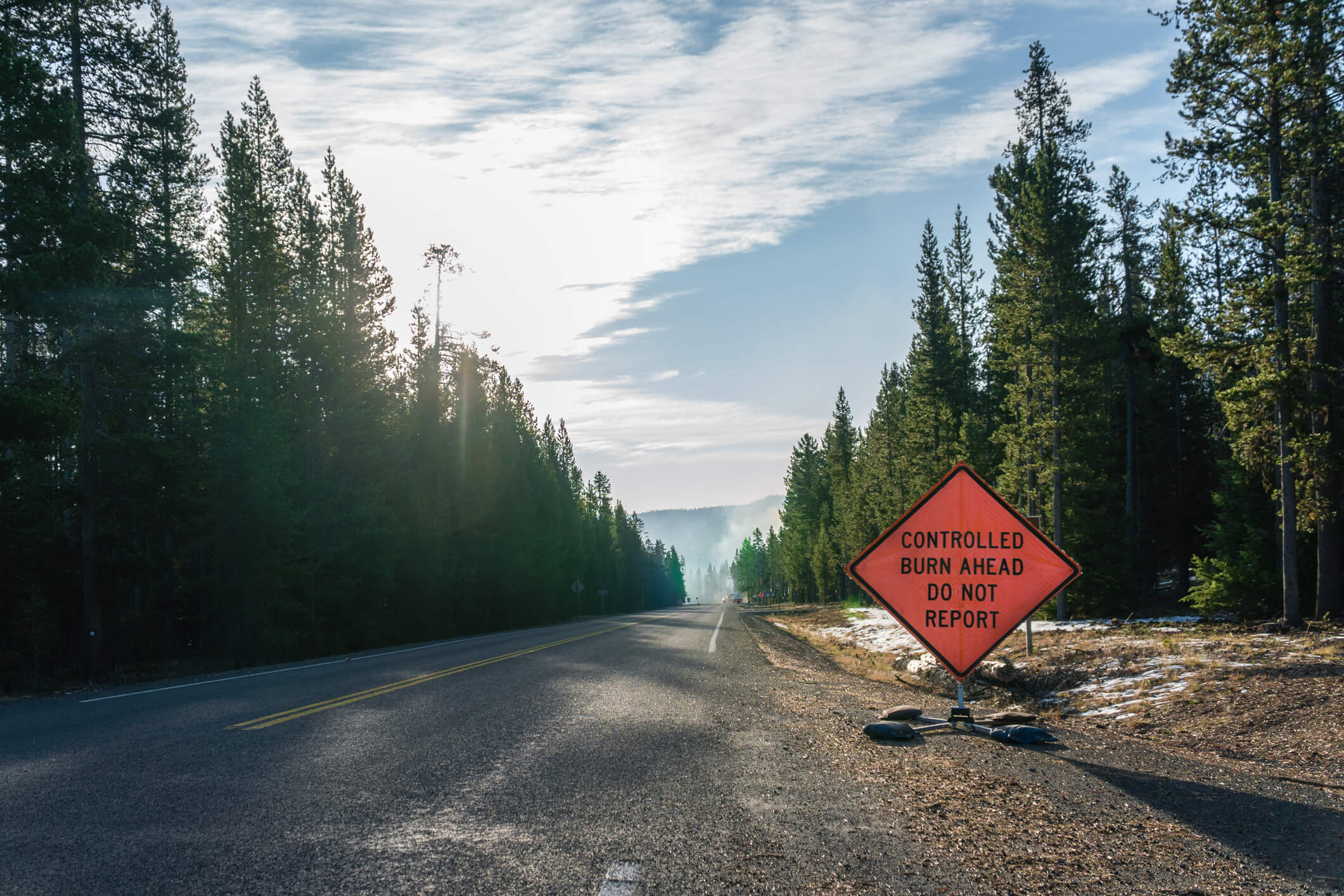
The Clean Air Act (CAA) is a critical environmental law designed to protect Americans from harmful air pollution. Along with private-sector innovation, the law has helped to improve air quality, boosting public and environmental health and overall quality of life. While still well-intentioned, the law has failed to keep pace with innovation, resulting in regulations in which the economic costs can exceed the marginal environmental benefits. With respect to addressing America’s wildfire crisis, the CAA can ironically penalize states for conducting prescribed burns, which are among the most effective tools for preventing catastrophic wildfires and the harmful air pollution they produce.
This week, the House will vote on whether to maintain the status quo or amend the law to reflect today’s wildfire realities. Ahead of what’s expected to be a severe wildfire season, this is critically important.
Congressman Gabe Evans’ (R-CO) Fire Improvement and Reforming Exceptional Events (FIRE) Act would ensure states aren’t penalized in their air quality standards for carrying out prescribed burns to protect their communities from wildfires. This matters because of how federal air quality standards are structured.
The National Ambient Air Quality Standards (NAAQS) are EPA-set limits on the level of certain pollutants in the air. There are six main types of pollutants, and states that exceed their limits face “nonattainment” status, triggering a burdensome, multiyear process that adds additional air quality regulations.
>>>READ: Policy Inaction Threatens the West’s Energy and Water Supplies
States can qualify for CAA waivers under the exceptional events rule, which excludes pollution from wildfires, high-wind dust storms, and other naturally occurring, non-preventable events from counting towards states’ pollution limits. Because prescribed burns don’t fall into those categories, they often count against states.
While the EPA amended this rule in 2016 to allow prescribed burns to qualify, it has failed in practice. In the past decade, only one prescribed fire has qualified for this exemption. The FIRE Act would directly amend the Clean Air Act to ensure that actions that mitigate wildfire risk are counted the same way exceptional events are.
Without this change, states risk nonattainment status for simply managing their forests and land better. That designation carries real consequences for local and state economies: new or expanding businesses face additional restrictions, tougher permitting, and are required to install the most stringent available pollution controls and offset their emissions by securing pollution reductions from other sources in their vicinity. Instead of complying with these costly, heightened regulations, economic development would likely pivot to states without nonattainment status.
>>>READ: Pray for Snow, Plan for Fire
Recent research shows that wildfires in the U.S. and Canada are reversing decades of progress towards clean air and are emitting harmful pollutants. PM 2.5 is the primary pollutant of concern emitted by smoke (from both prescribed burns and wildfires). However, Forest Service data from the Western US shows that prescribed burns produce roughly one-tenth of the PM 2.5 (one of the six pollutants under the NAAQS) that wildfires do. Another study found that emissions from the largest wildfire in California in 2015, the Rough Fire, could have been reduced by 20 percent had prescribed burns been carried out. Prescribed burns are not only a critical tool for preventing wildfires, but they also reduce the very pollution that the CAA is trying to control.
With Western states heading into what is expected to be another severe fire season due to historic widespread droughts, policies like the FIRE Act can make all the difference in saving lives and communities, as well as protecting the environment. Forest managers need certainty that taking proactive measures today to reduce wildfire risk will not trigger regulatory penalties in the future. This bill is commonsense policy that would improve long-term air quality and protect communities and the environment from wildfires.
The views and opinions expressed are those of the author’s and do not necessarily reflect the official policy or position of C3.