Getting climate, energy & environment news right.

Conservatives have been vocal about our climate for years. Those voices won’t be ignored any longer.

[searchandfilter id="17558"]

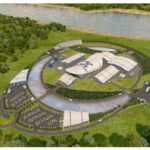
U.S. Energy Secretary Chris Wright says the Palisades nuclear power plant in Van Buren County will help power data centers while bringing down utility rates when it reopens later this year.

Wright discussed the plant during a media availability Monday in Lansing after an event with U.S. Rep. Tom Barrett, R-Charlotte, which he said was largely focused on affordability.

While some environmental groups oppose the Palisades facility reopening, Wright said the United States must grow the capacity of its power grid before decommissioning facilities.

Read more in WKAR News here.

The U.S. Strategic Petroleum Reserve has fallen to the lowest level in more than 40 years as emergency stocks are released to help ease the supply disruption triggered by the Iran war. 

The SPR stood at 340.3 million barrels as of June 12, the lowest level since the summer of 1983, according to data released Monday by the Department of Energy. The reserve fell nearly 9 million barrels week over week.

Read more in CNBC here.

Switch Bioworks is moving its engineered microbial fertilizer into U.S. field trials, giving the company a practical test for technology designed to reduce dependence on conventional nitrogen fertilizer.

The San Carlos, California-based biotechnology company has received authorization from the U.S. Department of Agriculture and the U.S. Environmental Protection Agency to begin advanced research and development field trials across multiple agricultural sites in the U.S. Midwest.

The trials will focus on corn, the largest U.S. crop by acreage and one of the most nitrogen-intensive parts of American agriculture. For growers, corn production is closely tied to fertilizer availability, pricing, and timing, making it a key market for any alternative nitrogen product.

Read more in E+E Leader here.

New coal-fired generation has been effectively off the table in the U.S. for more than a decade. The TerraSpark Energy Campus is testing whether that’s still true. The DOE’s selection of the Grant County, West Virginia, project for up to $18.5 million in development funding is a notable signal that surging electricity demand—driven by data centers, manufacturing, and electrification—is forcing a fresh look at baseload coal.

The award will support front-end engineering and design (FEED), permitting work, and early technical studies for the greenfield facility, which would be sited near the existing Mt. Storm energy complex. Combined with $21.5 million in non-federal cost share from the developer, the scoping and design phase carries a total value of roughly $40 million. Project developer TerraSpark—legally TerraPurus Inc., doing business as TerraSpark Inc.—announced the award on June 4.

Read more in Power Magazine here.

Necessity, the proverb says, is the mother of invention. That indicates that the reason behind most innovations is that they fill a need. Many of us have a different, more modern way to explain that same observation: free markets work. People see a need, and they innovate to fill it, often crafting a new product or service.

The economy or the climate? Why not both?

Subscribe for ideas that support the environment and the people. 

The most obvious example of this is, even now, helping to insulate Americans from higher energy prices. Yes, the price per gallon of fuel has jumped since February, but domestic price increases pale in comparison to the jump in Asia and Europe. That’s because entrepreneurs in the U.S. developed fracking to release and then recover tight oil and natural gas from shale formations.

The United States had been a net importer of petroleum products for decades when Texas oilman George P. Mitchell decided to experiment with fracking. He knew there were fossil fuels available in shale formations, but it took him many years of dogged experimentation to craft a process to extract those fuels.

Mitchell’s work paid off. “The wells began producing far more gas than ever before, and the costs dropped low enough to make shale gas drilling not just feasible, but profitable,” Authentic Texas magazine wrote. “The energy industry took notice. What had once been considered an impossible dream became a full-scale energy revolution.”

Keep in mind that this innovation was driven by necessity. By the late 1990s, other experts were predicting that the U.S. and the world had passed “peak oil” and would forever be energy deficient. Even fracking couldn’t save us, these experts insisted. “If we step back and acknowledge that the shale oil phenomenon will be over in a couple of years and that oil production is dropping in the rest of the world, then we have to expect that the remainder of the peak oil story will play out shortly,” retired CIA energy analyst Tom Whipple wrote in 2014. We are still awaiting that crash, more than a decade later.

>>>READ: AI can lower energy bills with data centers that power themselves

“As is well known, economic development can have major reactions and feedbacks,” Whipple added, having failed to take into account either the reaction to or feedback from fracking, which took the U.S. from being a net importer to a net exporter of hydrocarbons. Even with the oil we still need to import, three-quarters comes from the Western Hemisphere (principally Canada and Mexico), with less than 15% sourced from Saudi Arabia and Iraq.

The innovations that will shape the 21st century are coming from data centers.

Yes, it is fair to say these centers have become less popular as they’ve become more widespread. But because there are so many, and because they need so much energy to operate, datacenters are driving innovations that will improve energy efficiency. One way is through experiments with new building materials. 

“We see data centers as really important customers for entrepreneurs to commercialize technologies that we’ve been working on for a long time,” Dawn Lippert, the CEO of the non-profit Elemental Impact, told Axios recently. The company’s innovations include advanced cooling, energy storage, and low-carbon building materials.

Elemental will invest up to $5 million over the next two years to test technologies. “This initiative is coming at the most perfect time,” industry analyst Ryan Panchadsaram said, “because the priorities they have are literally the same priorities that you’re hearing from communities.”

At the same time that data centers are reducing their energy use, they are also preparing to use less water. Google recently announced plans to return more water to local watersheds than its data centers consume by 2030. It will also attempt to use reclaimed wastewater for cooling, and it will disclose each year how much water its facilities use.

>>>READ: Blocking Data Centers Won’t Make Electricity Cheaper

Expect more breakthroughs over time. 

Perhaps new data centers could be constructed with solar panels on their roofs? Doesn’t seem much of a technology challenge but it’s yet to catch on. Doing so would have dual benefit of insulating the roof from direct sunlight while also generating electricity that could be used to power and cool the computer components within. It won’t be enough to power the data center, but why not leverage every square inch of that roof? 

Or perhaps data centers could use geothermal technology to cool the facilities, such as the process used to air condition the visitor center at Brooklyn’s Botanical Garden. 

The one thing we can be sure about is that as needs arise, the free market will deliver innovations that solve problems.

The surge in AI and data centers risks driving up electricity demand faster than we can deploy the power lines needed to carry it. The high-voltage transmission that this expansion, and economic growth more broadly, relies on is slow and expensive to develop, and stuck in an outdated regulatory system that often hands the work to local utilities without competition. New analysis from the R Street Institute shows what this costs us, finding that, when transmission projects are open to competitive bidding, they get built cheaper and faster.

The economy or the climate? Why not both?

Subscribe for ideas that support the environment and the people. 

Over a decade ago, the Federal Energy Regulatory Commission (FERC) mandated competitive processes for regional transmission projects that cross multiple utilities’ service territories. But it exempted lines built entirely inside one utility’s own territory, on the logic that urgent repairs and upgrades shouldn’t have to wait for a bidding process.  This exemption, however, has given utilities a loophole to avoid competition for high-voltage infrastructure by keeping a project within their borders, developing the lines themselves, and collecting the guaranteed return, while ratepayers lose out on the savings competition would have delivered. 

That loophole fundamentally skews the projects that utilities choose to build. Because only regional lines are subject to competition, utilities have reason to favor investing in projects that fall below regional planning thresholds over the larger regional lines that the grid actually needs. High-voltage lines confined to a single utility’s territory cannot move power across grid boundaries when the system is stressed, limiting resilience and access to lower-cost generation from elsewhere. The result is a fragmented and locally constrained transmission system, with higher costs ultimately borne by everyday Americans. Ratepayer advocates and industrial customers have been pushing to close this gap for years.

Utility companies across the Midwest and Southeast recently argued that competitive bidding slows transmission development by one to two years. Their study criticized the procedural steps of competitive bidding, but overlooked that many regulated regions already exempt the most time‑sensitive reliability projects from those requirements. One directly affected grid operator said the complaint overstated how much solicitations actually delay projects in practice. To be sure, poorly designed bidding can add front‑end time, but that is a fixable, process-related problem, not a reason to block competition altogether. 

R Street tested these delay claims using project data representative of development across the U.S., counting the full planning and solicitation period, and comparing how long it takes for projects to come online under competitive bidding versus incumbent utility development. The data showed that competitive transmission lines get built both faster and cheaper. In four of five regions assessed, competitive projects became operational earlier, on average, than those developed by incumbent utilities. The study also found that competitive bids provided roughly 30 percent cost savings relative to traditional development. 

>>>READ: A Consumer-First Framework for Transmission Reform

Injecting more competition into the grid’s development is a common-sense step toward building a more efficient and affordable system. It works because it aligns incentives. Developers who win projects through bidding typically agree up front to cost caps and late-delivery penalties, so they eat the cost of overruns and delays themselves. Incumbent utilities, the regulated monopolies that own the grid, do not face the same discipline. They recover their spending through rate increases approved by regulators and earn a guaranteed rate of return on the capital they build and own. The result is much weaker incentives to limit overruns and delays.  

One straightforward way to shrink the loophole would be a rulemaking from FERC requiring regional planning, and thus competitive bidding, for all transmission lines exceeding 100 kilovolts (kV), a widely accepted threshold for bulk power transmission, while maintaining discretion to waive requirements when appropriate. This addresses the core definitional flaw in the current framework: qualification for the local exemption is drawn on geography alone, even though the value of high-voltage infrastructure stretches beyond a single utility’s service boundary. Combined with FERC’s recent work to modernize long-term transmission planning, this approach could help ensure utilities can no longer dodge cost and timeline pressures on transmission projects just by making them local.

However, a strict voltage threshold does require careful implementation for specific classes of transmission infrastructure. A utility trade association has argued that requiring regional planning could slow connection of power plants and large energy users to the grid. With interconnection already a major bottleneck,  FERC should ensure that any new requirement optimizes interconnection rather than adding to the backlog. 

>>>READ: A Consumer-First Grid Needs Competition, Not Just More Wires

New transmission will be essential to energy affordability and reliability, and who builds these lines matters too. So far, the local project loophole has meant that only a small share of transmission projects have faced competition. Closing it is one way FERC can lower costs, speed construction, and ensure the grid gets built in the public interest.

Energy Secretary Chris Wright said that nearly 100 vessels have used the Jones Act waiver granted by President Donald Trump, which allowed refiners to use foreign-flagged ships to transport fuel between United States ports.  

The Jones Act waiver “has been used enormously,” Wright said in testimony Wednesday before the House Science Space and Technology committee. “I think close to 100 ships already have used that Jones Act waiver.” 

Read more in the Washington Examiner here.

The Great Salt Lake is in decline. Shorelines that once defined northern Utah’slandscape have receded dramatically over the past two decades, exposing thousands of acres of dry lakebed and intensifying concerns over dust pollution, ecosystem collapse, and long-term water scarcity across the Wasatch Front.

Scientists have warned repeatedly that if current trends continue, the consequences will extend far beyond the lake itself. Public health risks will increase, wildlife habitat will deteriorate, and economic losses tied to recreation, mineral extraction, and tourism will compound.

The Great Salt Lake has grown from an environmental issue to a test of whether the United States is still capable of solving large-scale conservation challenges before they become irreversible.

Read more in the Washington Examiner here.

The Trump administration is not going to set nationwide environmental requirements or recommendations for the rapidly growing data center industry, EPA Administrator Lee Zeldin said Wednesday.

While there are technologies and practices that reduce air pollution and water usage, states and communities know what works best for them, Zeldin said at the POLITICO Energy Summit in Washington.

Read more in Politico here.

The term “moon shot” was launched in the 1940s, according to research by the Oxford English Dictionary. “The real result of all the work which would have to go into the moon shot,” Rotarian magazine wrote in 1949, “would be the knowledge of how to build and operate rockets of such size.”

The economy or the climate? Why not both?

Subscribe for ideas that support the environment and the people. 

Eventually, the space program threw off scores of scientific advances, some of which are more useful here on Earth than in the cosmos. “Water filtration systems, adjustable smoke detectors, and anti-icing technology all trace their lineage to space research,” NASA writes. High technology spawned by the space exploration program now powers CAT scanners, LEDs, and PCs.

Earlier this year, Americans looked to the sky once again with awe. Four Artemis II astronauts engaged in a 10-day mission that ventured deeper into space than any human ever has. It was the first trip to the moon since 1972, and it unlocked the door to do much more. 

NASA plans to visit the lunar surface three more times this year to begin constructing a base there. “We intend to take an iterative approach, sending a demand signal to industry for a lot of landers and rovers and tech demonstrations, and all the scientific payloads these missions can accommodate,” NASA Administrator Jared Isaacman said.

That is exactly the right approach: let the market understand that there is a need, and entrepreneurs will step up and step in to fill that need. Here on Earth, something similar is underway with fusion technology. Investments in fusion technology today could unlock the next big clean energy revolution in the way that natural gas innovation did with the shale revolution.

To prime the pump, the Energy Department’s Advanced Research Projects Agency (ARPA-E) has promised to invest $135 million over the next 18 months to help boost the deployment of fusion energy technologies. It is an attempt to keep the U.S. on the cutting edge, and especially ahead of China. 

It is a good start that can get the fusion project growing by getting many sectors involved. “I personally take our combination of capital, venture capital and investments from the private sector, along with government spending,” ARPA-E director Conner Prochaska, said, “versus that pure government spend in China any day of the week.”

>>>READ: Five of the World’s Leading Fusion Energy Technologies

Fusion is the cleanest form of energy. The process works the same way that our sun and other stars do. It combines two light atomic nuclei (such as hydrogen) into a single, heavier nucleus (such as helium). Turning the two into one reduces mass and thus releases a massive amount of energy. Fusion, if it can work at utility scale, could deliver as a limitless, clean, and carbon-free energy source that could work almost anywhere.

Scientists at MIT developed fusion technology and spun their idea off into a company called Commonwealth Fusion Systems. CFS is now at work building what would be the world’s first grid-scale fusion power plant. The trick will be getting the process to work at a large enough scale. But that is an effort worth making. The plant, in Chesterfield County, Virginia, could be able to generate some 400 megawatts of clean, zero-carbon power by the early 2030s.

That would be enough to power 150,000 homes, and it could also provide green electricity to power Virginia’s famous data centers, thus leaving more electricity on the grid for domestic users. Either way, if the technology works at scale, and Commonwealth thinks it can, it could unlock a clean electricity revolution.

>>>READ: The Fusion Energy Fast Forward

Virginia is the ideal place to debut a fusion plant, because it is noted for its “all-of-the-above” approach to energy. A fusion plant there, outside Richmond, would be proof of concept and would encourage further experiments in fusion technology.

The American economy has evolved from one that ran on wood to one that ran on coal to one that runs on everything from natural gas, nuclear, hydropower, coal, solar, geothermal, wind and batteries. It will eventually add fusion as well. That’s a down to earth moonshot that could guarantee the cleanest of futures.

Subscribe to our exclusive email designed for conservatives who care about climate.

Help us promote free market solutions for climate change.

5 Incredible Ways Economic Freedom Helps the Planet.

Sign up for our newsletter now to get the full list right in your inbox.

Thank you for signing up

Help us promote sensible solutions for both planet and prosperity.

Download Now