The Trump administration announced two more payouts Monday for energy companies to walk away from U.S. offshore wind projects under development. Bluepoint Wind and Golden State Wind have agreed to end their offshore wind leases in exchange for reimbursements totaling nearly $900 million. Both companies have decided not to pursue any new offshore wind projects...
A Consumer-First Framework for Transmission Reform
Transmission is one of the most inefficiently regulated forms of infrastructure in the United States. Regulatory flaws reward inefficient projects, underdevelop efficient projects, and underutilize existing infrastructure. This has caused escalating transmission costs to consumers, while the gap between transmission need and infrastructure capacity widens.
Trump extends Jones Act waiver in bid to lower fuel prices
The Trump administration announced on Friday it was issuing a 90-day extension to the Jones Act waiver, which requires shipping between U.S. ports to be conducted by American ships, in an effort to lower fuel prices. “New data compiled since the initial waiver was issued revealed that significantly more supply was able to reach U.S. ports faster,”...
America’s Permitting System Is Broken. Here’s How to Fix It
The United States is the most energy-rich nation on earth. We have motivated capital, human ingenuity, a wide range of resources, and innovative technologies. With unprecedented energy demand needed in the next few years, the United States needs more power generation, more pipelines, and transmission lines.
Energy Innovation Could Offer a Path to More Affordable Energy and Lower Emissions
Affordability has quickly overtaken climate change as the primary focus of energy policy. One reason may be that the climate policies adopted over the past decade are finally starting to bind, imposing added costs at a time of rising electricity demand and, in some parts of the country, higher power bills.
Restoring Predictability to Historic Preservation Review
The National Historic Preservation Act (NHPA) was enacted in 1966 to protect America’s cultural heritage at a time when rapid development was destroying historic sites. Its core process, Section 106, requires federal agencies to consider how projects they fund, permit, or carry out affect historic and cultural resources. Though well-intentioned, nearly six decades later, Section 106 has become a source of uncertainty, delay, and rising costs for energy, transmission, and conservation projects.
How to Avoid Repeating the Potomac River Spill Fiasco
For five days, the equivalent of 350 Olympic-sized pools’ worth of sewage flooded into the Potomac River in a suburb of Washington, D.C. The cause? A clear failure in our permitting systems.
End the Penalty on Prescribed Burns
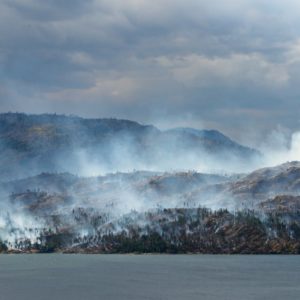
With respect to addressing America’s wildfire crisis, the CAA can ironically penalize states for conducting prescribed burns, which are among the most effective tools for preventing catastrophic wildfires and the harmful air pollution they produce.
USDA Finalizes Historic Regulatory Reform in National Environmental Policy Act Final Rule
Today, U.S. Secretary of Agriculture Brooke L. Rollins announced the U.S. Department of Agriculture (USDA) has finalized a rule modernizing the National Environmental Policy Act (NEPA) regulations. This Final Rule adopts the changes introduced in the Interim Final Rule published on July 3, 2025, which consolidated seven agency-specific NEPA regulations into a single, department wide framework, reducing...