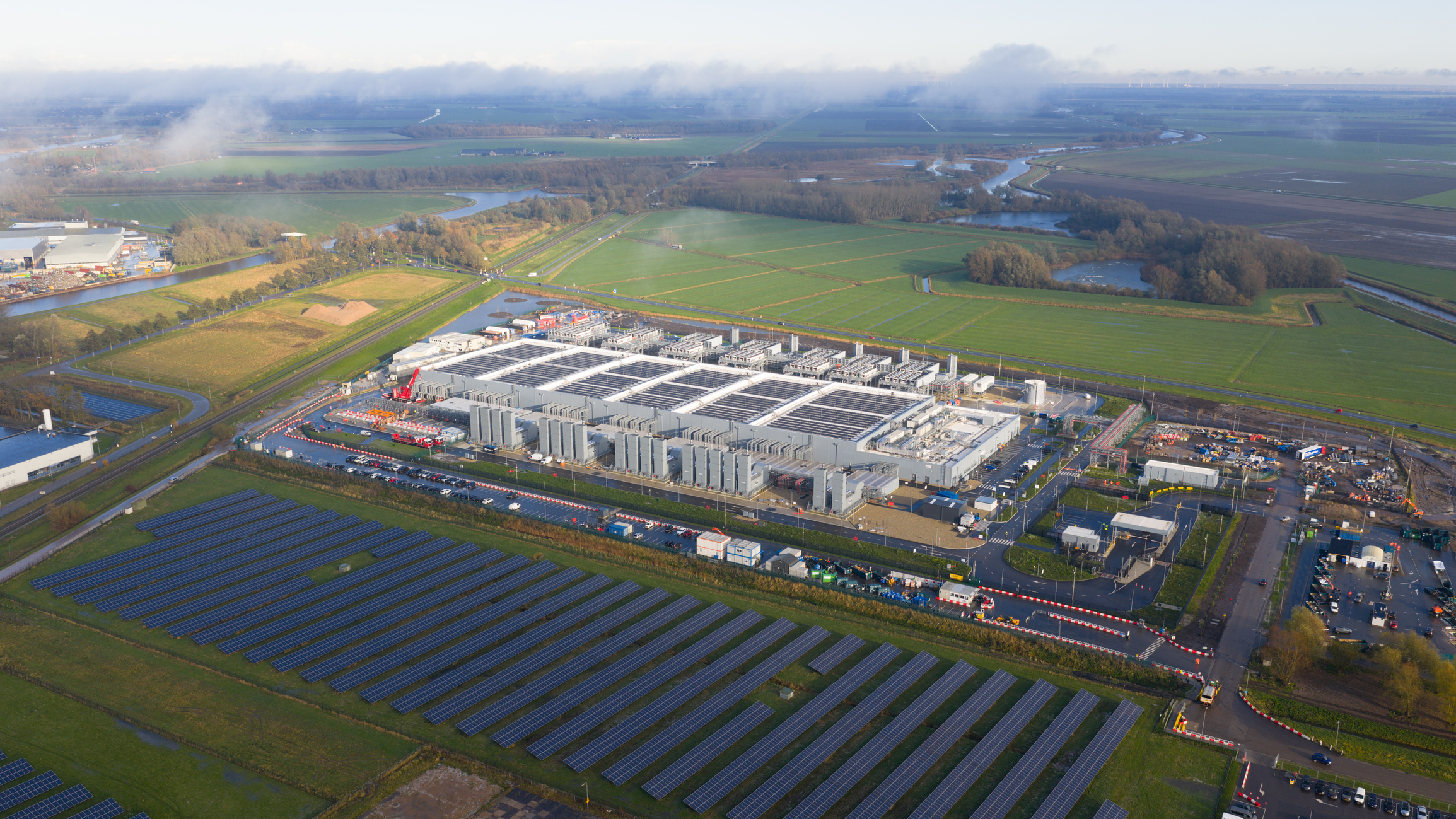
Growing opposition to data centers is beginning to expose divides in both parties. Last week, POLITICO reported that progressive challengers in battleground House primaries in Tennessee, Indiana, Virginia, and Maine are backing a national moratorium on datacenter construction. The idea draws on a bill introduced last month by Senator Bernie Sanders and Representative Alexandria Ocasio-Cortez, which would freeze new data center construction until Congress passes comprehensive AI legislation addressing the technology’s potential effects on jobs, electricity prices, and the environment. Republicans have seen similar tensions, with proposals for state-level moratoriums surfacing in gubernatorial races in Florida and Michigan.
These politicians are tapping into real frustration in communities worried about rising utility bills and the rapid pace of data center development. But a construction freeze is the wrong response. It would do little to address the underlying pressures on the electric grid while putting U.S. leadership in AI at risk. A better approach would be for policymakers in Congress and state governments to examine how existing laws and regulations may be limiting the ability of electricity markets to respond to new demand.
Concerns about AI and data centers should be taken seriously. For many Americans, there is real uncertainty. Workers worry that AI may disrupt their livelihoods while residents worry that large-scale development may change their neighborhoods, strain local infrastructure, and affect the environment. These concerns are already showing up as organized opposition to computing facilities and data centers. In Memphis, for example, Elon Musk’s xAI operations have drawn sustained criticism over the environmental impacts of the methane gas turbines used to power them. In Indianapolis, officials recently approved a $500 million data center despite community concerns about environmental effects and rising utility costs.
A January POLITICO/Public First poll found the public nearly split on data centers. A modest plurality, 37 percent of respondents, supported building new facilities in their area, while 28 percent opposed them and another 28 percent had no opinion. When asked about the drawbacks of building data centers in the United States, respondents most often cited higher household electricity costs.
The irony of this consternation is that, so far, there is little evidence that data centers are driving higher household electricity bills. Retail electricity prices have risen nationwide in recent years, but they have generally kept pace with broader inflation. The more important story is variation across states, with some states experiencing sharp increases in retail electricity prices while others have seen modest declines. A study from Lawrence Berkeley National Laboratory and the Brattle Group examined the factors behind those differences and found that load growth (i.e., growth in the amount of electricity demanded) has often put downward pressure on rates, not upward pressure.
That may sound counterintuitive, but the logic is straightforward. A large share of retail electricity bills goes toward fixed costs for physical infrastructure, including poles, wires, substations, and generators. Those costs must be paid regardless of how much electricity is consumed. When electricity demand grows and those fixed costs are spread across a broader customer base, the average price per unit of electricity can fall.
But the researchers make an important caveat. Load growth only depresses prices when the electricity system is flexible enough to respond to it. New demand in places where generation, transmission, or distribution infrastructure are constrained can create supply shortages and lead to rising prices. As the researchers note, this is the case in many states.
>>>READ: Rubio’s Data Center Diplomacy
That is where policymakers should focus their attention. The real question is not whether data centers should exist, but whether existing laws and regulations are preventing utilities and electricity markets from building, connecting, and delivering the power those facilities require. A national moratorium would do nothing to solve that problem. It would simply restrict investment while leaving the underlying bottlenecks intact.
At the federal level, the most obvious priorities are transmission reform, permitting reform, and clearer rules that allow large energy users, including data centers, to bring new power onto the grid. State policymakers, meanwhile, should examine rules that raise system costs or limit flexibility. These include Renewable Portfolio Standards that require utilities to source a specified share of electricity from renewable resources, as well as net-metering policies and subsidies for behind-the-meter solar that can shift fixed grid costs onto a smaller share of customers.
Fortunately, the idea of a national moratorium on data centers has not made much headway in Congress. Democratic Senator Mark Warner went so far as to call the plan “idiocy.” But the proposal is a useful example of the kind of heavy-handed policymaking lawmakers should avoid. Rather than imposing rules that are likely to be ineffective or counterproductive, policymakers should be asking how to create the market flexibility needed to address legitimate concerns about electricity costs, reliability, and local development. Usually, that means getting government out of the way, not adding new layers of restriction.
The views and opinions expressed are those of the author’s and do not necessarily reflect the official policy or position of C3.