The United States is the world’s largest oil and gas producer, but energy abundance means little if that energy cannot reach the people who need it.

The United States is the world’s largest oil and gas producer, but energy abundance means little if that energy cannot reach the people who need it.

Two hundred and fifty years young, the United States of America remains the best country in the world. We’re not perfect, but we still pass “the gates test” with flying colors.
As the longtime conservative leader Bill Bennett noted in highlighting the Berlin Wall, “You can measure a nation’s worth by observing the flow of humanity when barriers are raised: do they fight to enter, or do they risk everything to escape?” In America, people are still desperately trying to get in, and for good reason.

Last week, the Quadrilateral Security Dialogue, known as the Quad and consisting of the United States, India, Japan, and Australia, met in New Delhi and hammered out, among other things, a Quad Critical Minerals Initiative Framework.

These days, the role of Chicken Little is filled by reporters and environmental extremists. Every time a conservative administration somewhere in the world proposes to roll back an expensive environmental regulation, rest assured, we’ll hear that the sky is falling in on us.
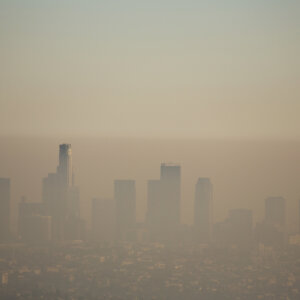
The Environmental Protection Agency’s recent decision to temporarily stop assigning dollar values to the projected health benefits of reducing fine particulate matter (PM2.5) and ozone has sparked renewed controversy over air pollution regulation. As I discussed last week, the agency framed the move as a response to persistent uncertainty in estimating PM2.5 health effects, not as a withdrawal from regulating air pollution or considering public health impacts.

Last week, the Trump Administration announced its intention to withdraw the United States from several landmark international climate institutions, including the United Nations Framework Convention on Climate Change (UNFCCC) and the Intergovernmental Panel on Climate Change (IPCC). In practical terms, the move is largely symbolic: U.S. participation or non-participation in these bodies has relatively little direct effect on domestic climate policy or near-term global emissions outcomes.
Last year, in one of his first actions on inauguration day, President Donald Trump signed an executive order directing federal agencies to stop using the social cost of carbon (SCC) when weighing the costs and benefits of regulations. The decision prompted predictable outrage from many environmental activists, climate scientists, and economists, who argued that abandoning the SCC would strip climate regulations of their scientific grounding.

While domestic energy demand surges, our adversaries — led by China, the world’s dominant energy financier — are outpacing us in investments in innovative R&D and critical infrastructure. To win this competition, the federal government must enable the U.S. energy sector to compete in technology areas where the financial risk is too high for the private sector to bear alone. One of the U.S. government’s more powerful tools is loan guarantees.

The Clean Air Act (CAA) is now 55 years old—and shows its age. That’s not a critique of its legacy. The law, in conjunction with innovation and private investment in environmental improvement, has contributed to significant improvements in air quality, public health, and environmental protection. But its regulatory framework still operates like it’s 1970, often resulting in costly, inefficient regulations that stifle economic growth for little environmental gain.
Working with our allies is the best way to beat China and build a better, cleaner future.