The Lone Star state is a geothermal sleeping giant
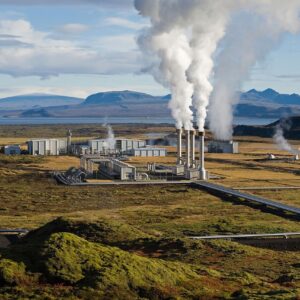
The Lone Star state is a geothermal sleeping giant
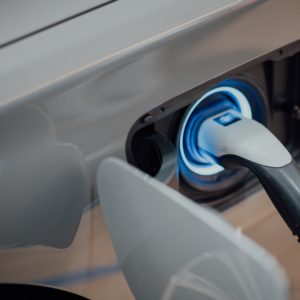
"Lithium-based batteries are also critical for achieving U.S. climate objectives. The report states that without reliable access to lithium battery technology, the U.S. has no chance of meeting its 2050 net-zero carbon emissions goal or ensuring an inclusive and socially responsible industry. With U.S. defense applications increasingly dependent on lithium-based batteries, the report warns of the national security risks in relying on batteries and battery components made abroad."
"What about storing energy for utilities? Form Energy in Somerville, Massachusetts, has developed a gigantic iron-air battery that it says can store more than 100 hours of solar and wind electricity. To discharge energy, oxygen entering the battery produces hydroxide ions that rust the iron pellets, sending electrons to the circuit. Recharging reverses the process, turning rust back into metal and releasing oxygen bubbles. The company projects that its battery packs will cost less than $20 per kilowatt-hour, making them competitive with legacy power plants."
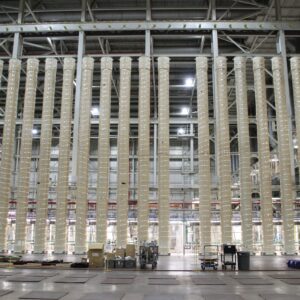
"Centrus’s pioneering cascade uses gas centrifuge machines, which feed uranium hexafluoride (UF6)—heated to a gaseous state—into a rotor inside the centrifuge machine. A rotor spinning at high speed inside a steel casing uses centrifugal force to concentrate the heavier U-238 isotopes at the outer wall of the rotor and the lighter U-235 isotopes toward the rotor center. The streams are then fed to the next machines in a “cascade” to achieve the desired level of enrichment. Centrus will use a 4.95% LEU feed material for its planned HALEU 16 AC100M-centrifuge cascade. It suggests roughly 85% of the separative work units (SWU)—a measure of enrichment needed to produce HALEU—is already contained in the LEU feed material."
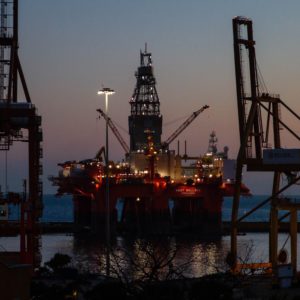
"Some opponents of gas contend that new gas pipelines will lock in long-term emissions, but much gas infrastructure can be retrofitted to carry hydrogen or carbon dioxide captured from power plants. European companies announced recently they will build new power plants that will run first on gas, then on hydrogen produced from gas with carbon capture and storage, and finally on hydrogen made using renewable energy. These investments are an example of what many energy technology experts expect to be a variegated electricity production system, with the wide range of natural gas and hydrogen related plants getting power from differing but increasingly clean sources."

"To date, thousands of hollows carved by Hollowhog tools have been installed around Australia, with the technology in use by state and federal government agencies, as well as land care groups."
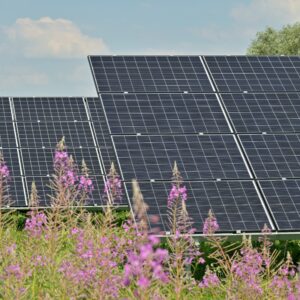
"Unlike a standard oil and gas lease, which typically comes with a 3 to 5-year term during which a successful well may or may not be drilled, this solar lease comes with a 35-year term that includes a certain stream of annual income. It won’t make the rancher fabulously wealthy overnight like an oil gusher can, but then, oil gushers have never been a feature of this particular part of the vast Texas landscape."
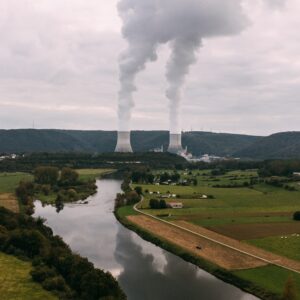
"Currently, 19% of electricity generated in the United States comes from nuclear power plants, according to the U.S. Energy Information Administration. That represents about half of the carbon-free electricity generation in the U.S., according to the U.S. Department of Energy."

"The foam dissolves in a tub of water and can be poured over a lawn or garden to safely add some nitrogen back into the soil, Felts said. And it’s safe if your dog, or your fish, eats any of the foam."
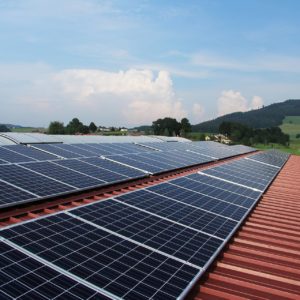
"The technology is fairly straightforward. Fans on each panel draw in ambient air and push it through a water-absorbing material, trapping the vapor from the air. The vapor is then condensed into a liquid using energy from the sun, after which it’s collected in a reservoir. The water is then mineralized with magnesium and calcium to maintain quality and achieve a better taste."