For five days, the equivalent of 350 Olympic-sized pools’ worth of sewage flooded into the Potomac River in a suburb of Washington, D.C. The cause? A clear failure in our permitting systems.

For five days, the equivalent of 350 Olympic-sized pools’ worth of sewage flooded into the Potomac River in a suburb of Washington, D.C. The cause? A clear failure in our permitting systems.
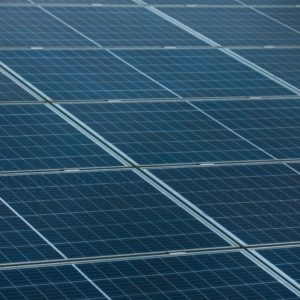
Chinese officials have held initial talks with providers of equipment to make solar panels as they consider limiting exports of the most advanced technology to the United States, said five people with knowledge of the consultations. Such a clampdown would risk investments by U.S. firms and set back a race for space-based computing, as China,...

The National Historic Preservation Act (NHPA) was enacted in 1966 to protect America’s cultural heritage at a time when rapid development was destroying historic sites. Its core process, Section 106, requires federal agencies to consider how projects they fund, permit, or carry out affect historic and cultural resources. Though well-intentioned, nearly six decades later, Section 106 has become a source of uncertainty, delay, and rising costs for energy, transmission, and conservation projects.

With respect to addressing America’s wildfire crisis, the CAA can ironically penalize states for conducting prescribed burns, which are among the most effective tools for preventing catastrophic wildfires and the harmful air pollution they produce.
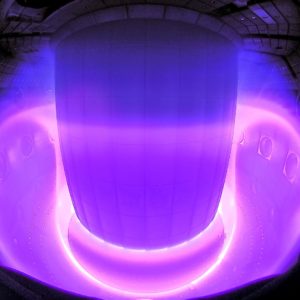
Inertia Enterprises, the commercial fusion energy company, today announced a landmark strategic partnership with Lawrence Livermore National Laboratory (LLNL), establishing one of the largest private sector-led partnerships in the history of the U.S. national lab system. On the heels of its $450 million funding round, the collaboration with LLNL expands on the robust research and development...

Texas has long stood apart from national energy policy—its own grid, its own rules. In 2026, that independence has made it the top destination for AI-driven electricity demand. While Washington grapples with the pressures of building data centers, ensuring reliability, and controlling costs, Texas is tackling everything at once. The Electric Reliability Council of Texas (ERCOT) market is solving for speed-to-power by surmounting transmission bottlenecks, phantom load growth, buying down residential rate increases, and more.
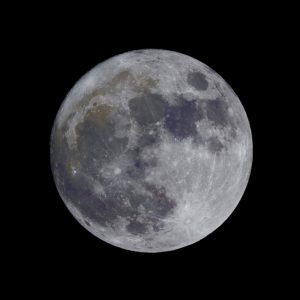
A memo released by the Trump administration on Tuesday detailed a goal of having a nuclear reactor on the moon’s surface by 2030, a move that furthers the United States’ quest for supremacy in space over China and Russia. In the six-page document, the White House Office of Science and Technology Policy wrote that incorporating nuclear energy in...

When President Trump stood before Congress in February 2026, he delivered a stark message to America’s technology leaders: “You have an obligation to provide for your own power needs.” His call to action on behind-the-meter nuclear power for data centers wasn’t mere rhetoric. It was a recognition that the energy demands of artificial intelligence and modern computing require a fundamental shift in how we power our economy.

On April 7, Anthropic announced Project Glasswing, a coalition of 12 major technology companies marshaling a new frontier artificial intelligence (AI) model to find and fix critical software vulnerabilities before attackers can exploit them. While the announcement is framed around technology infrastructure broadly, the implications for the power sector are immediate and serious. Partner posts from Amazon...

America has an infrastructure problem hiding in plain sight. Too often, when a storm rolls through, millions of homes dark. Politicians hold press conferences, utility companies apologize, and nothing fundamentally changes. The U.S. power grid is not a modern system under routine stress. It is an aging, fragile patchwork operating well past its design life, and the consequences are landing squarely on ordinary Americans and the natural environment around them.