A more competitive nuclear industry would be good for energy security and the climate.
The Political Risks of Mandating EVs for Everyone
"The realities of physics and engineering mean that politicians pushing for an all-EV future run a high risk. Quite aside from the eventual discovery that EVs will disappoint with only a tiny impact on global CO2 emissions, the bigger impacts will come as consumers find vehicle ownership costs and inconveniences both escalating."
U.S. Deploys $3.5B Boost for Grid Resilience: Major Projects Revealed
"The biggest Grid Innovation recipient is the Minnesota Department of Commerce, which will receive $464 million to coordinate the planning, design, and construction of five transmission projects across seven Midwestern states, known as the Joint Targeted Interconnection Queue (JTIQ) Portfolio. The $1.8 billion JTIQ, launched by the Southwest Power Pool (SPP) and Midcontinent Independent System Operator (MISO) in 2020, aims at building transmission network upgrades along the MISO-SPP seams to enable new generator interconnections."
The Hidden Costs of Green Protectionism
Opening up trade, reducing inefficient regulations, and promoting pro-growth tax policies will allow the market to respond to consumer demands for cleaner technologies without leaving the developing world behind.
The Coming Energy Expansion and What it Means for the Climate
Successful energy and climate policies should liberate producers and innovators to provide consumers with what they want as opposed to policymakers and regulators dictating to consumers what they think they should have.
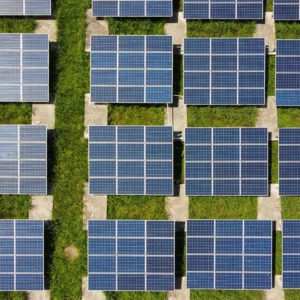
New Study: Solar Projects Do Not Lower Nearby Home Values
Expanding renewable energy generation can coincide with high property values for homeowners and businesses.
Regional Clean Hydrogen Hubs: A Milestone Towards a Cleaner Future
"The hydrogen hubs are a testament to what can be achieved when policy meets innovation. But this is just the starting line. We must remain unwavering in our commitment to policy evolution, infrastructure development, community involvement, and relentless innovation if we hope to unlock the full decarbonization potential of clean hydrogen."
For lower income nations, fossil fuel debate rings hollow
"In some cases, new fossil fuel infrastructure could still lower greenhouse gas emissions compared to previous practices. Replacing wood and other biomass fuels with liquid propane for rural home cooking would reduce emissions and improve air quality. Deploying natural gas for local industry would be better than burning (also known as flaring) or releasing (also known as venting) the gas into the atmosphere in many cases."
Hamas and the Folly of Energy Dependence
Blocking Access to American Energy Resources Invites Aggression
Biden’s ‘Climate Corps’ Is the Wrong Way to Help the Environment
"Meaningful climate progress can only be accomplished with responsible federal spending. Growing government and saddling future generations with more debt, as programs like the Climate Corps would do, will only stymie economic and environmental progress."