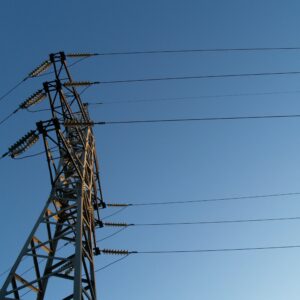
The Trump administration said Wednesday it would cancel three proposed federal corridors designed to speed the development of multi-state electric transmission lines that were selected during the Biden administration. The decision lands as the Trump administration battles broader affordability concerns ahead of the November midterm election amid rising electricity prices and growing energy demand. Read...
Record-setting geothermal bid signals rising interest in federal leases
A June geothermal lease sale held in New Mexico by the Bureau of Land Management netted more than $16.5 million, making it the second-highest-grossing sale in BLM history, while the top bid set a federal record of $701 per acre. Forty-seven parcels sold at an average of $107 per acre, more than triple the $32...
Federal Critical Minerals Investments Need a Cost-Benefit Test
The risks posed by this concentration are worth taking seriously. The problem is that these tools may force taxpayers to take on unnecessary risk—leaving them stuck with the bill if the companies fail—without addressing the underlying problem.
We Know How to Reduce Wildfire Risk. Policy Is Standing in the Way
The need to reduce fire risk is apparent, and we know how to do so through active forest management. Yet policy continues to slow those efforts down and that urgently needs to change.
Dominion ordered to directly assign some transmission costs to data centers
Dominion Energy will need to change its transmission cost allocation policy to directly assign the cost of certain transmission infrastructure to the new large-load facilities — such as data centers — which made that infrastructure necessary, the Virginia State Corporation Commission said in an order filed July 31. The mandatory contribution in aid of construction,...
Federal Grid Reforms Pick the Right Route and the Wrong Builder
The Department of Energy’s recent National Transmission Needs Study identifies several of these cases, where regions’ electricity costs would decline substantially if they were connected by a high-capacity transmission line. Providing these benefits to consumers, however, requires confronting not just the incentives that discourage utilities from building interregional lines, but the state laws that let incumbent monopolies control who builds them.
Common Sense Returns to the Endangered Species Act
By rescinding the expansive regulatory definition of “harm” under the Endangered Species Act and returning to Justice Scalia’s narrower textual reading that limits “take” to direct actions against individual animals, federal agencies have struck a blow for property rights, reduced unnecessary land-use controls, and restored freer market incentives.
Advisory Council on Historic Preservation Releases Section 106 Modernization
Congress is running short on time to pass a comprehensive permitting reform package before the lame duck this fall. On the table awaiting votes are bills reforming the National Environmental Policy Act, Endangered Species Act, and Clean Air Act. The National Historic Preservation Act, which has recently gained traction as a permitting barrier to projects, has received comparatively little attention in Congress.
Federal government proposes Colorado River water use cuts for California, Arizona and Nevada
The federal government is proposing potentially steep cuts to water used by California, Arizona and Nevada, a major step toward figuring out the management of the dwindling Colorado River. The river provides water to states throughout the West, including drinking water and water for agricultural, industrial and municipal uses. As the West becomes drier, figuring out...
The Wire Inside the Wire: Energy Capacity Hiding in Plain Sight
Building more is no substitute for building smarter. At times, this has been a challenge for America's energy infrastructure, particularly transmission. It is evident that the U.S. needs more transmission, but which transmission lines it builds matters for protecting ratepayers and keeping costs in check. An overwhelming number of House Members just reaffirmed this guiding principle for how America should approach the development of electric transmission.