Singapore has opened up its markets to allow investment and innovation to flourish.

Singapore has opened up its markets to allow investment and innovation to flourish.
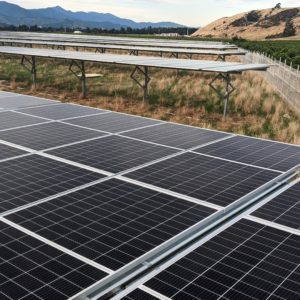
"Rather than micromanaging production, governments should unleash investment, by acting boldly to strip back permitting rules and ease the risk of projects in the global south. They also need to face up to the fact that protectionism frustrates their climate goals. It leads to lower returns, higher prices for power and more broken promises over decarbonisation."

"KOKO hints at why there is excitement about carbon markets. The African Carbon Markets Initiative (ACMI), a UN-backed consortium, reckons that Africa uses just 2% of its annual carbon-credit potential; it aims for Africa to sell $100bn worth of credits a year by 2050. Even a fraction of that would be a boon for a continent where annual foreign direct investment has never surpassed $80bn. William Ruto, Kenya’s president, calls carbon credits an “unparalleled economic gold mine” and his country’s “next significant export”. Yet, as is often the case with Africa and its natural resources, things could go wrong."
"The big question, as always, is what happens next. BNEF’s energy storage team expects prices to closely follow the trajectory of raw material prices. We’re projecting pack costs will fall to $133/kWh next year in real 2023 terms. In the long-term, based on the same learning rate as the previous year, battery pack prices are expected to fall below $100/kWh in 2027."

"In Scotland, researchers have been looking at how the water that’s flooded old, disused mines can be used to provide decarbonized heating to buildings."

Private finance is directing its attention to funding conservation projects across the country, which is something that conservationists and conservatives can celebrate.
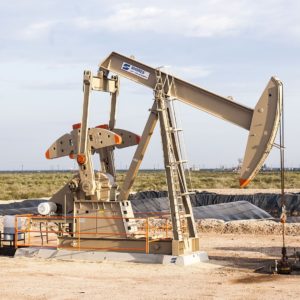
"Despite roiling the region politically, the war between Israel and Hamas doesn’t threaten supplies directly. That would change if the war were to spread or expand into areas housing the infrastructure—production facilities, tankers and pipelines—that enables the flow of oil and gas. About 21 million barrels of oil pass through the Persian Gulf and Strait of Hormuz daily, along with substantial amounts of liquefied natural gas. Since the U.S. shale revolution, the bulk of those supplies now head to Asian markets."
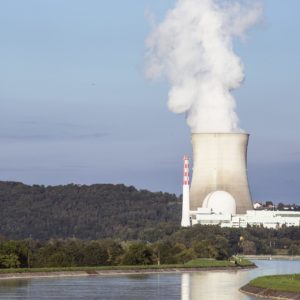
"The declaration is the latest sign of shifting sentiment toward nuclear power, which doesn’t produce carbon dioxide emissions, but has often been criticized over the waste it generates, the cost of building plants and potential security issues. Support has gained traction especially as clean back-up for renewable energy sources such as wind and solar. The countries will also commit to new technologies, such as small modular reactors."

"Today, the U.S. has about five gigawatts of agrivoltaic projects, encompassing more than 35,000 acres across over 30 different states. While this only represents about 3% of the country’s installed solar capacity, it’s a growing industry, and farmers are taking note."
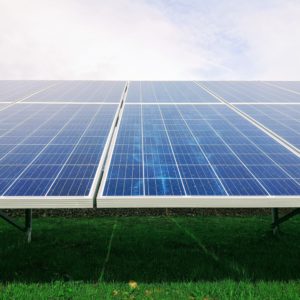
"The second project in Maryland will be built in Kent County. The Amazon Solar Farm Maryland—Morgnec, which could have as much as 45 MW of generation capacity, is one of Amazon’s first agrovoltaic solar projects. The installation will use bifacial solar panels to harvest the sun’s energy, while at the same time allowing for the land beneath the panels to be used for growing crops."