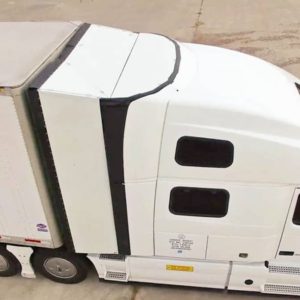
DHL Supply Chain has signed a long-term contract with Fortum Battery Recycling, a division of Nordic energy company Fortum, to manage logistics services that support the collection, transport, and recycling of EV batteries. The partnership marks a significant step forward for Europe’s circular economy, positioning both companies as key players in sustainable e-mobility infrastructure. Fortum Battery Recycling...
Author: E+E Leader
Virginia Tech Leads Watershed PFAS Mitigation Project
A major research initiative from Virginia Tech is setting a new precedent for how water utilities can confront PFAS contamination—a persistent, complex issue affecting drinking water systems across the U.S. The project is centered on Northern Virginia’s Occoquan Reservoir, a vital source of drinking water for nearly one million residents in the Washington, D.C. metro area....
Turning Crop Waste Into Textiles: A Cleaner Cellulose Source
A new approach developed at Chalmers University of Technology in Sweden could reshape how cellulose textiles are produced. Instead of relying on resource-intensive cotton or chemically processed wood pulp, researchers have demonstrated that common agricultural residues—like wheat straw and oat husks—can serve as effective raw materials for dissolving pulp, the base for cellulose fibers. The...
States Challenge Federal Rollback of California’s Vehicle Emissions Waivers
In a federal lawsuit filed June 12, 2025, California and ten other states are challenging the legality of three Congressional resolutions signed by President Trump that disapprove key EPA waivers. The waivers, granted between 2023 and early 2025, allow California to implement its Advanced Clean Cars II, Advanced Clean Trucks, and Omnibus Low NOx regulations—rules...
Rhode Island Passes Textile Waste Recycling and Education Bill
The Rhode Island Senate has officially passed legislation to enhance textile waste recyclingand public education efforts, reinforcing the state’s commitment to sustainable waste management. With landfill capacity dwindling and textiles accounting for a substantial portion of waste, this initiative aims to increase awareness, improve recycling infrastructure, and enforce reporting requirements among industry stakeholders. Key Provisions Expanding Public...
Wine Packaging Rethink Aims to Fix Recycling Bottlenecks
South Australian wine producer Nepenthe Wines has rolled out a packaging overhaul aimed at addressing a long-standing recycling issue in the industry. The initiative—timed with World Environment Day 2025—focuses on fully removable aluminum capsules, developed in collaboration with packaging manufacturer Interpack. The move seeks to resolve the bottleneck in recycling processes caused by traditional wine sleeves, which...
Trump-Era Fast-Track Approves Utah Uranium Mine in Just 14 Days
A uranium mine in southern Utah is the first project to be approved under President Donald Trump’s emergency declaration streamlining the development of energy infrastructure. Owned and operated by the Canadian company Anfield Energy, the Velvet-Wood uranium project received a green light on Friday under the federal government’s new, 14-day environmental review process for energy...
Great Basin Geothermal Could Fuel 10% of U.S. Power
A fresh assessment from the U.S. Geological Survey (USGS) has thrown a spotlight on Nevada’s Great Basin, suggesting the region could support up to 135 gigawatts of baseload power—about 10% of current U.S. electricity demand. Unlike intermittent sources like wind and solar, enhanced geothermal systems (EGS) offer continuous output, making them an increasingly attractive option for utilities focused on...
Floating Solar Growth Raises Questions for Waterbird Habitats
As floating solar installations become more common across agricultural and industrial water bodies, researchers are raising concerns about how these systems may affect local ecosystems—particularly waterbirds. UC Davis scientists are leading research to explore how birds interact with floating photovoltaic (PV) infrastructure, urging the renewable energy sector to integrate ecological considerations early in the design process. From...
Geothermal Research Digs Deep for Future of Industrial Energy
In South Dakota, 8,000 feet below ground, scientists are advancing geothermal technologies with potential to reshape commercial energy use. At the Sanford Underground Research Facility (SURF), a project led by Pacific Northwest National Laboratory (PNNL) is leveraging the extreme underground conditions to conduct critical research on Enhanced Geothermal Systems (EGS). The work is part of the Center...