Nothing has been decided yet. That is worth saying plainly, because the Bureau of Ocean Energy Management (BOEM) Request for Information and Interest (RFI) published June 23 is an early-stage process step, not a lease award or even a decision to hold a lease sale. But it opens the door to something that has no precedent in...
Author: E+E Leader
Ocean Carbon Removal Tech Moves Toward Coastal Field Testing
Mitsubishi Electric and VTT Technical Research Centre of Finland have completed core development of a direct ocean capture system, moving the project closer to demonstration in coastal conditions. The system is designed to remove carbon dioxide through seawater rather than through air or industrial exhaust streams. That makes it part of the growing marine carbon dioxide removal market,...
Switch Bioworks Advances Microbial Fertilizer to Corn Trials
Switch Bioworks is moving its engineered microbial fertilizer into U.S. field trials, giving the company a practical test for technology designed to reduce dependence on conventional nitrogen fertilizer. The San Carlos, California-based biotechnology company has received authorization from the U.S. Department of Agriculture and the U.S. Environmental Protection Agency to begin advanced research and development field trials across multiple...
New Hampshire’s Push for Advanced Nuclear Resources
As states seek low-carbon, reliable energy solutions, New Hampshire’s HB 710 could mark a turning point—enabling electric utilities to own, operate, and offer advanced nuclear resources (ANRs) alongside renewable energy. With growing national interest in small modular reactors (SMRs), this bill signals a broader movement toward integrating nuclear energy into the evolving U.S. grid. HB 710:...
Agricultural Drones Cut 51M Tons CO2 and Saved 410M Tons Water
DJI Agriculture’s 2025 Agricultural Drone Industry Insight Report puts a number on something the precision agriculture sector has been claiming qualitatively for years: that drone-based crop application meaningfully reduces the environmental footprint of farming at scale. The cumulative figures through end of 2025 are specific enough to be useful to anyone building agricultural sustainability metrics into a...
Canadian Wildfire Smoke Is Now a Grid Transmission Risk
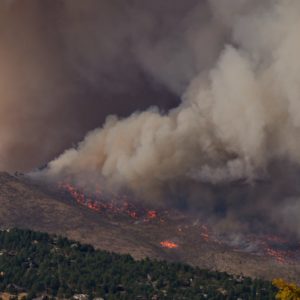
Canada’s Wildfire Season Is Becoming a Transmission Problem, Not Just an Air Quality Problem When a wildfire burns near a transmission corridor, physical damage is the obvious risk. The less visible risk is what smoke and ash contamination do to high-voltage infrastructure across a much wider area. In Alberta and British Columbia, that contamination risk...
UK Fusion Consortium Turns Focus to Commercial Delivery Path
Type One Energy, Tokamak Energy and AECOM have launched the UK Infinity Fusion Consortium, a private-sector-led initiative focused on developing a commercial fusion power plant in the United Kingdom. The consortium brings together three areas of capability that will be central to any future fusion project: plant design, magnet technology and major infrastructure delivery. Type One Energy is contributing...
Can Faster Uranium Projects Close Supply Gaps?
As nuclear energy regains traction, the uranium market is facing a timing problem. Demand is rising, but new supply remains slow to develop—leaving North America reliant on imports and legacy inventories. Triton Uranium’s Atlas Project in northern Saskatchewan is being positioned as part of a potential solution. The company is aiming to shorten development timelines by combining near-surface geology...
Puerto Rico’s LNG Shift Strengthens Grid Reliability
Puerto Rico’s energy strategy is undergoing a quiet but meaningful shift, with liquefied natural gas (LNG) playing a more central role in stabilizing the island’s grid. The first year of operations for the U.S.-flagged LNG carrier American Energy, operated by Crowley, signals a step toward a more structured and reliable fuel supply model. Since launching...
Biochar Gains Ground in Global Carbon Markets
Carbon removal is starting to look less experimental and more operational. Biochar, once a niche solution, is gaining traction as companies look for ways to pair waste management with credible climate impact. A new project in Bolivia offers a snapshot of how this shift is playing out on the ground. Empacar, known for its work in packaging and...