Rather than restricting certain investment strategies, policymakers should embrace policies that unlock investor freedom and leave politics out of it.

Rather than restricting certain investment strategies, policymakers should embrace policies that unlock investor freedom and leave politics out of it.

"Storage capacity in the U.S. has grown enough in recent years to be able to power many millions of homes, according to S&P Global Market Intelligence. California and Texas dominate the industry, but projects are in the works in Nevada, Arizona and elsewhere to help meet growing power demand from artificial-intelligence data centers and manufacturing plants."
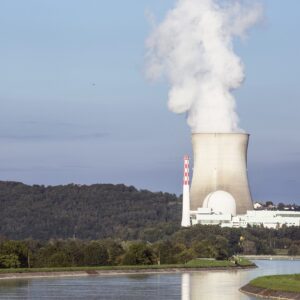
"A preliminary study is now planned to provide an analysis of the available technologies and requirements to help inform decisions to be taken. The development of nuclear energy is now considered by the Serbian Government a key development for the sovereignty and independence of the country, while simultaneously protecting the environment and the health of the citizens."

"Whether to mine on Alaska’s pristine land is a debate worth having. But if the minerals aren’t mined in the U.S., they’ll be sourced from overseas, where in many cases China dominates both mining and processing. If the Biden administration continues to stymie domestic mining projects, it can say hello to international dependence and kiss its net-zero agenda goodbye."

"Savor is confident that its technology can be used to make butter and multiple other animal-derived fats, such as milk and cheese. The company also plans to use this approach to make ice cream and edible oils."
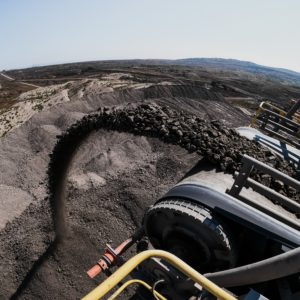
"Other solutions to obtain more of these metals are retrieving them from discarded devices and shifting sourcing to friendly nations and away from geopolitical rivals or unstable countries, analysts say. For now, there is only a handful of critical or rare earth mineral mines in the United States, although many more are being proposed."
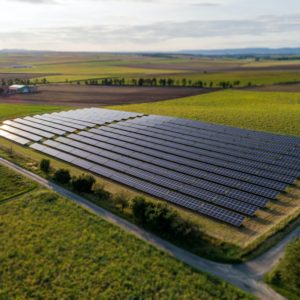
"In our analysis of wind ordinances, we found that not only were there numerous county-level wind ordinances but that the rate of adoption for new ordinances was accelerating. While there are fewer solar ordinances, this trend is similar for PV solar, which also has an accelerating rate of adoption of new ordinances restricting siting. As a caveat, the NREL database does not have the adoption year for every ordinance, so this assessment is only using ordinances for which there is such data collected. And, similar to our finding with wind ordinances, as solar power becomes more common, so too do ordinances restricting it."
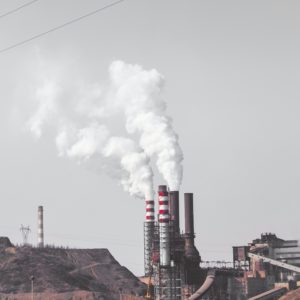
"What differentiates Omnis’s method from others, Hodson said, is that it plans to heat coal to temperatures as high as 5,500 degrees Fahrenheit—about half the temperature at the sun’s surface and twice what is required to make steel. The superhigh heat, he said, will convert coal into higher-quality carbon products, such as graphite."

"The project is perhaps the first to directly power a large industrial facility using solar-plus-storage technology. Developers say they hope the setup can serve as a model for future manufacturing plants — especially as the United States ramps up domestic production of electric cars, solar panels, batteries, and the steel, aluminum, and other essential materials used to make them."
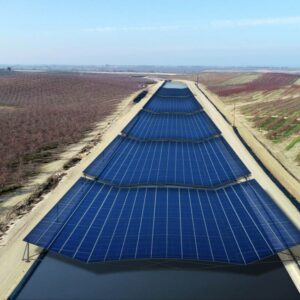
"Erecting solar on top of federally owned canals could be a win-win. The approach limits the disruption to ecosystems, and some studies suggest it actually has the potential to help canals do their jobs better; an over-the-canal design can prevent water from evaporating and inhibit algae growth. The comparatively small installations can also connect clean power directly to the distribution grid, an important distinction as it has become increasingly difficult to connect large projects to the transmission grid."