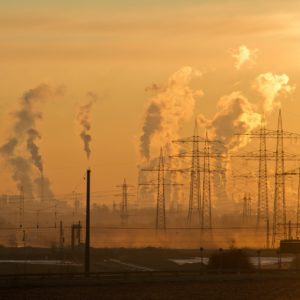
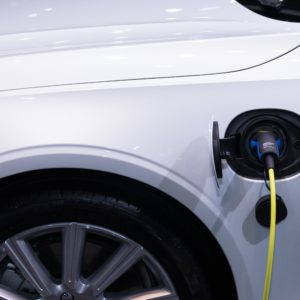
“This year has seen the rise of clean power companies—including Iberdrola, Enel and, in the U.S., NextEra Energy Inc. —into the upper echelons of the world’s most valuable energy companies. That has come as traditional oil majors grapple with the fallout from the coronavirus pandemic, which has decimated demand for crude and tanked prices. There is also broader support from companies, investors and governments for low-carbon energy.”
Articles from Around the Web
Researchers discover a new way to produce hydrogen using microwaves
“The technology developed and patented by the UPV and CSIC is based on the phenomenon of the microwave reduction of solid materials. This method makes it possible to carry out electrochemical processes directly without requiring electrodes, which simplifies and significantly cheapens its practical use, as it provides more freedom in the design of the structure of the device and choosing the operation conditions, mainly the temperature."
For a Climate-Concerned President and a Hostile Senate, One Technology May Provide Common Ground
"‘If you look at wind, that was the result of a whole bunch of different, really aggressive policy actions,’ said Rich Powell, executive director of ClearPath, a nonprofit that advocates for conservative clean energy policies. He noted that a combination of federal tax breaks and renewable electricity standards at the state level drove down the cost of wind over decades, and that the same has happened for solar over the past 15 years. ‘We're only seeing the beginnings of all those things for carbon capture.’"
How Hydrogen Is and Isn’t the Future of Energy
"The long-term solution to slow global warming is therefore to electrify everything, as long as that electricity comes from renewable sources. Aye, there’s the rub. We simply can’t run everything on electricity.
Balancing nitrogen between food production and climate change
“It is very clear that only a joint view of organic carbon and nitrogen management will provide the synergies needed to address both food security and climate change. These goals can only be delivered in an effective way by working from the ground up, starting with those who manage the land and providing the site-specific and dynamic information systems that allow a systems view of soil health management. In our opinion, only a joint platform to address the carbon-nitrogen nexus in soil health management will accomplish that.”
Climate change had mixed showing in 2020 elections
“The more climate change was on the agenda, the more it drove up votes in blue states, but it worked against Democrats in purple states, in battleground states,” said a former Obama administration official who spoke on the condition of anonymity given tense intra-party divisions."
Ditch Paris—and Save America
“By one estimate based on a U.S. Energy Department model, the Paris Climate Accord could have cost the average family of four over $20,000 in lost income, raised household energy prices by as much as 20 percent, and cost the economy $2.5 trillion by 2035.”
The 2020 Election was a Rejection of Excess
Voters said no to the ideological excess of progressives and the individual excess of Trump
What the Coming Wave of Distributed Energy Resources Means for the US Grid
“Cumulative U.S. DER investments will eclipse $110.4 billion between 2020 and 2026. Solar, EV infrastructure, battery storage and grid-interactive water heaters sales growth will drive spending to a new peak in 2025.”
Ocean plastic pollution is a huge — but solvable — problem
“Reducing the flow of ocean-bound plastic by 80 percent will require a society-wide effort. The good news is that it would benefit marine life, the planet and humans alike — and that it could happen within our generation.”