"CCS technology has been used for years, often to enhance oil well production rates, but rising carbon prices in regions such as Europe have lifted hopes it might take off as a stand-alone business in the future."
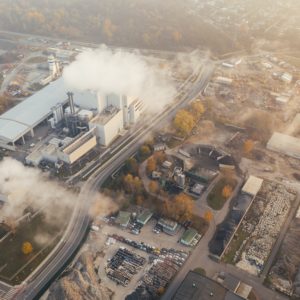
"CCS technology has been used for years, often to enhance oil well production rates, but rising carbon prices in regions such as Europe have lifted hopes it might take off as a stand-alone business in the future."

"Founded in 2019, Enriched Ag wants to equip ranchers with both tools and insights to better manage grazing practices on their land as well as make decisions around carbon capture. Three different data insight products constitute the Enriched Ag platform: one for grazing, another for carbon and a third for supply chain."
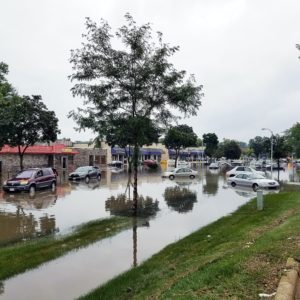
Zak Colman of POLITICO explains how governments can more adequately confront climate risk. “FEMA is also weighing new regulations that would expand the federal floodplain, which could includeincreasing minimum requirements for elevating homes to reduce flood risk. Those rules could be a ‘game changer’ by requiring stricter building standards to reduce flood risk for hundreds...
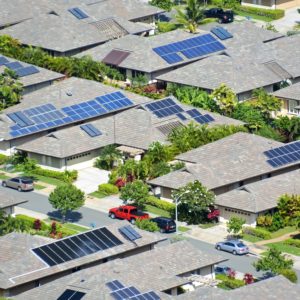
"The disruptions have pummeled solar deployment in the U.S., where domestic manufacturers are few and imports, largely from Chinese and other Asian makers, account for more than 80% of all panels used. An estimated 23 gigawatts’ worth of big solar projects have been delayed so far this year—almost twice as much as was installed in all of 2021 and approaching a third of all such projects in development, according to the American Clean Power Association, an industry group."
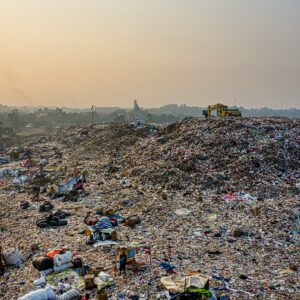
"Some of the predictions in 'Back to the Future' proved too far-fetched. Flying cars seem as distant today as they were in the 1980s. But power from trash? Today trash represents a permanent carbon-negative source of natural gas. Voluntary transactions in RNG, and the micro-scale process improvements that have boosted this market, suggest a far more circular economy on the horizon."
"Shell and BP are both looking to use their global oil-and-gas trading arms to reach existing customers willing to pay a premium for cleaner fuel, and to tap new markets as they invest in expanding the biogas businesses. Neither deal changes the dividend or buyback plans of Shell and BP, the companies have said, in a year of huge cash payouts to investors."

"Shin said the factory is projected to produce 120,000 tons of cathode battery materials annually once fully operational, which is enough to power batteries in 1.2 million electric vehicles."
"Wood Mackenzie’s Williams argues that there is a better way the administration could help relieve the diesel shortage in New York Harbor and put downward pressure on prices. 'The quickest way to ease the situation would be to waive the Jones Act for a month or two,' he says. 'If we could move more barrels around the US by sea, that would make a real difference.'"

"'It’s good for the environment, it’s good for the convenience of our customers, and it’s good for Amazon economics,' he added."
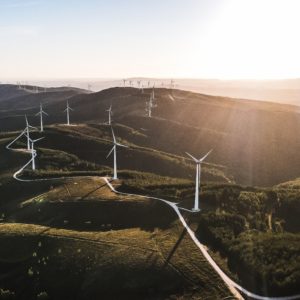
"Energy subsidies are wasteful at best and cronyist at worst, and they don't even accomplish their stated aims. Policymakers should be removing the obstacles that keep creative entrepreneurs from developing cheaper alternatives, not giving specific products an unfair edge."