There are many reasons that Donald Trump is president. But one of the key reasons is that he promised to stop the government from doing things that waste taxpayer money.
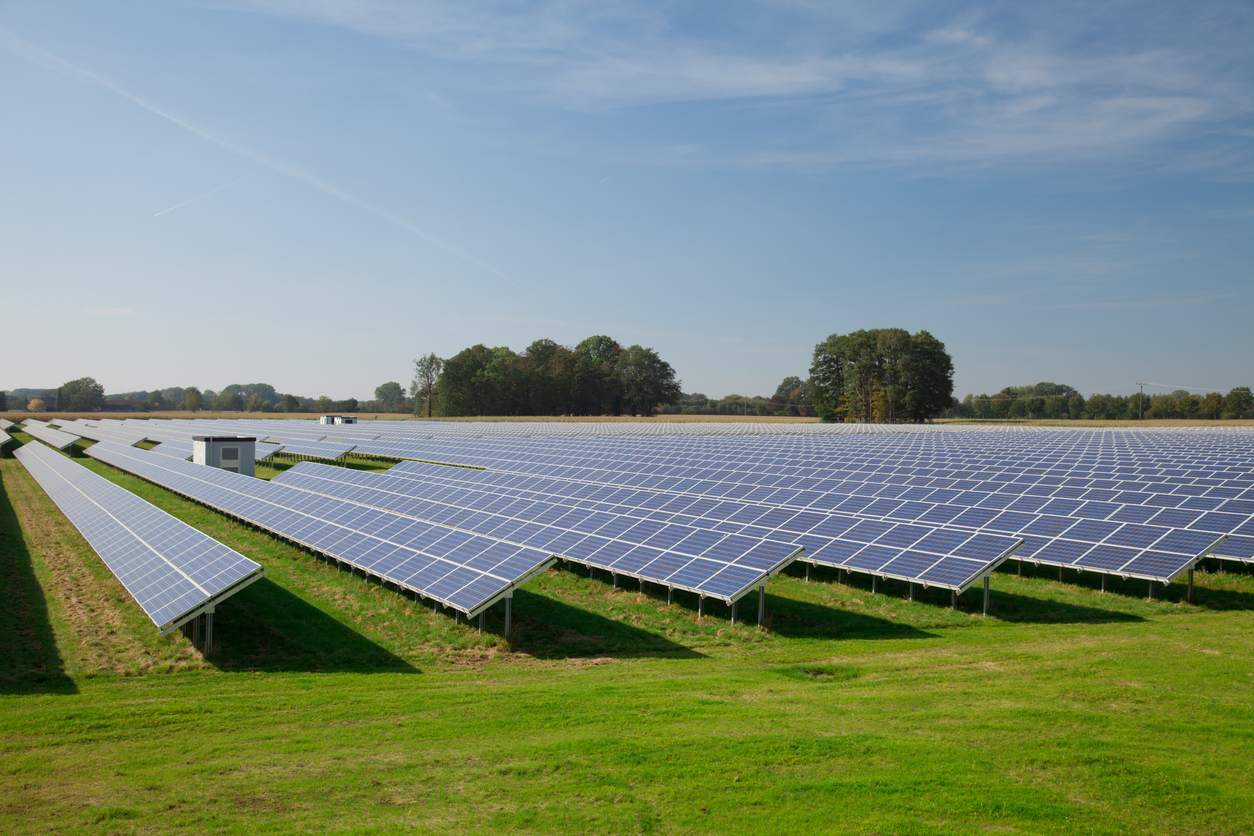
For example, the long-spinning merry-go-round of subsidies for solar. The solar investment tax credit, or ITC, for commercial and utility-scale systems has been renewed fifteen times since 1970. In the 1980s and 1990s, it was at about 10 percent. In 2005, it was raised to 30 percent. In 2015, the solar industry negotiated a truce with Congress to phase it back down to 10 percent over four years in exchange for it becoming permanent at that level.
The 2019 level had one advantage: it would be predictable. Ask any investor what they want most out of policy, and they will likely tell you it’s predictability. So the industry got what it wanted, and cost-conscious lawmakers got what they wanted. Or so it seemed, in theory. In practice, in 2020 and again in 2022, solar advocates pushed to stop the phase down at 26 percent, and then in 2022, in the misnamed “Inflation Reduction Act” promoted by the Biden Administration, Congress pushed it back up to 30 percent. So much for stable policy.
That brings us to today, and the One Big Beautiful Bill Act signed into law by President Trump. It phases out the solar tax credit for larger projects by the end of 2027. The solar industry has been saying for years that it delivers the cheapest form of energy. As a real-time experiment, we now have increasing demand from the hyperscalers–aka data centers–that are feeding the AI frenzy. Solar is well-positioned to help supply that demand, together with batteries, in the next several years. To sum up: a massive tidal wave of market demand and solar and batteries are ready to ride the wave.
So why do they need tax credits? Aren’t tax credits for technologies that are not yet mature and cost-competitive?
Amazingly, Tom Friedman, opinion columnist at the New York Times, recently complained that Trump’s tax bill “quickly phases out tax credits enjoyed by utility-scale solar and wind, as well as electric vehicle tax credits.” Well, yes. That’s the point. Instead of the federal government handing out subsidies and selecting winners and losers, we will allow consumers to drive the energy future.
“This virtually guarantees that China will own the future of solar energy, wind power, and electric cars and trucks,” Friedman wrote. But China already dominates in those areas, even after all the subsidies the federal government has handed out. China controls 80% of the solar energy supply chain and 60% of the wind and battery supply chains. Any money our government throws at this problem ultimately benefits Beijing.
The way for the United States to fight back is to slash regulations and encourage competition through the free market. Think of batteries. It requires rare earths to build batteries (as well as to manufacture and produce defense equipment), but the U.S. doesn’t make enough.
China supplies about 80% of our REE, and that is a recipe for a disaster. To improve our domestic supply chain, we must modernize the permitting process to open mines. That means slashing regulations. We also need American entrepreneurs and patriots to invest in our mining industry. The rare earths are out there, and we need people to get them. Finally, we must diversify our supply chain to include trade with allies such as Japan and Australia.
A Ronald Reagan story is worth noting here. When he took office in 1981, the U.S. had endured roughly a decade of fuel lines. There wasn’t a shortage, but government price controls had backfired and reduced supplies.
On Reagan’s eighth day in office, he signed Executive Order 12287, eliminating federal controls on U.S. oil production and marketing. “As a result of the President’s executive order, the cost of gasoline and heating oil is expected to rise, but analysts differed about the amount,” the New York Times noted at the time. Not quite.
Once companies were allowed to compete in a market, they produced more oil, eventually leading to a glut. By 1986, Reagan could note that, “the price of oil has fallen from the $36 a barrel of 1981 to about $12 a barrel today.”
Markets worked then, and can work now, whether or not people at the New York Times understand why or how.
The solar industry should be ready to stand on its own without subsidies from taxpayers. Competition and market demand, together with cooperation with our allies and technological advancements that drive manufacturing in America, are the path to success. Ultimately, the best and most stable policy is one that opens markets, streamlines permitting processes, and refrains from picking winners and losers. Let the solar companies win.
The views and opinions expressed are those of the author’s and do not necessarily reflect the official policy or position of C3.