To unlock affordable grid capacity, policymakers should require utilities to consider the best-available line technologies by default, while utilities themselves modernize planning to reinforce their affordability commitment to customers.

To unlock affordable grid capacity, policymakers should require utilities to consider the best-available line technologies by default, while utilities themselves modernize planning to reinforce their affordability commitment to customers.

Rather than causing disparate groups to come together to recognize the importance of all forms of energy, oil prices have resulted in some pushing harder for oil and gas and others pressing harder for solar, wind and batteries. This is a false dichotomy. Both are needed.

Before instituting sweeping policies that risk creating costs and distortions worse than the supply disruptions and Chinese dependence they aim to solve, Washington needs to weigh the benefits of intervention against its costs.
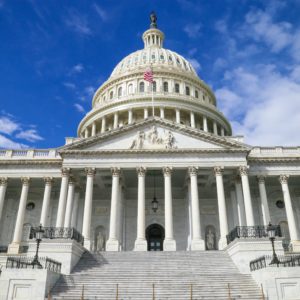
Governments shouldn’t determine which forms of energy are “good” or “bad,” using subsidies and mandates to boost the good while imposing restrictions to hobble the bad. Instead, decisions about the fuel mix should be left to the market as much as possible.

The risks posed by this concentration are worth taking seriously. The problem is that these tools may force taxpayers to take on unnecessary risk—leaving them stuck with the bill if the companies fail—without addressing the underlying problem.

The need to reduce fire risk is apparent, and we know how to do so through active forest management. Yet policy continues to slow those efforts down and that urgently needs to change.
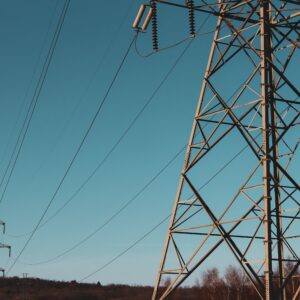
The Department of Energy’s recent National Transmission Needs Study identifies several of these cases, where regions’ electricity costs would decline substantially if they were connected by a high-capacity transmission line. Providing these benefits to consumers, however, requires confronting not just the incentives that discourage utilities from building interregional lines, but the state laws that let incumbent monopolies control who builds them.

By rescinding the expansive regulatory definition of “harm” under the Endangered Species Act and returning to Justice Scalia’s narrower textual reading that limits “take” to direct actions against individual animals, federal agencies have struck a blow for property rights, reduced unnecessary land-use controls, and restored freer market incentives.

Lawmakers in both parties are scrambling to address the issues revealed by data centers. President Donald Trump, his administration officials, and several governors (including Pennsylvania Gov. Josh Shapiro) signed on to a statement of principles that encourage data centers to bring their own power or pay for the power they need.

Congress is running short on time to pass a comprehensive permitting reform package before the lame duck this fall. On the table awaiting votes are bills reforming the National Environmental Policy Act, Endangered Species Act, and Clean Air Act. The National Historic Preservation Act, which has recently gained traction as a permitting barrier to projects, has received comparatively little attention in Congress.