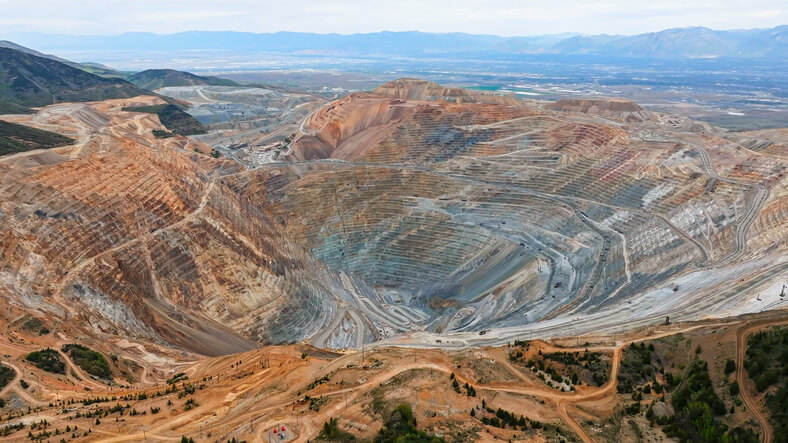
The Protecting Domestic Mining Act (H.R. 1501) just passed the House by a 218–201 vote, with seven Democrats crossing the aisle. The bill, which now heads to the Senate, makes mining and mineral processing eligible for expedited permitting under Title 41 of the Fixing America’s Surface Transportation Act (known as FAST-41) and blocks a Biden-era proposal that would have limited that eligibility to “critical” minerals.
Both provisions are a positive step forward and will help relax some federal rules that have suppressed the American minerals industry and pushed the mining and refining of key inputs for the energy, computing, and defense sectors overseas. But the bill also illustrates why carve-outs for particular industries, technologies, or materials are not the first-best approach to permitting reform.
FAST-41 is a voluntary process that moves permitting for large projects in eligible sectors to a federal steering council, which coordinates review across roughly a dozen agencies. It creates a public dashboard and enforceable timelines so a project can’t be bogged down by the slowest agency. Opening this process to mines and mineral processing is a real improvement, especially given the heavy permitting burden U.S. mines face relative to the rest of the world. The inclusion of mineral processing is particularly welcome, since that stage of the supply chain is where many of the most serious chokepoints and reliability concerns have developed.
But this step doesn’t address the underlying problem. Coordination and enforceable timelines help at the margin, but the substantive statutes and permitting processes that are creating bottlenecks remain in place. And how the benefits are applied is subjedt to politicization. While any qualifying project is technically eligible, the administration decides which projects it actually prioritizes and shepherds through. Under the Biden Administration, for example, projects receiving permitting approval with FAST-41 assistance skewed heavily towards favored renewable energy projects.
A more durable, legislative fix should improve permitting across the board, for all sectors and all projects. Reforms should make the process more efficient, provide certainty, and rein in excessive litigation. In fact, Emily Domenech, the director who oversees the federal permitting dashboard, remarked, “I joke a lot that I took this job knowing that I would love to put the Permitting Council out of business, because we fix federal permitting for everyone and we don’t need it.”
>>>READ: Critical Minerals Policy Needs Clear Guardrails
Removing the “critical minerals” restriction is likewise a positive move, though it also highlights deeper flaws. A mineral earns its critical designation from two things: economic importance and supply-chain vulnerability. But for many of these minerals, that vulnerability is itself a product of U.S. policy—of which permitting has played a key role—that drove the industry overseas to adversarial or volatile nations. By the time the shortfall in domestic and friendly mining and refining is finally recognized, the permitting regime has already done its damage. Offering a fast-track at that point does nothing to undo the costs that onerous permitting imposed on the way down. The designation is a lagging indicator of a problem permitting helped create.
The broader point is that markets need flexibility to adapt to complications no one can see coming, and permitting gets in the way of that flexibility. Governments are poor at forecasting where their own policies will collide with future needs, shortages or product substitutes, so the posture should be to open up as much room as possible for market adjustments, not to wait for bottlenecks to become damaging enough to earn their own exemptions.
Carve-outs to today’s onerous permitting regime are politically enticing, and they can deliver real improvements. But they’re ultimately a band-aid fix to a fundamentally broken permitting regime. The more durable fix must take a broader view. Instead of granting preferential treatment to the politically favored industries of today, reform how the permitting process itself weighs environmental costs against economic ones, so that markets, not a government designation, decide what gets built.
The views and opinions expressed are those of the author’s and do not necessarily reflect the official policy or position of C3.