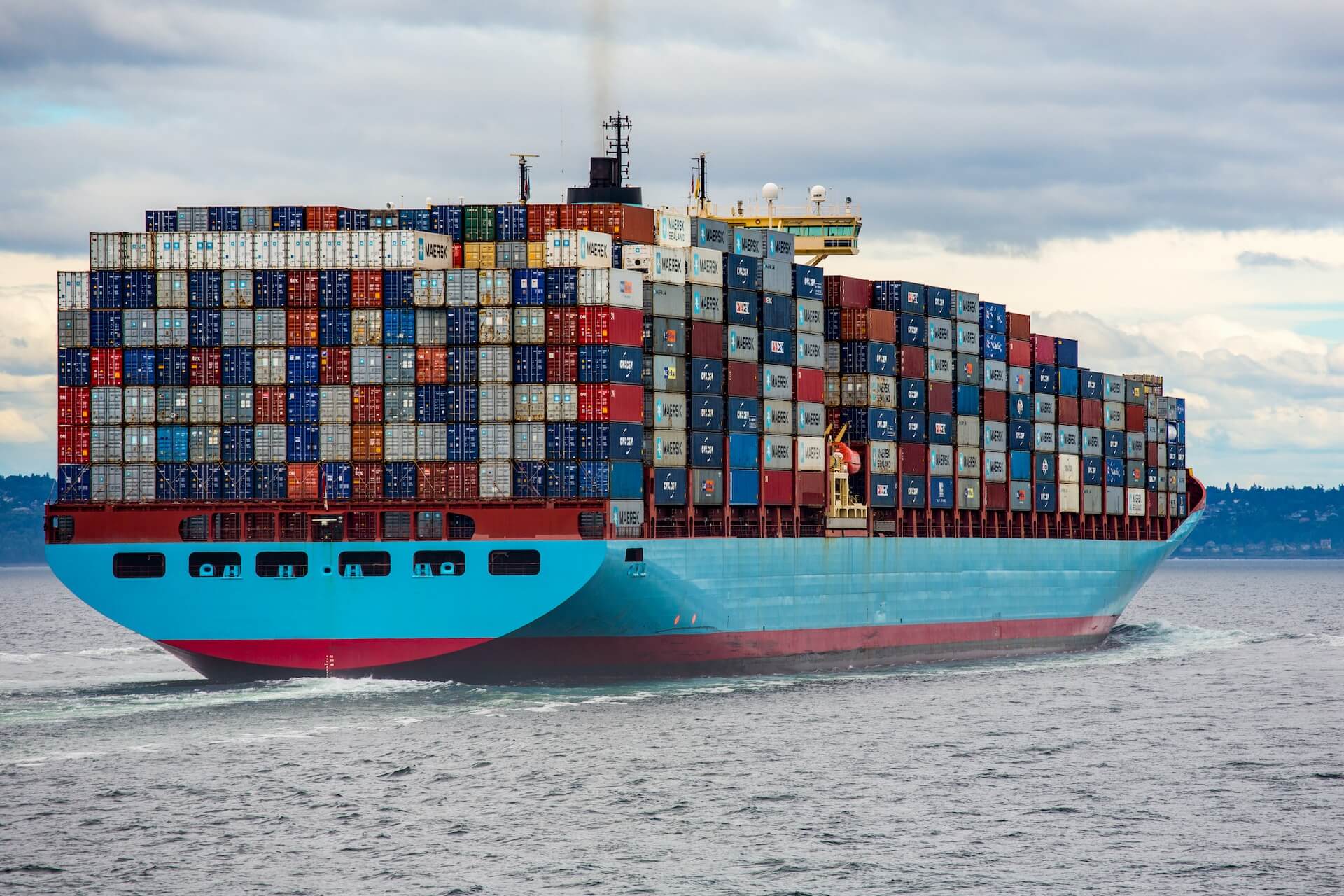
President Trump has suspended the Jones Act for 60 days to help lower gas prices. This raises the question: if the Jones Act is pushing up prices at the pump, why do we still have it? The simple, direct answer is that there are no valid reasons to keep it, and Congress should repeal it.
The Jones Act, which has been in place for over a century, states that any goods shipped between two U.S. ports must be transported by a ship built in the United States, flying the American flag, and operated mainly by Americans. As C3 Solutions has repeatedly emphasized, the Jones Act distorts LNG transportation and restricts the ability to move fuel efficiently within U.S. markets.
The law’s impact has been higher energy and other goods costs, and domestic bottlenecks have forced regions to depend on imports instead of the plentiful American supply. Energy law expert James Coleman has noted that refiners in the northeast U.S. paid three times more to ship oil from Texas than from West Africa or Saudi Arabia.
The law also complicates the delivery of liquefied natural gas. There are effectively zero large-scale Jones Act–compliant LNG tankers capable of moving LNG between U.S. ports. That means it cannot effectively move LNG from the Gulf Coast to New England or to non-contiguous places like Hawaii and Puerto Rico. Despite being the world’s largest producer and exporter of natural gas, the northeast has imported natural gas from other countries, including, in some instances, Russia.
Supporters often argue the law is necessary for national security and a strong domestic shipbuilding base. But the evidence suggests otherwise. The U.S. commercial fleet has declined over time. Anastasia Boden of the Pacific Legal Foundation recently wrote:
The Jones Act has shrunk the American shipping industry. Without foreign competition, U.S. shipbuilders have had no incentive to keep costs down. The Congressional Research Service has found that American-built ships can now cost six to eight times as much as equivalent vessels built in foreign yards.
The economics are simple: When vessels are that expensive, American shippers buy fewer of them. The Transportation Department counted 92 oceangoing Jones Act-compliant vessels as of 2024 — a 52 percent decline since 2000. Meanwhile, more than 60,000 commercial ships operate globally.
It’s troubling for the law that every time there’s a national emergency, presidents from both parties waive the Jones Act. President Trump is doing it now. President Biden waived the Act when Hurricane Fiona hit Puerto Rico, knocking out power. The island was then in desperate need of fuel to run generators for essential infrastructure like hospitals. A ship with 308,000 barrels of diesel was nearby, ready to unload the fuel. But there was a big problem: the ship didn’t have the legal authority to dock because it wasn’t Jones Act-compliant.
In perhaps the silliest example, the Jones Act requires Hawaiian cattle ranchers to ship their cattle to California by air rather than by cargo ship. If they do use a cargo ship, it must first go to Canada, which then delivers the cattle to the states by truck.
Silly as it is, the economic pain is very real. American consumers, especially in non-contiguous states, pay higher prices. There is a significant loss of economic opportunity for American businesses. As I wrote before, Iowa and Ohio soybean growers miss out on chances to sell their product to North Carolinian hog farmers who opt to buy cheaper soybean meal from Brazil.
The Jones Act also leads to unintended environmental impacts. Not using water transportation and increasing cargo on planes, trains, and trucks raises pollution levels. The Act shifts freight to trucks and rail, even though water transport would be cheaper and more environmentally friendly.
>>>READ: For a Cleaner, More Competitive Economy, Repeal the Jones Act
The Jones Act faces criticism from across the political spectrum. Representative Alexandria Ocasio-Cortez (D-NY) said, “We must lift the Jones Act, which has exploited Puerto Rican consumers and strangled the economy.” She’s one hundred percent right.
Senate Energy and Natural Resources Chair Mike Less (R-UT) said that the Jones Act is “a classic example of a small handful of big, wealthy corporations in America with concentrated benefits becoming further enriched on the backs of poor and middle-class Americans who are themselves relatively powerless and in many cases relatively unaware of the reasons why everything that they pay for has become so expensive.” He’s one hundred percent right, too.
Waiving the Jones Act is better than not waiving it, but the real solution is for Congress and the Trump administration to repeal it outright. The Jones Act signals a larger systemic issue in the U.S. that harms consumers, innovators, and the environment. Building new energy sources and providing more secure, reliable energy to consumers has become increasingly challenging. If Congress is serious about reforming permitting processes, repealing the Jones Act should be included.
The views and opinions expressed are those of the author’s and do not necessarily reflect the official policy or position of C3.