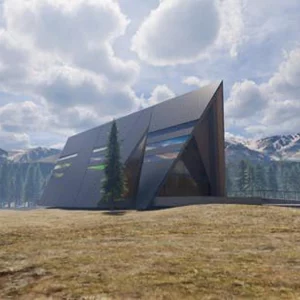
"Conventional produce grown in fields across the U.S. is often transported an average of 1,500 miles before it reaches the consumer. Hippo Harvest’s greenhouses don’t require farmland and are climate-controlled, so they can be located closer to consumers—even in low-water environments or areas with limited agricultural space, like metropolitan areas. Growing produce close to consumers increases its shelf life and reduces carbon emissions by eliminating the need to transport the product over longer distances."

Planting More Trees In Cities Could Slash Summer Heat Deaths, Study Finds
"The research identifies a way for city planners to combat the impact of rising temperatures, wrote Kristie Ebi, a professor for health and the environment at the University of Washington, in a linked comment. Such action is especially important as climate change continues to drive temperatures upwards and it must be combined with other initiatives like modifying infrastructure to reduce heat, added Ebi, who was not involved in the research. Ultimately, 'all heatwave-related deaths are preventable,' Ebi said.
Small Modular Nuclear Reactors Are A Game Changer For Clean Power
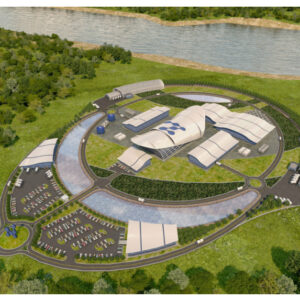
"That’s the beauty of SMRs: the small models are designed to be manufactured off-site at a commercial scale, and assembled on site for more efficient nuclear energy deployment."
Cost-Effective Carbon Capture Has Arrived
A system that can both capture and convert carbon, costs less money to implement, and results in a new source of revenue? This is innovation at its very best.
Nuclear Power? Have No Fear—Our Clean Energy Future Is Radioactive.
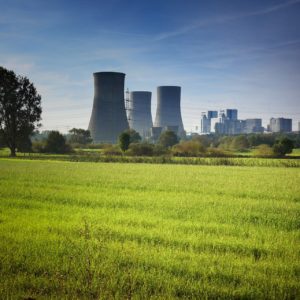
"There’s no low-carbon transition where power stays reliable and affordable without nuclear. Once they’re built, these plants are cheap: the fuel is cheaper than gas and coal, you’ve got some maintenance (which, by the way, you’ve also got on wind and solar), and a plant can operate for 80 years. And again, it's all based on mature technology that’s already powering our homes and businesses. The possibilities for fusion—the process of combining atoms to create energy that saw a breakthrough in December—are a whole ‘nother conversation."
Scientists Unveil Least Costly Carbon Capture System to Date
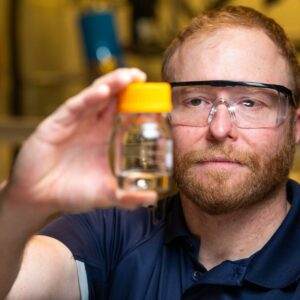
"Deploying this technology will reduce emissions, said Heldebrant. But it could also help stir the development of other carbon capture technology and establish a market for CO2-containing materials. With such a market in place, carbon seized by anticipated direct air capture technologies could be better reconstituted into longer-lived materials."
Hydrogen plane startup looks to reshape aviation industry
"It's an ambitious timeline that will require arduous regulatory approvals and new infrastructure at airports. 'If we have all these beautiful engines with no fuel at the airports, nobody's gonna fly them,' he told Axios."
NRC Certifies NuScale’s Small Modular Reactor Design in Historic Ruling
NuScale’s SMR design is the first to be cleared for use in the United States
For all their ferocity, California storms were not likely caused by global warming, experts say
"'Most recent storm systems don’t hold a candle to the kinds of extreme prolonged storms of the last century,' said Daniel Swain, a climate scientist at UCLA. 'They do, however, point in the direction of the episodes of hydro-climate we can expect to see more of due to global warming.'"
Nuclear-powered datacenter throws open doors to tenants this year
"Touted as the first facility of its kind in the US, datacenters at the campus will be directly connected to the 2.5 gigawatt Susquehanna power plant 'without intermediation by legacy electric transmission and distribution utilities,' which the company claims will allow it to offer the most attractive energy rates in the country."