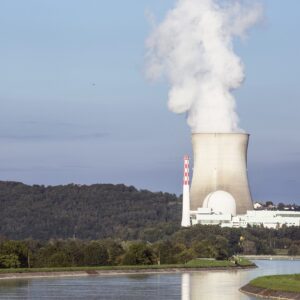
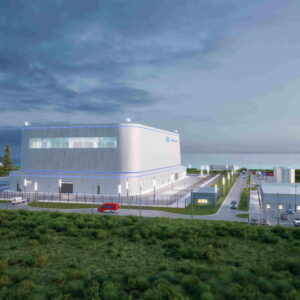
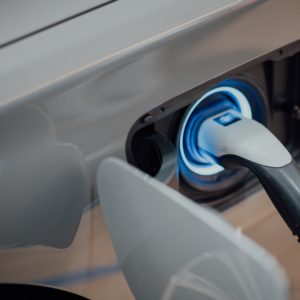
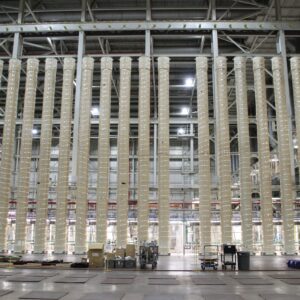
"What once seemed like a pipeline dream is slowly but surely turning into a sustainable reality - significant investments by major carbon capture companies have resulted in cheaper technologies, offering a promising future for both companies and technology in carbon capture projects. This presents new opportunities to tackle climate change by reducing greenhouse gas emissions, which is crucial in achieving net-zero emissions."
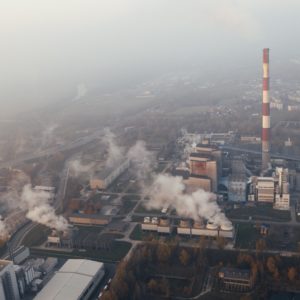
Why Is There Buzz About Pink Hydrogen?
Pink hydrogen could soon play a key role in our clean energy mix.
Three States that are Advancing Energy Innovation
By implementing pro-growth policies at the state and federal levels, policymakers can ease burdens to allow innovators and entrepreneurs to continue this remarkable progress.
Genetically Modified Trees Are Taking Root to Capture Carbon
Margaret Osborne of Smithsonian Magazine reports on a startup that is using genetically modified trees to capture carbon. online pharmacy buy sildalis online cheap pharmacy “In 2021, Living Carbon received a $500,000 grant from the Department of Energy, which predicted that the genetically engineered trees could remove billions of tons of carbon dioxide from the...
United’s $100M fund to invest in startups making sustainable jet fuel
"Passengers who book United flights within or from the United States will also be able to contribute to the new fund by adding $1, $3.50 or $7 to their final ticket price. The gesture is likely meant to soften the “flight shame” that travelers might be feeling, albeit without directly reducing the planet-warming emissions generated by a particular flight."
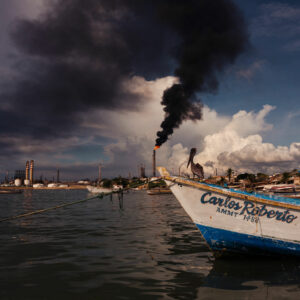
Venezuela’s Oil Industry, Reopening to Investors, Is Major Polluter
"'It’s not even happening once in a while anymore, we’re now talking about spills and leaks that are practically constant because there’s no personnel to handle them,' Mr. Quero said. Venezuela has seen many experienced oil field technicians and laborers flee the country over the past decade as the economy tanked and as the collapse of the local currency, the bolivar, rendered salaries the equivalent of a few U.S. dollars a month, oil union leaders say."
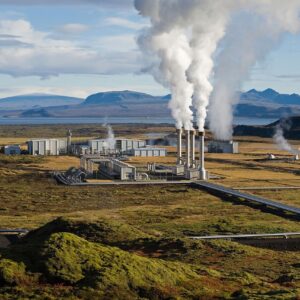
Geothermal Energy Report Predicts Future Drilling Boom in Texas
The Lone Star state is a geothermal sleeping giant
Li-Bridge outlines steps for U.S. to double annual lithium battery revenues to $33 billion and provide 100,000 jobs by 2030
"Lithium-based batteries are also critical for achieving U.S. climate objectives. The report states that without reliable access to lithium battery technology, the U.S. has no chance of meeting its 2050 net-zero carbon emissions goal or ensuring an inclusive and socially responsible industry. With U.S. defense applications increasingly dependent on lithium-based batteries, the report warns of the national security risks in relying on batteries and battery components made abroad."
Innovation Drives Down the Cost of Powering Electric Cars
"What about storing energy for utilities? Form Energy in Somerville, Massachusetts, has developed a gigantic iron-air battery that it says can store more than 100 hours of solar and wind electricity. To discharge energy, oxygen entering the battery produces hydroxide ions that rust the iron pellets, sending electrons to the circuit. Recharging reverses the process, turning rust back into metal and releasing oxygen bubbles. The company projects that its battery packs will cost less than $20 per kilowatt-hour, making them competitive with legacy power plants."
Centrus Competes Construction, Initial Testing of HALEU Demonstration Cascade
"Centrus’s pioneering cascade uses gas centrifuge machines, which feed uranium hexafluoride (UF6)—heated to a gaseous state—into a rotor inside the centrifuge machine. A rotor spinning at high speed inside a steel casing uses centrifugal force to concentrate the heavier U-238 isotopes at the outer wall of the rotor and the lighter U-235 isotopes toward the rotor center. The streams are then fed to the next machines in a “cascade” to achieve the desired level of enrichment. Centrus will use a 4.95% LEU feed material for its planned HALEU 16 AC100M-centrifuge cascade. It suggests roughly 85% of the separative work units (SWU)—a measure of enrichment needed to produce HALEU—is already contained in the LEU feed material."