"Electrolyzers split hydrogen from water, yielding a fuel that can be produced and used without spewing greenhouse gases into the air. Although hydrogen is seen as a potential fuel for everything from city buses to data centers, most of it sold today goes to oil refineries and fertilizer plants, and it’s stripped from natural gas in a process that gives off carbon dioxide."
Here’s how a former NASA engineer hopes to clean up the world’s dirtiest waterways
Breanne Deppisch of The Washington Examiner reports on the work of one former NASA engineer to clean up dirty waterways. buy bactroban online bactroban no prescription “‘The SPEARS work like a sponge,’ Albino explained in an interview with NASA after he founded the company. ‘Individual spikes are inserted into a mat structure, and you press...
Wildfire startup puts AI-powered eyes in the forest to watch for new blazes and provide rapid alerts
"DNR is in discussion with established corporations and startups to explore solutions. That includes Google, which has promoted wildfire detection tools that are integrated into Google Maps, and Lockheed Martin, the defense industry juggernaut that is applying satellite tech to the wildfire space. Startup Data Blanket is talking with DNR regarding its AI-based drone system for surveying fires to map their perimeters and helping marshal resources. The Seattle company is doing demos with local fire departments."
An Innovative Solution to Reduce Air Travel’s Climate Impact
With the help of data and AI, American Airlines may be on to a cost-effective solution to significantly reduce the climate effect of contrails.
Floating Solar Panels Turn Old Industrial Sites Into Green Energy Goldmines
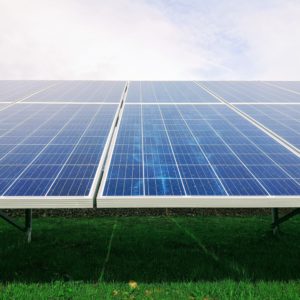
"Austria, home to central Europe’s biggest floatovoltaic array, has rolled out special subsidies for floating PVs and other novel projects that combine electricity generation with an ecological or agricultural aim. Scientific studies show that FPVs improve water quality by reducing algal blooms. Panels can also help save water during times of drought by reducing evaporation and decreasing sunlight penetration."
U.S. scientists hit new fusion energy milestone
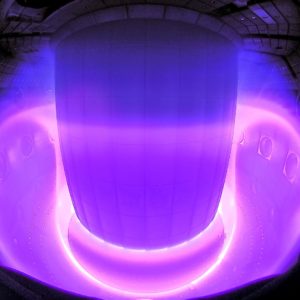
"Scientists have worked for decades to develop nuclear fusion as a source of effectively limitless clean energy, but Axios' Alison Snyder notes that there's still a long way to go in overcoming further scientific, technical and financial hurdles for it to become a commercial power supply."
Tesla alum aims to build the power company of the future
"In Equilibrium’s first commercial deal, the startup pays Jupiter Power a monthly fee for the next seven years to operate a 100-megawatt battery system in West Texas. Equilibrium currently dispatches that battery for optimal profit in the wholesale markets of Texas grid operator ERCOT. Of course, actually making money in Texas’ rough-and-tumble merchant power markets is never guaranteed. To increase its odds of success, Equilibrium built an AI-enhanced digital trading platform to orchestrate its bids based on analysis of the myriad variables influencing the markets."
Czech Republic Expanding Nuclear Power Program
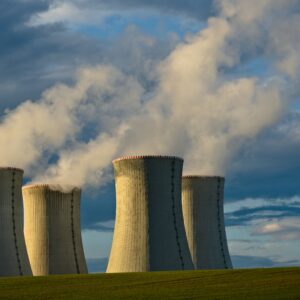
"CEZ in May of this year launched a tender to add two generators to the Temelin Nuclear Power Station, a 2,056-MW facility with two VVER-1000 units designed by Russia’s Gidropress. The units came online in 2000 and 2002. CEZ said its wants construction of the new generators at Temelin, representing an investment of about $160 million, to take place between 2028 and 2030. CEZ in March 2022 announced a tender seeking companies to bid on a one-unit expansion of the Dukovany nuclear power plant."
Alaska’s newest gold rush: Seaweed
"Alaska has already attracted large operators. Seagrove Kelp now ranks as the country’s largest active seaweed farm. There are nearly a dozen other applications pending for kelp farms of at least 100 acres submitted by a mix of Alaskan, out-of-state and overseas players."
Power to the People: Microgrid Gives Community Control of Its Energy
"Power is generated and distributed locally with multiple levels of security in the BlockEnergy system, which includes protection from cyber and other threats. In the event of an outage, there is no action required of the system as it is 'always-on' and not dependent on the grid for ongoing power reliability. That provides resiliency, as there is no single point of failure—each BlockHome has its own solar generation, energy storage, and controls."