Getting climate, energy & environment news right.

Electric Cars Emit More Particulate Pollution
Post

Electric Cars Emit More Particulate Pollution

"Where do most particulate emissions attributed to cars come from? California speaks as if their primary source is the tailpipe. That was true in the past. But today most vehicle-related particulate matter comes from tire wear. Cars are heavy, and as their tires rub against the road, they degrade and release tiny, often toxic particles. According to measurements by an emission-analytics firm, in gasoline cars equipped with a particle filter, airborne tire-wear emissions are more than 400 times as great as direct exhaust particulate emissions."

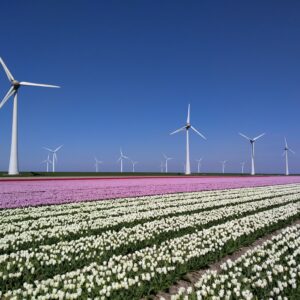
A new Energy Department program aims to recycle wind turbine magnets
Post

A new Energy Department program aims to recycle wind turbine magnets

"Funded by the 2021 Bipartisan Infrastructure Law, the prize seeks to develop ​“a cost-effective and sustainable recycling industry” for wind turbine components that aren’t being recycled commercially today, including wind turbine blades and the supersized magnets inside some generators. Each winning group receives a $75,000 cash prize to help advance its recycling idea. If a team’s initial results are promising, it may go on to win an additional half a million dollars in cash, as well as a $100,000 voucher for technical assistance from a DOE national laboratory."

Oceanography professors transform a research tool into a startup that’s sucking CO2 from seawater
Post

Oceanography professors transform a research tool into a startup that’s sucking CO2 from seawater

"In the startup’s carbon dioxide removal system, sunlight will activate the chemical, and the acidic protons will flow into a tank of seawater. That will cause carbon dioxide gas to bubble out of the water, something like it does in a highly carbonated soda. The system captures the carbon dioxide for disposal and transfers the protons back to the photoacid. The seawater is returned to the ocean."

A Startup’s Technology Can Help Solve Lithium-Ion Batteries’ Fire Problem
Post

A Startup’s Technology Can Help Solve Lithium-Ion Batteries’ Fire Problem

"San Jose, California-based Anthro’s differentiator is that its electrolyte is a drop-in technology that wouldn’t require battery manufacturers to make any changes to their process, according to Mackanic. Despite these advantages, the startup’s current electrolyte production costs are about twice that of producing conventional liquid electrolytes, due in part to the cost of its materials. He expects to be able to get that down to a 10% to 20% premium at commercial scale."

DOE, Kairos Unveil Milestone-Based Funding Agreement for Advanced Nuclear Demonstration Project
Post

DOE, Kairos Unveil Milestone-Based Funding Agreement for Advanced Nuclear Demonstration Project

"In December 2023, notably, the company secured a construction permit from the Nuclear Regulatory Commission (NRC) to build the non-power demonstration reactor in Tennessee. The approval marks the NRC’s first green light for the construction of a non-water-cooled reactor in more than 50 years. Kairos, however, must first secure a separate NRC operating license before it can begin operating the Hermes demonstration to comply with the regulatory body’s two-step, 10 CFR Part 50 licensing process."

Sparing the Land by Collecting Minerals at Sea
Post

Sparing the Land by Collecting Minerals at Sea

"In the end, the better question to ask is not whether humanity should collect deep-sea metals, but rather how. Before claiming that the cost of collecting nodules from the ocean floor is too high, researchers, activists, regulators, and companies should explore the degree to which operators can reduce impacts and define what obligations to hold industry accountable to. As such, calling for immediate moratoriums on deep-sea mining is not only premature, but a circumvention of constructive dialogue and negotiation."

The Great Salt Lake Is Full of Lithium. A Startup Wants to Harvest It.
Post

The Great Salt Lake Is Full of Lithium. A Startup Wants to Harvest It.

"Lilac says its technology is much faster, taking a matter of hours from the time of extraction, while preserving water levels. Its method deploys reusable ceramic 'beads' that attach to lithium atoms to separate them from the brine. Snydacker says the company has spent more than 500,000 hours testing the technology on more than 70 brine samples around the world."

Subscribe to our exclusive email designed for conservatives who care about climate.

Help us promote free market solutions for climate change.

5 Incredible Ways Economic Freedom Helps the Planet.

Sign up for our newsletter now to get the full list right in your inbox.

Thank you for signing up

Help us promote sensible solutions for both planet and prosperity.

Download Now