"Icon has spent 18 months developing its artificial intelligence program — named Vitruvius after an ancient Roman architect — which uses a chatbot to converse with would-be homeowners about their dream projects. After the user responds to a series of prompts, Vitruvius offers several versions of a house, complete with exterior and interior renderings and floor plans."

Irrigation tech startup led by farming experts blossoms with revenue growth and new cash
"Smaller farms have historically irrigated using labor-intensive, manually operated systems. The systems could malfunction, flood crops, and operated inefficiently, requiring farmers to regularly go into the fields to check sprinklers and turn them on and off."
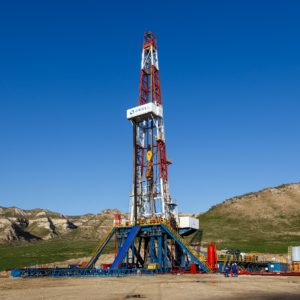
Frackers Are Now Drilling for Clean Power
"Technological advances in well drilling, modeling and sensor technology are expected to change that: The Energy Department estimates geothermal energy could power the equivalent of more than 65 million U.S. homes by 2050."
How rerouting planes to produce fewer contrails could help cool the planet
"In those simulations, the researchers found that reducing the warming effect of contrails by 73% increased fuel costs by just 0.11% and overall costs by 0.08%, when averaged across those tens of thousands of flights. (Only about 14% of the flights needed to be adjusted to avoid forming warming contrails in the simulations.)"
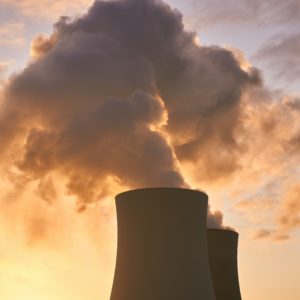
Atomic Canyon Emerges from Stealth with Neutron, an AI-powered Search Platform Designed to Energize the Nuclear Sector
"Neutron uses AI-powered search, trained on all 52 million pages from the NRC's Agency-wide Documents Access and Management System (ADAMS) database. Despite ADAMS offering access to millions of publicly available documents for nuclear facilities, the process of addressing NRC requests and obtaining regulatory approvals is currently cumbersome. Cutting search time by orders of magnitude, Neutron identifies and streamlines patterns and processes, leading to renewed growth in the nuclear sector."
What’s the Future of Direct Air Capture?
While the technology is still in its relative infancy, cost will be a determining factor for the future of DAC. Policies that increase competition and instill market discipline will help.
Pressed for Space, Solar Farms Are Getting Creative
"As solar gains momentum, its champions are getting more creative about where to place panels. There are solar arrays on top of big-box stores, solar arrays on yachts and solar farms that float. There are panels small enough to work on a balcony and even small enough to attach to a smartphone. To minimize clearing land, engineers are also working on incorporating the technology into existing infrastructure. From landfills to art installations, here are five unexpected places you can find a solar farm — or at least some strategically placed panels."
Investments in Carbon Dioxide Removal are Yielding Innovative Results
Spurring private sector innovation requires supporting carbon removal technologies in their early stages, and that means supporting the vital work that programs like the Carbon Negative Shot aim to accomplish.
Electric Cars Emit More Particulate Pollution
"Where do most particulate emissions attributed to cars come from? California speaks as if their primary source is the tailpipe. That was true in the past. But today most vehicle-related particulate matter comes from tire wear. Cars are heavy, and as their tires rub against the road, they degrade and release tiny, often toxic particles. According to measurements by an emission-analytics firm, in gasoline cars equipped with a particle filter, airborne tire-wear emissions are more than 400 times as great as direct exhaust particulate emissions."
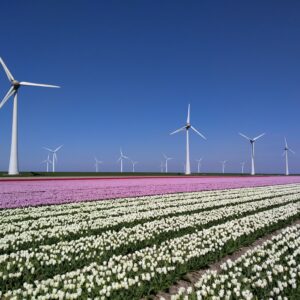
A new Energy Department program aims to recycle wind turbine magnets
"Funded by the 2021 Bipartisan Infrastructure Law, the prize seeks to develop “a cost-effective and sustainable recycling industry” for wind turbine components that aren’t being recycled commercially today, including wind turbine blades and the supersized magnets inside some generators. Each winning group receives a $75,000 cash prize to help advance its recycling idea. If a team’s initial results are promising, it may go on to win an additional half a million dollars in cash, as well as a $100,000 voucher for technical assistance from a DOE national laboratory."