As the Iran war continues, oil prices keep rising. Gasoline has climbed to over $4 per gallon for the first time in four years. The ripple effects are spreading across the economy as markets that depend on affordable crude begin to absorb the disruption of roughly one-fifth of the world’s oil and liquefied natural gas that normally passes through the Strait of Hormuz. Everything from airline tickets to groceries is seeing upward pressure as the prices of jet fuel, diesel, and fertilizer all rise.
Meta Launches ‘Workforce Academy’ to Train Workers to Build Data Centers
Forget about learning to code. Meta says it’s time to pick up a wrench. The company is starting a “workforce academy” to train Americans to build its data centers as skilled trade workers become a sought-after commodity. The five-week training program, in partnership with CBRE and the Associated Builders and Contractors, is free of charge and guarantees graduates a job at...
How Conservation X Labs Is Reimagining Wildlife Conservation
Conservation science has long defined itself as a crisis-solution field, rooted in problem-solving. Yet for years it has been better at identifying species and regions at risk than at delivering solutions to help them. Identifying this key downfall, Conservation X Labs has risen to the occasion. A non-profit focused on slowing biodiversity loss, it promotes innovation and the development of cutting-edge technology to tackle conservation challenges.
Why one of the cities most dependent on the Colorado River now has water for sale
Even as California is offering to take less water from the drought-shrunken Colorado River, one of the state’s biggest cities that’s long been the most dependent on it curiously now has excess water to sell. On a good year, San Diego gets barely eight inches of rain. And not too long ago, the picturesque coastal...
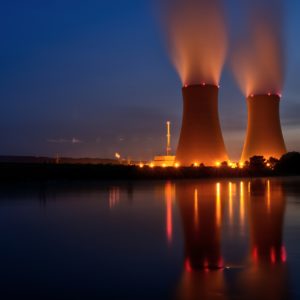
3 Proposals to Reduce the Time and Cost of Nuclear Deployment
After two decades of flat demand, power consumption is surging. Grid Strategies forecasts 5.7 percent annual growth over the next five years, and the peak demand could be equivalent to 15 times New York City’s peak energy consumption.
Meanwhile, electricity prices are rising faster than inflation, and families and businesses across the country are feeling the effects.
It’s clear we need more supply, and nuclear power can be part of the solution. It’s safe, clean, dependable, and scalable. The key question for policymakers and ratepayers alike is: Is it cost-competitive?
Halter Launches World-First Virtual Fencing Via Satellite
Halter, the leading digital operating system for pasture-based ranches, today announced the launch of direct-to-satellite connectivity for its smart cattle collars — a world-first that removes the need for cell towers or on-ranch infrastructure. Using Starlink, the new technology enables ranchers to manage cattle anywhere they can see the sky. Combined with a suite of...
The Texas Energy Reference Design: Stress-Testing Load Growth Challenges for an AI Century
Texas has long stood apart from national energy policy—its own grid, its own rules. In 2026, that independence has made it the top destination for AI-driven electricity demand. While Washington grapples with the pressures of building data centers, ensuring reliability, and controlling costs, Texas is tackling everything at once. The Electric Reliability Council of Texas (ERCOT) market is solving for speed-to-power by surmounting transmission bottlenecks, phantom load growth, buying down residential rate increases, and more.
Could AI Make Nuclear Permitting Faster?
Implementing artificial intelligence may help make nuclear permitting faster, even with existing bureaucratic hurdles.