If you ask the average person what the biggest technology breakthrough since the turn of the century has been, the smartphone is a safe bet for the most common answer. Recency bias could lead to some artificial intelligence (AI) responses. Unless you’re in the business or completely fixated with Landman, it’s unclear how many folks are saying the Shale Revolution.
Fighting Fire with Federalism
Last month, Utah and the U.S. Forest Service announced a new partnership to accelerate forest restoration, reduce wildfire risk, and improve forest management across the state. Known as a shared stewardship agreement, the partnership establishes a long-term cooperative framework through which the state and federal government jointly set restoration priorities and coordinate the use of existing authorities to carry them out.
Desperate in failing Colorado River negotiations, Wyoming water officials pitch conservation bill at home
Read more in Wyoming News here.
Should the Government Insure Permits?
A new idea has emerged in the federal permitting reform space: “de-risking” permits via a government-managed insurance program. The context for this development is that investors lack confidence in their ability to secure federal permits due to the power of political appointees at permitting agencies to delay, cancel, or revoke permits. This has resulted in a new permitting reform priority: “permitting certainty,” or the notion that a permit, once granted, won’t be reversed under a future administration. While this is a laudable goal, policymakers must appreciate that government interventions can make these problems worse.
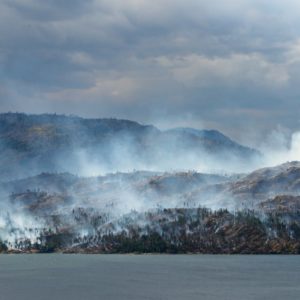
Pray for Snow, Plan for Fire
Washington, D.C., may long be tired of the frigid temps, above-average snowfall, and icy roads. But out West, signs reading “Pray for snow” are everywhere. Utah Governor Spencer Cox even encouraged Utahns to join together in prayer for snow.
PM2.5, Regulatory Uncertainty, and the Role of Science in Policymaking
The Environmental Protection Agency’s recent decision to temporarily stop assigning dollar values to the projected health benefits of reducing fine particulate matter (PM2.5) and ozone has sparked renewed controversy over air pollution regulation. As I discussed last week, the agency framed the move as a response to persistent uncertainty in estimating PM2.5 health effects, not as a withdrawal from regulating air pollution or considering public health impacts.
Snow, Cold, And The Quiet Miracle Of Modern Energy
Kevin Dayartana and Paul Teller write in the Daily Caller. Read more in the Daily Caller here.
NRC Launches Major Reorganization as Licensing Deadlines and Reform Workload Intensify
POWER Magazine editor Sonal Patel covers the NRC’s effort to keep up with a surge in nuclear licensing and reform demands. Read more in POWER Magazine here.
Permitting Reform Is the Only Way America Can Build Again
As energy affordability becomes an increasing concern and energy demand continues to rise, America’s ability to efficiently permit and build infrastructure will be crucial to its success.
Last month, the EPA proposed reforming the Clean Water Act’s Section 401. This isn’t just a good idea. It’s long overdue.
DOE Takes Important Step to Modernize Nuclear Permitting
The Department of Energy recently announced that certain advanced nuclear reactor projects can qualify for a categorical exclusion from the National Environmental Policy Act’s (NEPA) full review process. The move is a practical step forward to accelerate innovation, reduce unnecessary cost and delay, and strengthen U.S. competitiveness in nuclear energy.