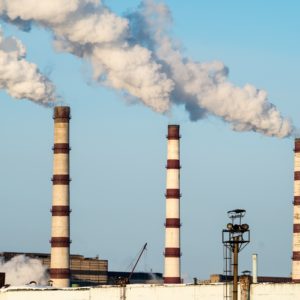
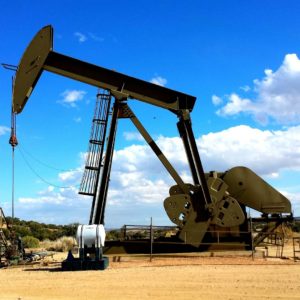
"In the past, oil-and-gas entrepreneurs who closed one drilling venture often started another. Today, money has gotten tight for many new fossil-fuel projects in the U.S. as the productivity of wells wanes and climate-conscious investors shy away, industry executives say. Although many big fossil-fuel companies are spending billions on acquisitions to increase production, the amount of money private investors are committing to funds that invest in oil-and gas-related assets has roughly halved so far this year versus a recent peak of $102 billion in 2016, according to investment data tracker Preqin."
Rising peak demand, 83 GW of planned retirements create blackout risks for most of US: NERC
"A spokesperson for MISO said the grid operator 'concurs with NERC’s key conclusions and recommendations,' and is taking steps to address potential resource shortfalls. A new seasonal resource adequacy construct, changes to resource accreditation, development of a long-range transmission plan and adoption of a reliability-based demand curve will help, they said."
Poverty is killing the Amazon rainforest. Treating soil and farmers better can help save what’s left
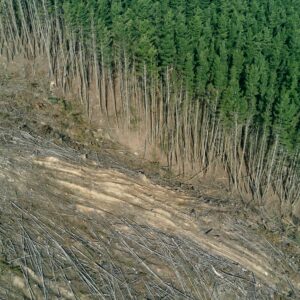
"The only way to meet both goals is to find more paths for people to make a living in the Amazon without further destroying the rainforest, say experts who have long worked in the region. That means using already deforested land more efficiently — to reduce pressure to clear more forest — as well as supporting businesses that sustainably harvest native products such as açaí and cacao."
Farmers race to innovate as climate change threatens African food supply
"The founders of EthioChicken, set up 13 years ago, hawked their first crop of chicks out of baskets strapped to motorbikes when a contract fell through. But now the company employs 1,600 people directly and 10,000 agents, and it has been boosted by investments from the World Bank’s private arm, the International Finance Corp.; and the Gates Foundation. The company projects that it will sell 35 million chicks this year and has expanded to five other countries under the umbrella Hatch Africa."
US nuclear start-ups battle funding challenge in race to curb emissions
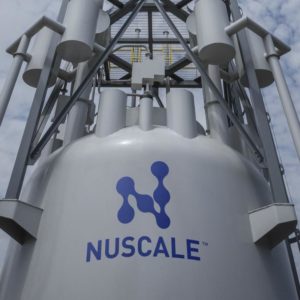
"The industry is racing to develop SMRs — new types of advanced nuclear reactors that have a power capacity of 300MW or less, which is about a third of standard facilities. Governments and private investors — including Rolls-Royce, GE and Hitachi — have spent billions of dollars to commercialise the technology over the past decade."
Economic and Environmental Lessons from Singapore
Singapore has opened up its markets to allow investment and innovation to flourish.
Green protectionism will slow the energy transition
"Rather than micromanaging production, governments should unleash investment, by acting boldly to strip back permitting rules and ease the risk of projects in the global south. They also need to face up to the fact that protectionism frustrates their climate goals. It leads to lower returns, higher prices for power and more broken promises over decarbonisation."
Could carbon credits be Africa’s next big export?
"KOKO hints at why there is excitement about carbon markets. The African Carbon Markets Initiative (ACMI), a UN-backed consortium, reckons that Africa uses just 2% of its annual carbon-credit potential; it aims for Africa to sell $100bn worth of credits a year by 2050. Even a fraction of that would be a boon for a continent where annual foreign direct investment has never surpassed $80bn. William Ruto, Kenya’s president, calls carbon credits an “unparalleled economic gold mine” and his country’s “next significant export”. Yet, as is often the case with Africa and its natural resources, things could go wrong."
Battery Prices Are Falling Again as Raw Material Costs Drop
"The big question, as always, is what happens next. BNEF’s energy storage team expects prices to closely follow the trajectory of raw material prices. We’re projecting pack costs will fall to $133/kWh next year in real 2023 terms. In the long-term, based on the same learning rate as the previous year, battery pack prices are expected to fall below $100/kWh in 2027."
Rare earth discoveries mean coal mines could have a key role to play in the energy transition
"In Scotland, researchers have been looking at how the water that’s flooded old, disused mines can be used to provide decarbonized heating to buildings."