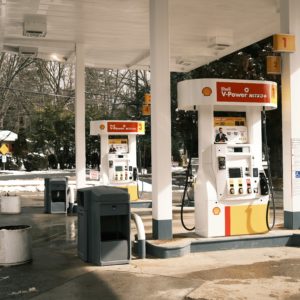
The U.S. Strategic Petroleum Reserve has fallen to the lowest level in more than 40 years as emergency stocks are released to help ease the supply disruption triggered by the Iran war. The SPR stood at 340.3 million barrels as of June 12, the lowest level since the summer of 1983, according to data released...
Switch Bioworks Advances Microbial Fertilizer to Corn Trials
Switch Bioworks is moving its engineered microbial fertilizer into U.S. field trials, giving the company a practical test for technology designed to reduce dependence on conventional nitrogen fertilizer. The San Carlos, California-based biotechnology company has received authorization from the U.S. Department of Agriculture and the U.S. Environmental Protection Agency to begin advanced research and development field trials across multiple...
A New Coal Plant in the U.S.? Once Unthinkable, Now a Strong Maybe
New coal-fired generation has been effectively off the table in the U.S. for more than a decade. The TerraSpark Energy Campus is testing whether that’s still true. The DOE’s selection of the Grant County, West Virginia, project for up to $18.5 million in development funding is a notable signal that surging electricity demand—driven by data...
Chris Wright says nearly 100 ships have used Jones Act waiver to move oil
Energy Secretary Chris Wright said that nearly 100 vessels have used the Jones Act waiver granted by President Donald Trump, which allowed refiners to use foreign-flagged ships to transport fuel between United States ports. The Jones Act waiver “has been used enormously,” Wright said in testimony Wednesday before the House Science Space and Technology committee. “I think...
An urgent message to Congress: Refill the Great Salt Lake
The Great Salt Lake is in decline. Shorelines that once defined northern Utah’slandscape have receded dramatically over the past two decades, exposing thousands of acres of dry lakebed and intensifying concerns over dust pollution, ecosystem collapse, and long-term water scarcity across the Wasatch Front. Scientists have warned repeatedly that if current trends continue, the consequences will extend...
EPA won’t set nationwide standards for data centers
The Trump administration is not going to set nationwide environmental requirements or recommendations for the rapidly growing data center industry, EPA Administrator Lee Zeldin said Wednesday. While there are technologies and practices that reduce air pollution and water usage, states and communities know what works best for them, Zeldin said at the POLITICO Energy Summit...
Meta Launches ‘Workforce Academy’ to Train Workers to Build Data Centers
Forget about learning to code. Meta says it’s time to pick up a wrench. The company is starting a “workforce academy” to train Americans to build its data centers as skilled trade workers become a sought-after commodity. The five-week training program, in partnership with CBRE and the Associated Builders and Contractors, is free of charge and guarantees graduates a job at...
DOE reinstates $57M American Battery grant
Last October, DOE canceled $700 million worth of battery and manufacturing projects grants, including American Battery’s grant, saying the projects either didn’t meet certain milestones, were not economically viable or would not “adequately advance the nation’s energy needs.” American Battery says it was one of “hundreds” of grants that were canceled in that process. In 2022,...
This software firm has a plan to take grid-enhancing tech nationwide
A major grid-tech company is asking the Trump administration to fund a project it says could significantly boost the nation’s ability to move power around — without building a single new transmission tower or line. Open Access Technology International (OATI) is a Minneapolis-based firm whose software is used by nearly every North American transmission grid operator to manage the flow...
Wildfires Are Reversing Years of US Air Quality Gains, Study Finds
Wildfires have worsened ozone levels across the United States so much over the last decade that they have reversed around four years of progress, a new study has found. Surface ozone levels, or smog concentrations, steadily increased from 2015 to 2024, deteriorating air quality across the Midwest and Western U.S., researchers at the University of...