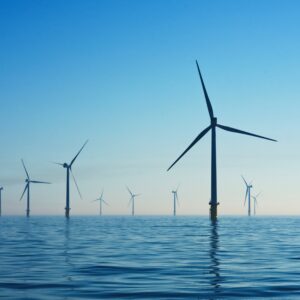
Advocates of large-scale transmission expansion have recited a simple slogan for years: There is no transition without transmission. By this, they mean that the shift to renewable energy will require vast new power lines. Whatever one thinks of climate policy, that argument no longer carries much weight. The relevant question now is whether building more transmission will make electricity more affordable.
Author: Nick Loris
The Clean Air Act Needs a Regulatory Face-Lift
The Clean Air Act (CAA) is now 55 years old—and shows its age. That’s not a critique of its legacy. The law, in conjunction with innovation and private investment in environmental improvement, has contributed to significant improvements in air quality, public health, and environmental protection. But its regulatory framework still operates like it’s 1970, often resulting in costly, inefficient regulations that stifle economic growth for little environmental gain.
Don’t Get Complacent on Forest Management
Nevertheless, a mild season doesn’t mean our forests are healthy or that the risk has disappeared. It simply means we were lucky. And luck is not a forest management plan.
Taking the Politics Out of Permitting Reform
Efficient permitting isn’t a partisan luxury – it's a national imperative. As our nation confronts rising energy demand, aging infrastructure, and growing pressure on our natural lands, the question is not whether we should reform our permitting processes; it’s how quickly and boldly we will.
What Can States Do to Embrace Advanced Nuclear?
At a recent hearing in Tallahassee, Florida, I testified on the advantages and promise of advanced nuclear technologies, as well as the policies needed to reduce costs and bring small modular reactors online more efficiently.
The PERMIT Act Will Help Meet America’s Growing Energy Needs
Introduced by Rep. Mike Collins (R-GA), the legislation offers targeted reforms to how we review and approve infrastructure and, in doing so, advances three vital goals simultaneously: helping to keep energy affordable, improving reliability, and protecting the environment.
Nobel Prize Winners Show Why Innovation is Essential for People and the Planet
Joel Mokyr, Philippe Aghion, and Peter Howitt won the 2025 Nobel Prize in Economics for their work on innovation-driven economic growth. Innovation spurs technological advancements that improve human flourishing and quality of life. It is also essential for a cleaner environment. As we remind policymakers in the U.S. and abroad, free economies are clean economies.
The Left’s Energy Amnesia
Energy price politics is not a new game in Washington. Typically, politicians blame the opposing side for higher gas prices. These days, higher prices are at the meter as electricity rates have more than doubled the inflation rate over the past year.
Reforming Radiation Standards to Unlock Nuclear Energy’s Full Potential
Executive Order 14300 explicitly calls for a re-evaluation of the Linear No-Threshold (LNT) model and the As Low As Reasonably Achievable principle (ALARA). These two frameworks have guided nuclear regulation for decades. While these models may have been defensible when first adopted, they have hardened into regulatory doctrines that no longer align with the best available science, economic realities, or the nation’s strategic energy goals.
How the SPEED Act Seizes the Moment on Permitting Reform
There has been bipartisan support for improving permitting processes, and both Republican and Democratic administrations have acknowledged the need to modernize NEPA. At a recent House Natural Resources Committee hearing, I testified to explain how narrowing the scope of environmental reviews and reining in the delays imposed by protracted litigation would help deliver more affordable power, reliable infrastructure, and a healthier environment.