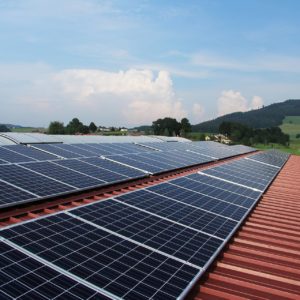
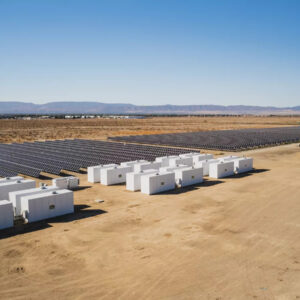
"The Klebergs’ solar array will help prevent 1 million pounds of coal from being burned to generate electricity. 'The legacy that I’d like to leave for my children is to leave it better than it was left for me. Improve the land, improve conservation methods, and solar is one of those things—it will carry on for the next 150 years.'"
Articles from Around the Web
Beer Brands Focus On Sustainability To build Trust With Consumers
"HEINEKEN aims to reach net zero emissions in its own operations by 2030 and to ensure the same throughout its value chain 10 years later. Since 2018, it has established more than 130 renewable energy projects, including solar-powered breweries."
The Home Depot Just Made a Major Change to How It Power Its Stores: ‘The Most Abundant Energy Resource On Earth’
"But this recent announcement was not the first time the orange-branded store went green. Over 80 of the company’s stores currently have rooftop solar arrays and many more use wind energy. These developments, when combined with the new solar purchase, are reportedly enough to power at least 500 of The Home Depot’s 2,319 stores."
Scientists Unveil Least Costly Carbon Capture System to Date
"Deploying this technology will reduce emissions, said Heldebrant. But it could also help stir the development of other carbon capture technology and establish a market for CO2-containing materials. With such a market in place, carbon seized by anticipated direct air capture technologies could be better reconstituted into longer-lived materials."
Hydrogen plane startup looks to reshape aviation industry
"It's an ambitious timeline that will require arduous regulatory approvals and new infrastructure at airports. 'If we have all these beautiful engines with no fuel at the airports, nobody's gonna fly them,' he told Axios."
Bureaucratic Red Tape Is Blocking a U.S. Nuclear Renaissance
"Plant Vogtle’s Units 3 and 4 are the first nuclear reactors to be constructed in the United States in more than three decades, and it’s no wonder. Overregulation and the absurd cost – both time-wise and financially – of the NRC permitting process are stopping clean, safe nuclear energy in its tracks. We’re allowing outdated fears and bureaucratic inertia dictate our energy future, while our energy security and climate goals suffer."
How Texas’ electricity plan could change the grid
"Critics, however, warn that the PUC is pushing the state toward a market design rooted in the past instead of embracing renewable energy and accelerating efforts to cut electricity use when demand is highest. Some also say the proposal would raise power costs for customers. And powerful legislators question whether the PUC’s plan will offer the reliability its supporters promise."
For all their ferocity, California storms were not likely caused by global warming, experts say
"'Most recent storm systems don’t hold a candle to the kinds of extreme prolonged storms of the last century,' said Daniel Swain, a climate scientist at UCLA. 'They do, however, point in the direction of the episodes of hydro-climate we can expect to see more of due to global warming.'"
Why Does the U.S. Tax Code Penalize R&D?
"Returning to R&D expensing—by which investments are written off immediately—makes sense. Virtually every single country around the world allows companies to deduct the full cost of R&D—and many subsidize it heavily. China, among other countries, does so using a 'super-deduction,' allowing companies to deduct more than 100% of their R&D costs. In China, companies may deduct 175% of R&D expenses. The U.S. is the outlier; it punishes investment by not letting companies deduct even 100% of R&D costs."
Willams’ CEO: Complex permitting, lack of infrastructure block nation’s natural gas potential
"'It used to take five years to build something like the Hoover Dam,' he said. 'Now, it takes us, at least for any kind of sizable project today, at least four years for the permitting process, not the construction. And generally, it will take us nine months to construct.'"