"In Equilibrium’s first commercial deal, the startup pays Jupiter Power a monthly fee for the next seven years to operate a 100-megawatt battery system in West Texas. Equilibrium currently dispatches that battery for optimal profit in the wholesale markets of Texas grid operator ERCOT. Of course, actually making money in Texas’ rough-and-tumble merchant power markets is never guaranteed. To increase its odds of success, Equilibrium built an AI-enhanced digital trading platform to orchestrate its bids based on analysis of the myriad variables influencing the markets."
Articles from Around the Web
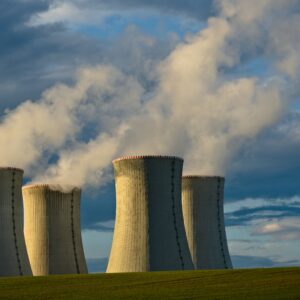
Czech Republic Expanding Nuclear Power Program
"CEZ in May of this year launched a tender to add two generators to the Temelin Nuclear Power Station, a 2,056-MW facility with two VVER-1000 units designed by Russia’s Gidropress. The units came online in 2000 and 2002. CEZ said its wants construction of the new generators at Temelin, representing an investment of about $160 million, to take place between 2028 and 2030. CEZ in March 2022 announced a tender seeking companies to bid on a one-unit expansion of the Dukovany nuclear power plant."
Alaska’s newest gold rush: Seaweed
"Alaska has already attracted large operators. Seagrove Kelp now ranks as the country’s largest active seaweed farm. There are nearly a dozen other applications pending for kelp farms of at least 100 acres submitted by a mix of Alaskan, out-of-state and overseas players."
Coastal Real Estate Can’t Seem to Price Climate Risk
"That study adds to a 2022 paper by Freddie Mac economists that found that Florida homes exposed to rising sea levels commanded no discount over those that aren’t. Another paper published this year estimated that flood-exposed residential properties were overvalued by $121 billion to $237 billion. In its totality, the available evidence suggests that the market has been insufficiently discounting the risk of rising seas because of a shortage of high-quality information — or at least an information assymetry between sellers and buyers — and that the best way to address it is to get the right data in front of people."
Conservatives Should Lead on Electric Transmission Reform
"Conservative thought leaders have been resistant to the idea of Congress imposing an arbitrary requirement on interregional transfer. Their instincts serve them well. Grid economics and reliability conditions vary by region. Some conservatives skeptical of a uniform requirement find a tailored approach more appealing, where transfer levels are determined by region-specific reliability conditions and benefit-cost analysis."
Power to the People: Microgrid Gives Community Control of Its Energy
"Power is generated and distributed locally with multiple levels of security in the BlockEnergy system, which includes protection from cyber and other threats. In the event of an outage, there is no action required of the system as it is 'always-on' and not dependent on the grid for ongoing power reliability. That provides resiliency, as there is no single point of failure—each BlockHome has its own solar generation, energy storage, and controls."
Rail freight transportation makes America a low-emissions leader
"Attempts to quickly find solutions may very well have the effect of driving up costs for freight rail transportation without having any measurable impact on safety, and they could undoubtedly result in a negative impact on U.S. efforts to lower global emissions."
UW researchers develop promising ‘bioplastic’ that can decompose like a banana peel
"The material has a number of additional features. It’s easy to recycle into new items. It’s fire resistant and will self-extinguish and char when exposed to a flame. It’s machinable and potentially strong enough for use in longer-lasting products such as furniture."
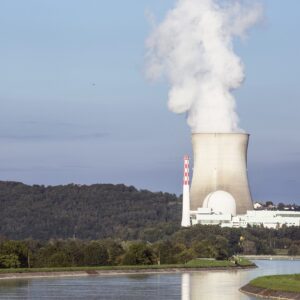
America’s first new nuclear reactor in nearly seven years starts operations
"Initial cost estimates for both reactors were $14 billion, and they were expected to power up in 2016 and 2017. But the costs have ballooned to $30 billion so far, and unit 4 is still not turned on, nuclear energy experts Matt Bowen, Rama T. Ponangi, and Andrew Evans from Columbia said."
A Stealthy L.A. Carbon Capture Startup Snags $80 Million From Big Oil And JetBlue
"The system is built around modules about the size of a 20-foot shipping container that pull in ambient air and run it through a series of filters. Water condensation, similar to what occurs in a dehumidifier, is collected, pumped out and stored, and the CO2 flows into tanks, CEO Will Kain told Forbes. He said there’s a 5-to-1 ratio of water produced for every ton of captured CO2. A pilot version of the system will open later this year in Bakersfield, California."