For the past two decades, we’ve been inundated with the message that climate change is an urgent and existential threat. We are told that unless countries band together and make large personal and economic sacrifices to curb greenhouse gas emissions, the world as we know it will end. In an interview last week, for example, António Guterres, Secretary-General of the United Nations (UN) said that overshooting the preferred 1.5 °C above preindustrial levels warming limit set by the Paris Agreement is now “inevitable” and he warned of “devastating consequences” for humanity.
That alarmist messaging has never been particularly helpful. It creates an all-or-nothing perspective on climate change, where one side pushes for aggressive mitigation efforts at the expense of all other considerations, while the other dismisses climate risks altogether. It’s time to drop that framing and instead adopt a perspective that puts climate risks in context. Smart energy policy should seek innovative, economically efficient ways to address climate risks, while also valuing affordability, reliability, and prosperity.
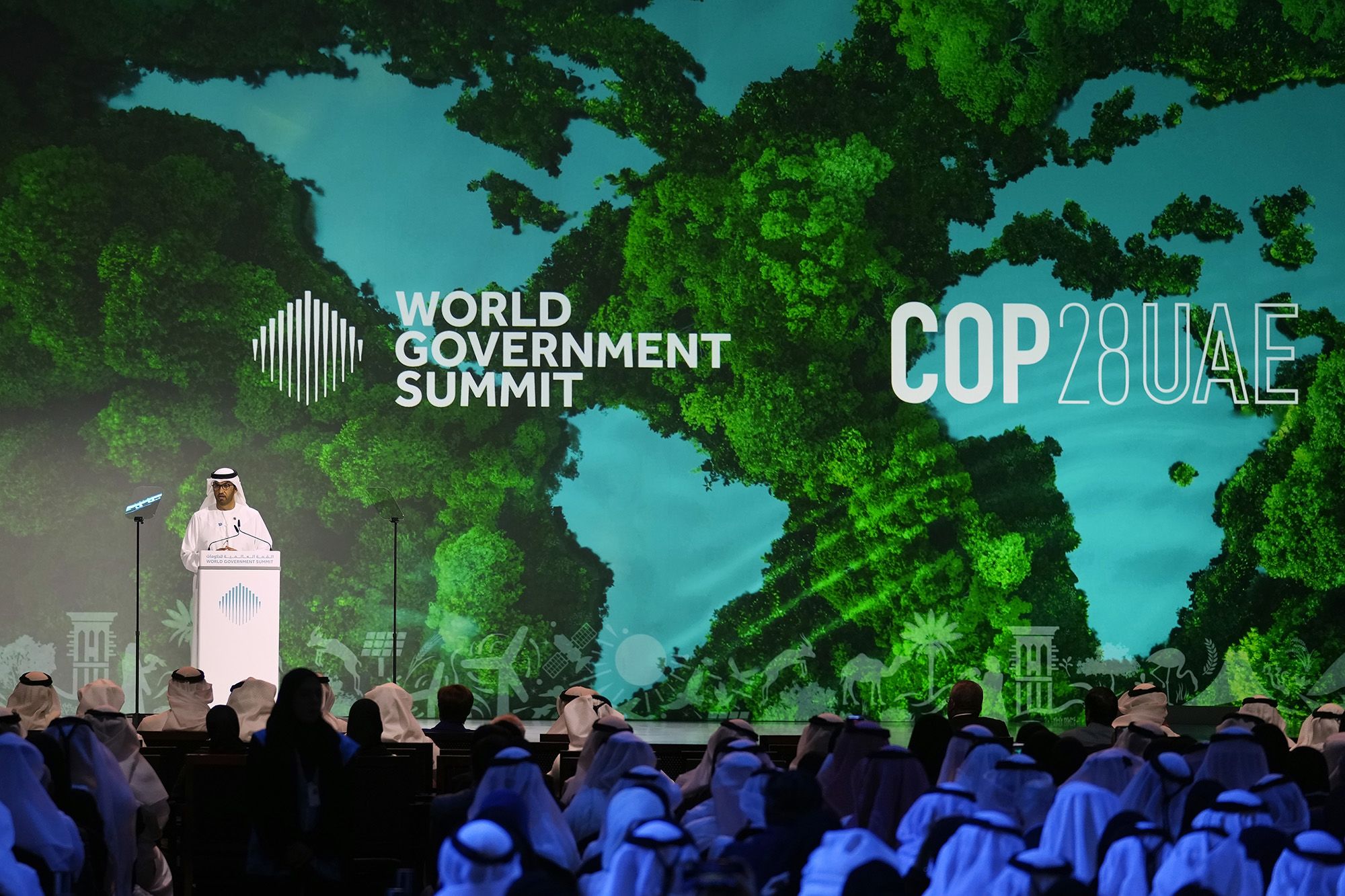
The upcoming 30th Conference of Parties (COP 30) of the UN Framework Convention on Climate Change (UNFCCC), held this year in Brazil, is an opportunity to embrace this reframing. The annual two-week conference brings together world leaders and delegates to negotiate global climate policy. This year’s agenda includes the proposed $125 billion “Tropical Forest Forever Facility,” designed to reward tropical-forest conservation, as well as a review of progress under the 2015 Paris Agreement negotiated at COP 21 in Paris.
Unofficial events are already underway in São Paulo, while the conference officially begins in the Amazonian city of Belém next week. Headlines ahead of COP 30 have focused on the fact that countries are falling short of their Paris commitments. Under that agreement, nations are required to submit updated emissions-reduction plans every five years, with the most recent round due before COP 30. So far, only 64 out of 195 signatories have submitted new proposals, and the pledged carbon cuts fall far short of what is required to keep global temperatures below 1.5 °C.
Many commentators blame these shortfalls on factors such as President Donald Trump’s decision to withdraw the US from the Paris Agreement and his dismissal of climate change as a “con job,” as well as opposition to measures like a global carbon tax on shipping and support for the US fossil-fuel industry. More broadly, the retreat from the Paris goals is portrayed as national selfishness, a failure to prioritize collective climate action over domestic concerns.
But that view overlooks the reality that climate change is not the only challenge facing nations and their citizens. The European Union, for example, has so far failed to reach an agreement on its climate targets, with some members concerned that deeper cuts will drive up already rising energy prices for their citizens and erode the competitiveness of domestic industries. Can we blame these governments, or the people they represent, for being concerned about how sacrifices made to avoid future climate risks affect more immediate priorities, such as energy affordability, employment, and growth? In both the U.S. and abroad, voters have made it clear that energy affordability and economic well-being are some of their top concerns. Action on climate consistently ranks near the bottom.
The original 1992 UNFCCC itself recognized the importance of balancing economic development and environmental protection. Its preamble affirms “that responses to climate change should be coordinated with social and economic development in an integrated manner with a view to avoiding adverse impacts on the latter.” From its inception, the framework acknowledged that protecting prosperity and advancing development are essential goals that must be weighed against environmental policy. The U.S. Senate underscored this view in 1997, when it unanimously passed the Byrd-Hagel Resolution (by a 95-0 vote) during the Kyoto Protocol negotiations, declaring that the U.S. should not enter into an agreement that would “result in serious harm to the U.S. economy.”
Leading economists have since reinforced the importance of this balance. William Nordhaus, winner of the 2018 Nobel Prize in Economics for his contributions to modeling the economic impacts of climate change, emphasized in his Nobel lecture the need to weigh the costs and benefits of climate policy. He cautioned against arbitrary temperature goals such as the 1.5 °C limit of the Paris Agreement:
However attractive a temperature target may be as an aspirational goal; the target approach is questionable because it ignores the costs of attaining the goals. If, for example, attaining the 1.5°C goal would require deep reductions in living standards in poor nations, then the policy would be the equivalent of burning down the village to save it. If attaining the low-temperature path turns out to be easy, then of course we should aim for it.
>>>READ: These two things will determine who wins the US-China trade war
Thomas Schelling, another Nobel Prize-winning economist, argued that the best hope for developing countries, the regions most vulnerable to the impacts of climate change, is rapid development itself. Prioritizing economic growth is the best way for poor nations to build the resources and institutions necessary to defend against the threats of a changing climate.
A recent statement by Bill Gates suggests that the narrative may be shifting toward these sentiments. Gates has historically expressed some alarm about climate change, but has also emphasized innovation as the best way to address climate risks. In a memo published last week, he acknowledged the seriousness of global warming but rejected what he calls the “doomsday view of climate change.” Gates wrote that climate change will “not be the end of civilization” and that “health and prosperity are the best defense against climate change.” His central point is that investments in fighting disease, energy innovation, and agricultural productivity can deliver greater long-term benefits per dollar than narrowly focused climate aid. The elevation of climate change as the single foremost problem facing humanity has diverted important investment away from other global priorities. Gates contends that at COP 30, nations should pivot toward “the things that have the greatest impact on human welfare.”
As a philanthropist and investor, Gates naturally focuses on directing resources towards the areas that will yield the greatest return. But his arguments can be taken a step further. The single most important driver of human progress has always been economic freedom. Nations that acknowledge the risks of climate change while also safeguarding growth and innovation will be best equipped to confront it.
Nothing in history has lifted more people out of poverty and disease than free markets and the prosperity they create. The same principle applies to climate change. The most effective climate strategy is not one that sacrifices prosperity for prevention, but one that removes barriers and encourages innovation to give people the best chance to flexibly adapt, mitigate, and flourish.
The views and opinions expressed are those of the author’s and do not necessarily reflect the official policy or position of C3.