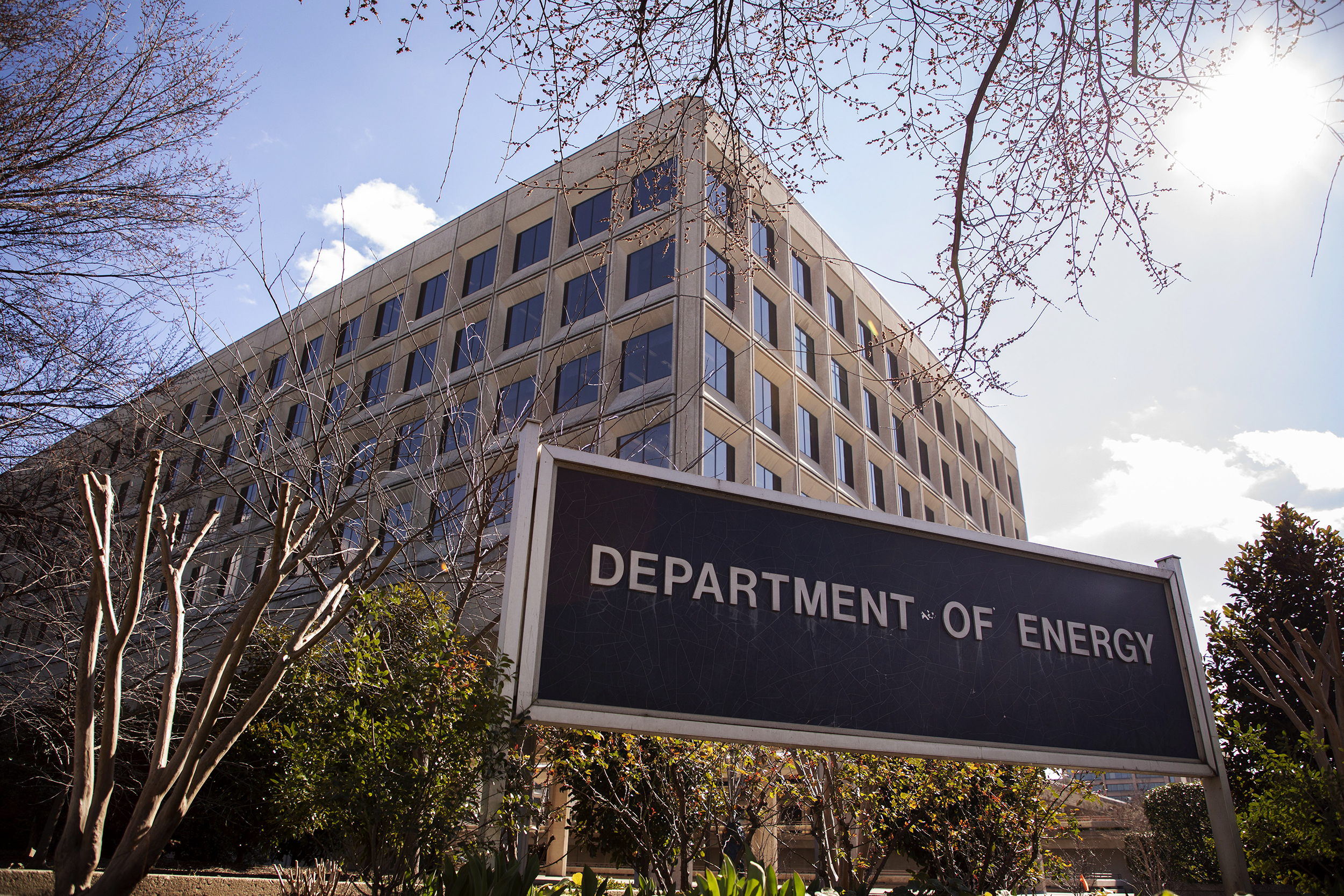
Washington’s latest energy-policy controversy centers on the Department of Energy’s (DOE) recent decision to cancel billions of dollars in grants, including subsidies for clean energy and greenhouse-gas-reduction projects. As companies appeal and policymakers debate the validity of these cancellations, it is worth considering the proper role of government in promoting energy innovation.
For background, DOE announced the termination of 321 awards worth roughly $7.5 billion in early October. A subsequent leak suggested that as many as 647 grants, totaling more than $20 billion, could ultimately be affected. Predictably, the reaction from the left, and from lawmakers whose districts stand to lose funding, was swift and angry. Environmental advocates accused the Trump administration of undermining American innovation and climate leadership. Secretary of Energy Chris Wright defended the actions, arguing that the projects missed milestones, would not be economically viable, and would lose taxpayer money.
From a free-market perspective, however, while the precise scope and rationale of the cancellations remain unclear, the available evidence suggests that many of the awards stray far beyond what can be justified as legitimate government support for research and development (R&D). DOE’s decision likely represents a needed course correction, reining in industrial policy while preserving support for genuine research and discovery.
The Case for (and Limits of) Public R&D Support
Some of the terminated grants clearly fall within the realm of industrial policy, in which the government attempts to steer private investment into politically favored, typically more mature, industries—in this case, clean energy and carbon-reduction projects. The failings of industrial policy are well known: it creates market distortions, invites rent-seeking, and locks in inefficient technologies. It can often result in throwing good money (private and taxpayer) after bad to keep a project alive or keep a Member of Congress happy.
Unlike industrial policy, there is a legitimate and well-established economic rationale for government involvement in R&D. The key issue is whether the cancelled awards represent examples of economically justified public R&D support, or whether they were, in practice, industrial policy disguised as research or innovation subsidies.
Economists have long recognized that, left to its own devices, the market will tend to underinvest in R&D relative to the socially optimal level. Once new knowledge is developed, it is difficult for private firms to prevent others from benefiting from it. Because firms cannot fully appropriate the returns from their research (particularly in fundamental, knowledge-building areas), they invest less than is economically efficient.
The government can address this failure through several mechanisms, including direct funding for basic science, tax incentives to encourage private R&D, and intellectual property protections. When well designed, these policies can generate substantial positive spillovers as new knowledge diffuses through the economy, driving innovation and long-term growth.
Of course, government involvement in R&D also has pitfalls. Poorly designed subsidies can crowd out private investment rather than complement it. Governments lack perfect foresight and may misallocate funds to projects or technologies that will ultimately be neither commercially viable nor socially beneficial. At the same time, more promising but less visible ideas remain underfunded. Targeted funding programs create opportunities for rent-seeking and political capture, in which resources are directed to politically connected firms or used for short-term political gain rather than steered toward projects with the most significant potential to advance innovation and growth.
Effective policy requires transparent criteria and clear limits on which types of projects merit public support. In general, basic science, which has the greatest spillovers and the weakest private incentives, should receive public funding. Commercially viable but unproven or politically motivated projects should be left to the market.
In the energy sector, the added wrinkle is climate change. Along with the usual tendency toward underinvestment in R&D, government support for clean technologies can generate additional social benefits by reducing greenhouse gas emissions and helping to reduce the risks associated with a changing climate. If the innovations become cost-effective and widely deployable, they can generate significant economic and environmental returns. Economic theory, including work by recently announced Nobel laureate Philippe Aghion, suggests that an optimal climate policy mix includes targeted research funded by the government to accelerate cleaner technology development.
Given these added benefits, there is a reasonable case for R&D subsidies for more advanced, cleaner energy technologies closer to commercialization but not yet ready for the market. Early demonstration or “first-of-a-kind” support can help prove viability and bridge the treacherous “valley of death” gap between publicly funded laboratory prototypes and privately financed commercial deployment.
The central policy challenge is finding the right balance. While R&D spillovers justify baseline government involvement, and climate benefits may warrant broader support, poorly implemented programs can waste resources and erode the policy’s intended environmental and economic benefits. The politicization of climate change heightens this risk by motivating policymakers to use R&D spending as a backdoor to fund politically preferred projects that are better left to the private sector or addressed through more direct policies.
Are DOE’s Terminations Smart Reform or an Overcorrection?
Against this backdrop, the DOE’s terminations raise important questions: do the awards on the leaked list reflect sound R&D policy grounded in economic theory, or do they exemplify the risks of government failure when such policy is poorly managed and insufficiently constrained? And is DOE’s decision to terminate these grants a warranted correction or a hasty move that risks undermining promising innovation?
The Department’s justification rests on a May memo from Secretary Wright, outlining the agency’s intent to identify wasteful spending and ensure grants are “financially sound and economically viable, aligned with national and economic security interests, and consistent with Federal law and this Administration’s policies and priorities and program goals and priorities.” At an event last week, Secretary Wright elaborated:
A lot of the stopping of funding of projects we’re working on right now have really been mutual decisions with the original applicants for them, that I think were counting on government support to continue…subsidized purchases of things that…wouldn’t exist without subsidies….We need things that will fly on their own.
Without more detailed justification for individual terminations, it is difficult to assess how DOE’s criteria align with economic principles. The Department’s challenge is to strike a balance between these two extremes: funding projects that demonstrate strong potential for future viability but have current technological obstacles or knowledge gaps that require additional foundational research that the private sector is unlikely to undertake on its own.
Unsurprisingly, the left’s response has lacked this nuance. A statement from the National Resources Defense Council (NRDC), for example, declares:
This is yet another blow by the Trump administration against innovative technology, jobs, and the clean energy needed to meet skyrocketing demand….Ending support for these projects will stall American innovation and competitiveness, raise consumer costs, and further cement our reliance on dirty fossil fuels.
This portrayal collapses when reviewing the list of terminated awards. There are a handful of projects that plausibly serve a public purpose. For example, a project testing multi-day energy storage using unproven battery technology with explicit provisions for public knowledge sharing is a valuable target for federal spending. However, many terminated awards appear far removed from genuine R&D support, including:
- Funding for technologies well along the path to commercial viability, which should be capable of sustaining themselves without public subsidies. For example, spending on companies constructing manufacturing plants for batteries or high-efficiency windows.
- Subsidies for activities outside the scope of genuine scientific research and development, such as billions in grants to state governments for transmission construction under the guise of “grid innovation.” Expanded transmission infrastructure may be needed, but the primary barriers to its deployment (such as permitting) do not involve a shortage of scientific knowledge or investment in research. These funds represent political expenditures rather than legitimate R&D support.
- Research projects with unclear spillover or climate benefits, including studies that, while perhaps interesting or valuable to some, do not present an obvious case for federal funding. For example, grants to examine the potential risks of offshore wind turbines to bats.
Taken together, the evidence suggests that many of the canceled awards were poorly aligned with an economically sound rationale for government-supported R&D or, more broadly, investment. The political backlash from the left, and from members of Congress intent on protecting funding for their districts, underscores the risks of politicized spending. The reflexive defense of every award on the list ignores an important truth: indiscriminate financing for all energy projects can reduce the overall efficiency of climate policy. At the same time, conservatives who may be less motivated by future climate risks should still recognize the broader economic value of well-designed R&D programs, which can generate knowledge spillovers and lower long-term energy costs.
Every dollar spent on projects chosen for political reasons or that displaces private investment undermines the government’s effectiveness in fostering innovation. Depoliticizing R&D subsidies can help provide a steady stream of funding to the most important and promising projects, rather than wild swings from administration to administration. DOE can be an instrumental source for energy innovation, which is why getting federal R&D policy right is crucial.
The views and opinions expressed are those of the author’s and do not necessarily reflect the official policy or position of C3.